
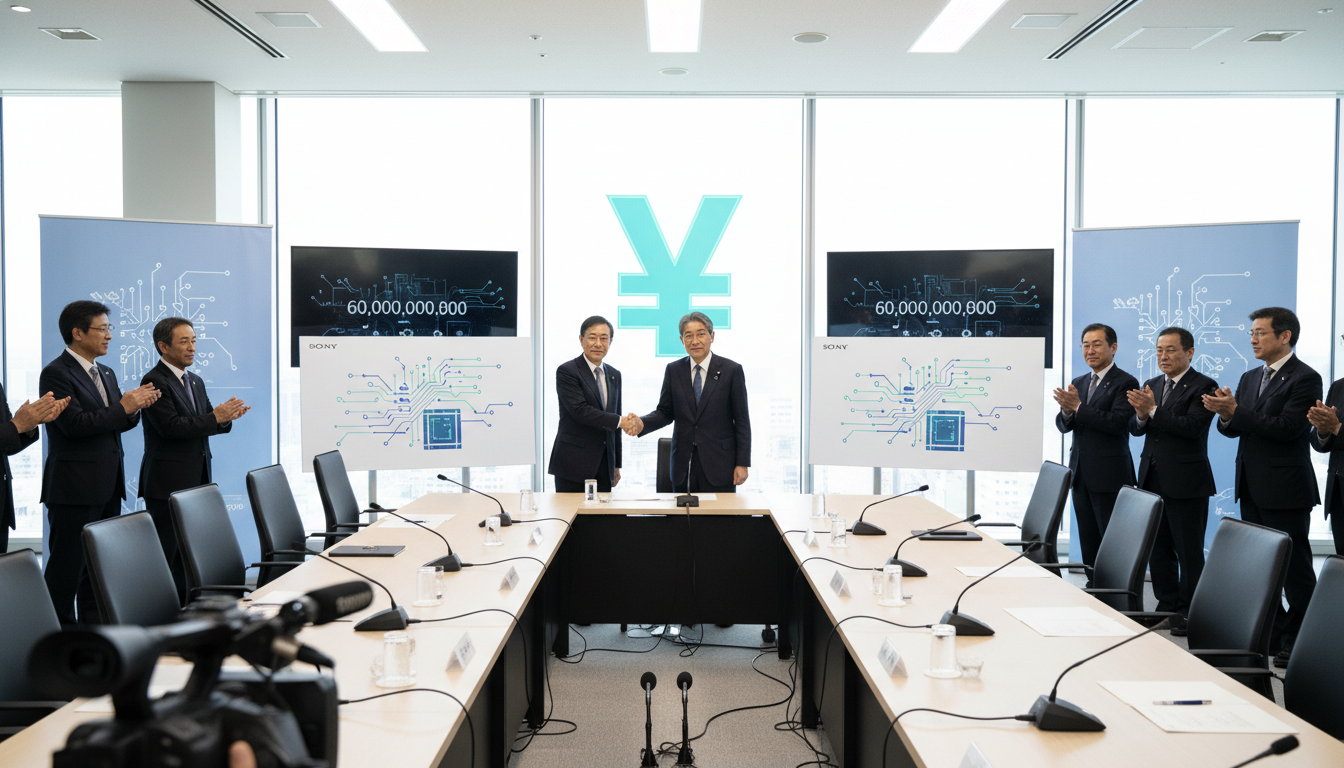
Sony semiconductor subsidy: Japan to provide up to ¥60 billion to boost device production
Japan will give Sony up to ¥60 billion to expand semiconductor device production for smartphones and vehicles, aiming to shore up domestic supply chains.
Sony semiconductor subsidy announced in Tokyo will provide the Sony Group with up to 60 billion yen to accelerate production of semiconductor devices used in smartphones and vehicles. The government said the funding is intended to help Sony expand output and develop customer relationships as part of a wider effort to ensure stable device supply. The move underscores Tokyo’s active role in supporting strategic electronics manufacturing within Japan.
Details of the subsidy package
The subsidy totals up to ¥60 billion (about $378 million) and is directed to Sony Group to support production increases and customer development for semiconductor devices. Officials described the funding as targeted support for devices that feed into consumer electronics and automotive supply chains. The announcement made clear the aid is linked to concrete production and market-development milestones.
Officials indicated the funding would be disbursed in stages tied to Sony meeting expansion and customer-development objectives. The arrangement reflects a conditional subsidy model aimed at ensuring public funds translate into measurable increases in domestic device supply. The scope covers both manufacturing scale-up and efforts to secure new buyers for the devices.
Production targets and applications
The subsidy targets semiconductor devices used in smartphones and vehicles, areas where demand remains robust and where supply stability has become a national priority. Sony’s semiconductor unit is known for image sensors and other components that feed into mobile and automotive systems. The funds are expected to support production lines and related capacity investments.
A Sony chipmaking unit is already building an image sensor facility in Kumamoto prefecture, highlighting the company’s ongoing capital spending in Japan. That plant is one of several projects intended to strengthen domestic production of high-value device components. The new subsidy is designed to accelerate such projects and help transition new output to commercial customers.
Policy context: securing device supply
Tokyo has framed the subsidy as part of a broader policy to secure stable semiconductor device supply for strategic industries. Government statements linked the funding to efforts to reduce vulnerability in critical technology supply chains and to support domestic manufacturers. The measure aligns with long-term aims to make Japan more resilient to external shocks in the electronics market.
By tying financial support to customer development, policymakers aim to encourage not just higher output but closer integration between manufacturers and downstream users. That approach seeks to avoid idle capacity and to ensure that scale-up translates into persistent, market-driven demand for domestically produced devices.
Implications for Sony’s business strategy
The financial support gives Sony Group a clearer runway to expand device production and to pursue contracts with handset makers and automakers. The subsidy could lower near-term capital risk and enable accelerated ramping of facilities that produce image sensors and related semiconductor devices. For Sony, the funding is likely to be applied where it can most quickly convert capacity into revenue.
While the subsidy supports production, it also signals government preference for domestically based device suppliers, which may affect Sony’s commercial positioning with global customers. The funding could enable faster delivery timelines for Japanese-made devices and strengthen Sony’s bargaining position when securing long-term supply contracts.
Local economic effects in Kumamoto and supply-chain links
The Kumamoto image sensor site is an example of the regional investment the policy seeks to support, with potential benefits for local employment and supplier networks. Expansion of semiconductor device production tends to generate demand for local subcontractors, logistics services, and construction during ramp-up phases. Regional officials have emphasized the potential for sustained job creation as facilities move from construction to mass production.
Beyond Kumamoto, the subsidy may spur additional investments across supplier clusters that serve chipmaking facilities, helping to reinforce domestic supply chains. The intent is to reduce reliance on distant suppliers for critical components and to foster a more integrated industrial base within Japan.
Oversight, timelines and expected outcomes
The government indicated oversight arrangements will link subsidy disbursements to Sony’s performance against expansion and customer-development targets. Timelines were presented as contingent on project milestones, with the aim of ensuring the funds accelerate real capacity rather than subsidize idle plans. The conditional nature of the support is meant to align public spending with measurable industrial outcomes.
Observers will watch for how quickly Sony can translate the funding into new shipments and customer wins, particularly in the smartphone and automotive sectors. If successful, the measure could help stabilize device supply channels for Japanese manufacturers while offering a model for targeted support of strategic technologies.
The Tokyo decision to allocate up to ¥60 billion to Sony reflects a strategic push to bolster semiconductor device production within Japan and to link public support to tangible commercial results.

