
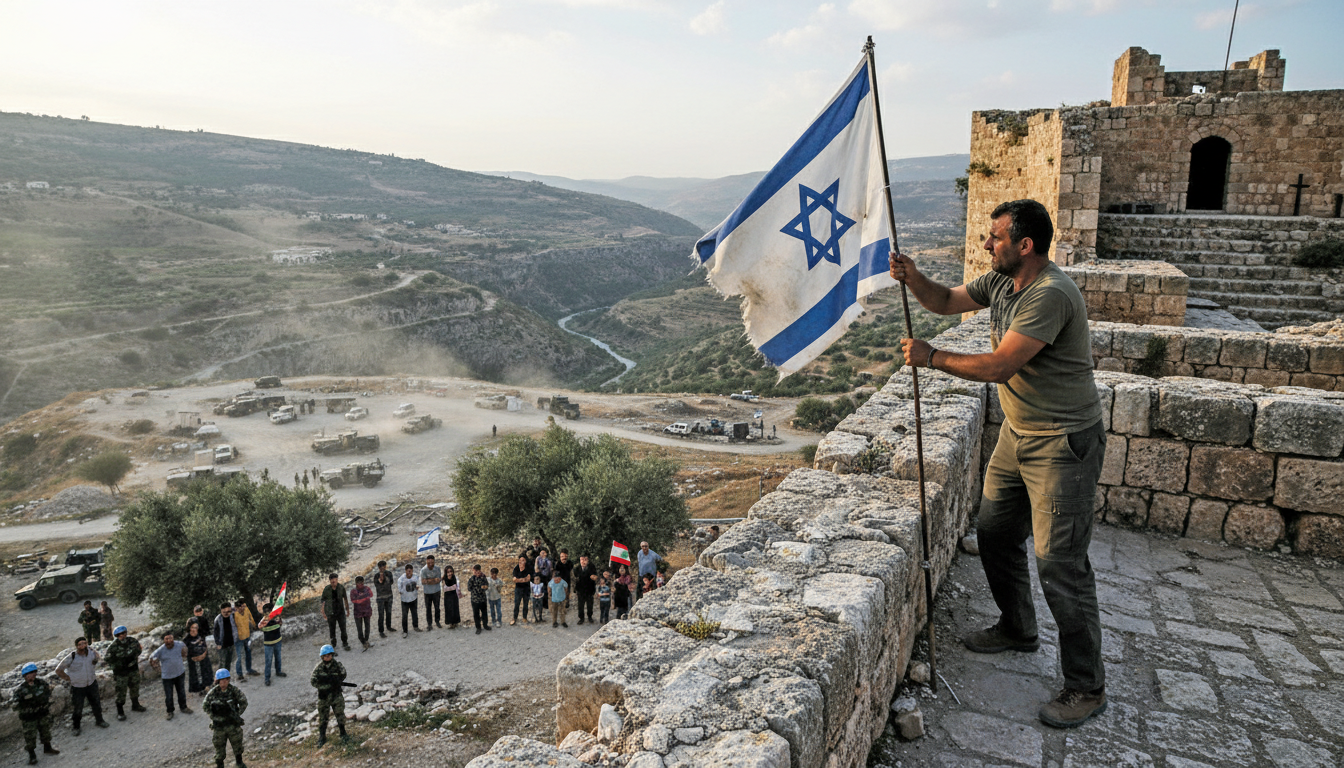
Beaufort Castle flag removed as residents return during temporary ceasefire in southern Lebanon
A Lebanese resident removed an Israeli flag from Beaufort Castle on April 18, 2026, after a temporary ceasefire allowed civilians to return to parts of southern Lebanon. Beaufort Castle (Qalaat al-Shaqif), a 12th-century fortress in Nabatiyeh Governorate, became a focal point for residents reclaiming their villages and removing visible marks of recent hostilities.
Flag Removed from Beaufort Castle After Ceasefire
A man from a nearby village climbed the fortress grounds and took down an Israeli flag that had been flying over the site during recent hostilities. The action occurred on April 18, 2026, as residents cautiously moved back into the area following the announcement of a temporary ceasefire. Photographs and eyewitness accounts show the castle, long a landmark in Nabatiyeh Governorate, once again in local hands after weeks of tense control shifts.
Return to Village in Nabatiyeh Governorate
Residents described returning to homes that had been abandoned or damaged during the fighting that swept across parts of southern Lebanon. Many entered cautiously, checking for unexploded ordnance and structural damage before attempting repairs or retrieving personal belongings. Local community leaders organized small groups to assess immediate needs and to coordinate with aid providers when access permitted.
Historical Significance of Qalaat al-Shaqif
Beaufort Castle, locally known as Qalaat al-Shaqif, dates back to the Crusader era and has long been a strategic and symbolic site in the region. Its elevated position made it a military vantage point through successive periods of conflict, and its rubble and standing walls now bear witness to the latest chapter of local upheaval. For residents and visitors alike, the castle serves as both a cultural landmark and a stark reminder of the impacts of recurrent violence.
Security Conditions and Ceasefire Details
The temporary ceasefire that enabled civilian re-entry was announced ahead of the morning of April 18, 2026, and appeared to cover limited areas in southern Lebanon. Local security checks and patrols were reported near main roads, but many neighborhoods remained without firm guarantees of sustained safety. Authorities on the ground, including municipal figures and informal community patrols, urged vigilance as clearance teams worked to identify hazards left by the fighting.
Local Reactions and Humanitarian Concerns
Scenes of relief were mixed with frustration as families confronted destruction and uncertainty about the future. Aid groups and local charities noted immediate needs for medical supplies, water, and shelter materials, especially for households whose roofs or walls had been damaged. Displaced residents returning to harvest small plots reported concern over land contamination and the absence of basic services that would be needed for prolonged resettlement.
Damage Assessment and Cultural Heritage Risks
Preliminary inspections at religious sites, schools and heritage buildings including Beaufort Castle indicated varying degrees of damage, from superficial scarring to structural threats requiring conservation work. Preservationists warned that ongoing instability could accelerate deterioration of historic masonry and artifacts. Local officials appealed for technical support and funding to stabilize fragile buildings and to document damage before further weathering or neglect causes irreversible loss.
Outlook for Reconstruction and Local Governance
Community leaders emphasized that short-term repairs will not substitute for a sustained reconstruction plan that includes clearing unexploded ordnance, restoring utilities and rebuilding public services. Discussions among municipal councils, civil society groups and humanitarian organizations are expected to focus on phased recovery that prioritizes the most vulnerable households. Long-term security arrangements and guarantees for safe access by aid workers will be critical to any reconstruction timetable.
The removal of the Israeli flag from Beaufort Castle on April 18, 2026, was a symbolic act reflecting a broader movement of residents reclaiming daily life amid fragile calm. As villagers continue to return, attention will shift to clearing hazards, restoring services and protecting historic sites like Qalaat al-Shaqif while negotiators and local authorities seek pathways that prevent a return to open hostilities.

