
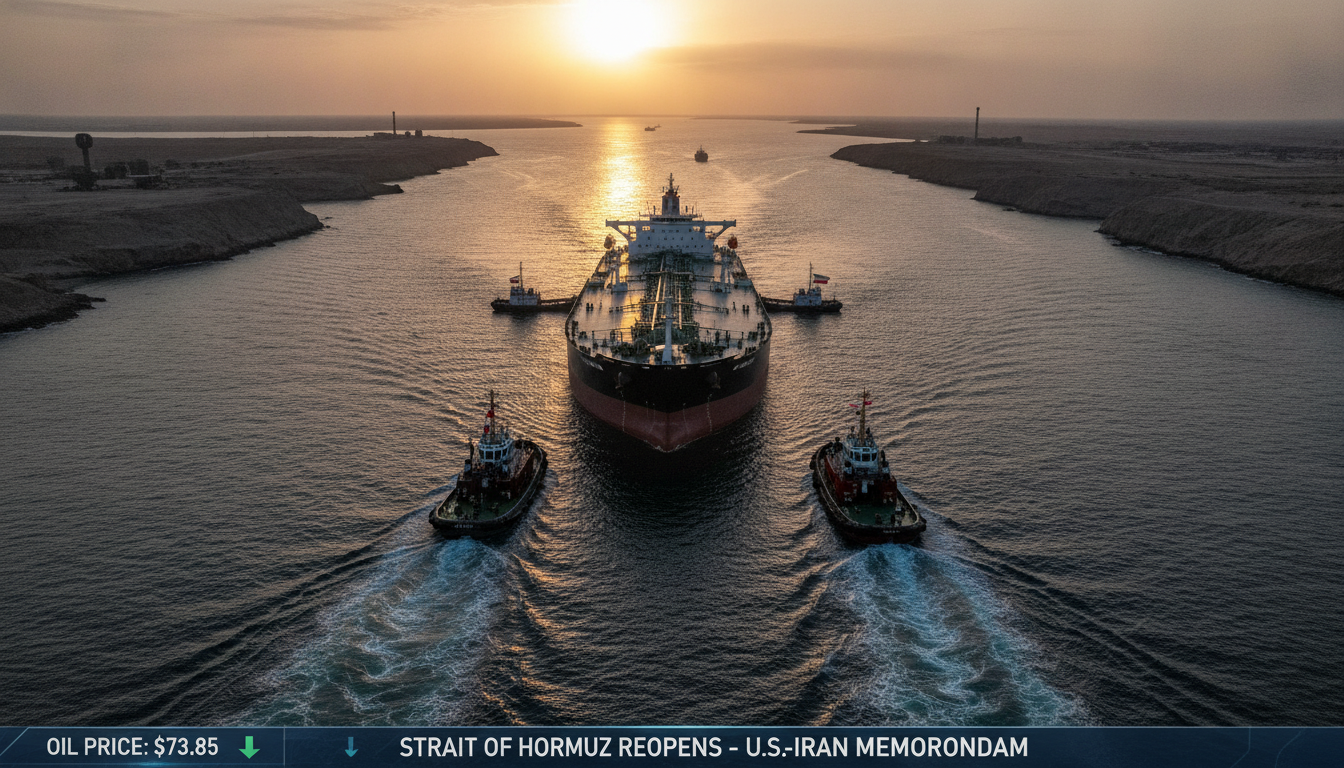
Iran war: U.S. and Iran sign memorandum, tanker traffic resumes through Strait of Hormuz
U.S. and Iran signed a memorandum of understanding to halt the Iran war, and ship movements through the Strait of Hormuz began to resume as markets reacted to the deal. The development sent crude prices lower and prompted cautious commercial transits after weeks of near‑total disruption. (washingtonpost.com)
U.S. and Iran sign memorandum to halt Iran war
The memorandum of understanding, agreed and signed by both capitals this week, declared an immediate end to large‑scale military operations and set a 60‑day window for negotiating a final settlement. The text of the interim accord calls for the reopening of key maritime routes, steps toward restoring trade in energy and a framework for further negotiations. (washingtonpost.com)
The move was described by officials as an initial, non‑binding step intended to stabilise the region and reduce the risk that military actions would again choke global oil flows. Washington said the agreement would allow for a phased lifting of tactical measures such as the naval blockade that had been in place around some Iranian ports. (washingtonpost.com)
Shipping restarts through Strait of Hormuz
Hours after the memorandum took effect, commercial shipping that had largely stayed away from the Strait of Hormuz began to move again, with industry tracking showing vessels transiting the narrow shipping lane. Observers reported at least a small number of oil tankers and merchant vessels making the passage as insurers and owners sought to test the new arrangements. (investing.com)
On the water, the initial returns were cautious: some supertankers were reported to have moved through the channel but many other ships remained anchored or loitering nearby while owners sought firm guarantees. Maritime operators said captains and charterers were awaiting clearer operational guidance before resuming normal routings in bulk. (investing.com)
Oil prices slide as markets reassess supply risks
Global oil markets reacted quickly to the prospect of restored flows through Hormuz, and benchmark prices eased as traders priced in an improvement to supply prospects. Market reports showed crude prices falling sharply from the elevated levels seen during the conflict, reflecting expectations that a reopening of the strait would materially ease the supply shock. (investing.com)
Traders cautioned, however, that the path back to pre‑war volumes would be gradual and conditional on both sides adhering to the memorandum and on the absence of further military incidents. Analysts noted that even a partial restoration of traffic could relieve immediate shortages, but full market normalisation would depend on sustained diplomatic progress. (investing.com)
U.S. military lifts naval blockade but retains presence
In parallel with the diplomatic move, U.S. military officials announced that a targeted naval blockade that had restricted some maritime movements was being lifted to allow commercial traffic to resume. Forces from the U.S. navy said they would continue to operate in the general area to oversee compliance and to ensure safe navigation during the transition. (militarytimes.com)
Military commanders emphasised that the lift of enforcement measures was tied to the memorandum’s implementation and that operational rules could be adjusted if either side failed to meet its commitments. The navy’s continued presence was described as a reassurance to commercial mariners rather than a return to blockade posture. (militarytimes.com)
Diplomatic talks continue amid renewed regional risks
Diplomats on both sides moved quickly to flesh out details of the interim agreement, with scheduled talks in neutral venues aimed at translating the memorandum into operational steps. Negotiators were reported to be discussing mine‑clearing, transit protocols and mechanisms for restoring insurance and shipping guarantees. (washingtonpost.com)
Despite the initial progress, officials warned that the situation remained fragile and that flare‑ups elsewhere in the region could still jeopardise the deal. Tehran’s statements this weekend indicated that the arrangement would be contingent on a halt to unrelated hostilities, underscoring how linked the memorandum’s fate remains to broader regional developments. (washingtonpost.com)
A later Iranian announcement that it had temporarily closed the strait again in response to separate hostilities underlined the fragility of the opening and the continued potential for sudden reversals. Diplomats said the coming days would be decisive for whether the memorandum can be turned into a durable easing of the operational risks that have gripped shipping and energy markets. (apnews.com)
The memorandum represents a notable diplomatic shift in an episode that sent shockwaves through energy markets and maritime trade. For now, the reopening of the Strait of Hormuz is cautious and conditional, and commercial operators are balancing the economic case for resuming voyages against the still‑elevated security and insurance risks that accompany the region’s volatile dynamics.

