
Taiwan tensions: President Lai urges U.S. arms approval ‘soon’ while stressing homegrown defense
Taiwan President Lai Ching-te urged the United States to approve new arms sales "soon" amid rising Taiwan tensions, while underscoring the importance of strengthening domestic defense capabilities.
Taipei — President Lai Ching-te on June 18 called on Washington to expedite approval of fresh arms transfers to Taipei as part of a broader effort to deter coercion, saying such support remains crucial amid ongoing Taiwan tensions. He framed the request as complementary to a parallel push to develop Taiwan’s own defense industry, stressing that neither aim is intended to provoke conflict. Speaking at a briefing hosted by the Taiwan Foreign Correspondents’ Club, Lai reiterated Taipei’s refusal to accept Beijing’s claim to govern the island while emphasizing a measured posture.
Lai’s Call for U.S. Arms Approval
Lai told reporters that he hopes the United States will approve new arms sales "soon," a plea framed around maintaining credible deterrence. He described advanced defensive systems and sustainment support from allies as essential to preserving Taiwan’s security posture. The president avoided detailing specific systems but signaled urgency in the wake of heightened cross-strait military activity.
The appeal reflects long-standing Taipei policy to seek both external security guarantees and the materiel necessary to sustain a modern deterrent. Officials in Taipei have for years requested U.S. weaponry to improve asymmetric defenses and resilience, arguing that timely approvals matter for readiness and planning.
Push to Strengthen Homegrown Defense Industry
Alongside requests to Washington, Lai highlighted Taiwan’s own defense-industrial development as "equally important," calling for accelerated investment in local production and technological innovation. He said expanding indigenous capabilities would reduce dependence on external suppliers and shorten response times in crises. The president’s remarks underscore a strategic dual-track approach combining foreign procurement with domestic capacity-building.
Taipei has been pursuing upgrades to missile systems, naval shipbuilding, and maintenance infrastructure, and Lai’s administration has sought to streamline procurement and deepen public-private collaboration. Lawmakers and industry leaders are expected to debate funding and export controls as Taipei seeks to scale production and move from assembly toward higher-value research and development.
Message to Beijing and Non-Provocation Stance
Lai reiterated that Taiwan’s resistance to Chinese rule is principled and non-negotiable, but he insisted his government’s actions were defensive rather than provocative. He framed Taipei’s posture as one of deterrence and self-preservation rather than expansion or escalation. The president emphasized that maintaining peace requires credible defense coupled with restraint.
Taipei’s messaging aims to navigate a narrow diplomatic path: deterring potential coercion while signaling willingness to avoid unnecessary confrontation. Analysts say such statements are designed to reassure domestic audiences and international partners that Taiwan seeks stability even as it strengthens defense.
Briefing at the Foreign Correspondents’ Club
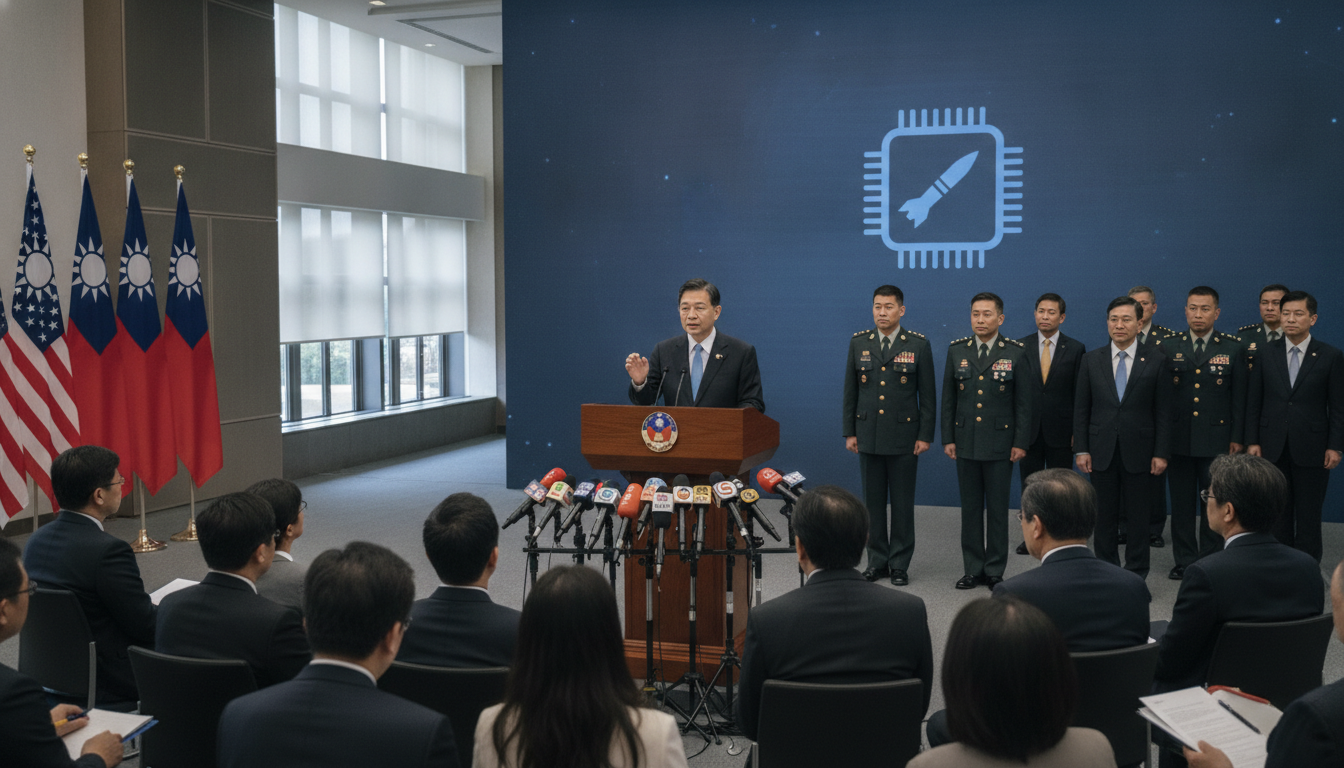
The remarks came at a briefing held by the Taiwan Foreign Correspondents’ Club in Taipei, where Lai answered questions from journalists about security, procurement timelines, and cross-strait relations. The presidential office confirmed the event and circulated images of the president addressing the press, underscoring the administration’s transparency on defense priorities. Reporters pressed Lai on whether the push for U.S. arms could further inflame tensions, a question he met by reiterating deterrence and responsibility.
The venue and format signaled an intent to reach international audiences directly, and the administration used the briefing to shape perceptions in key capitals. Lai’s engagement with foreign correspondents reflects Taipei’s broader diplomatic effort to sustain international attention on security dynamics in the Taiwan Strait.
Implications for U.S.-Taiwan Relations and Regional Security
If Washington grants the requested approvals, Taipei would likely accelerate modernization plans that U.S. officials and lawmakers have long debated as part of a broader Indo-Pacific strategy. Continued arms transfers are seen by allies as one tool to preserve the status quo by raising the costs of coercive action against Taiwan. Yet such moves also risk inflaming rhetoric from Beijing, which regularly condemns third-party arms sales to the island.
Observers say the timing and scale of any U.S. package will shape regional calculations and could influence deterrence dynamics across the Taiwan Strait. Taipei’s dual emphasis on external procurement and domestic development aims to present a balanced approach to allies and adversaries alike.
Domestic Politics and Defense Budget Outlook
Lai’s stance is likely to influence debates in Taiwan’s legislature over defense spending and industrial policy as the government seeks both short-term procurement and long-term self-reliance. Political parties and industry groups differ on priorities, but there is broad bipartisan consensus on the need for stronger defenses. The administration will face choices about fiscal trade-offs and the pace of reforms to accelerate domestic production.
Public opinion in Taiwan has generally favored robust measures to protect sovereignty, yet leaders must also manage economic costs and social expectations. How Taipei sequences foreign purchases, domestic investment, and training will determine the practical impact of Lai’s announcements in the months ahead.
Looking forward, Lai’s dual appeal — urging prompt U.S. arms approvals while championing homegrown defense — sets a pragmatic course intended to shore up deterrence without escalating confrontation. As Taiwan tensions persist, policymakers in Taipei, Washington and across the region will watch closely how diplomacy, procurement timelines and domestic reforms unfold.

