
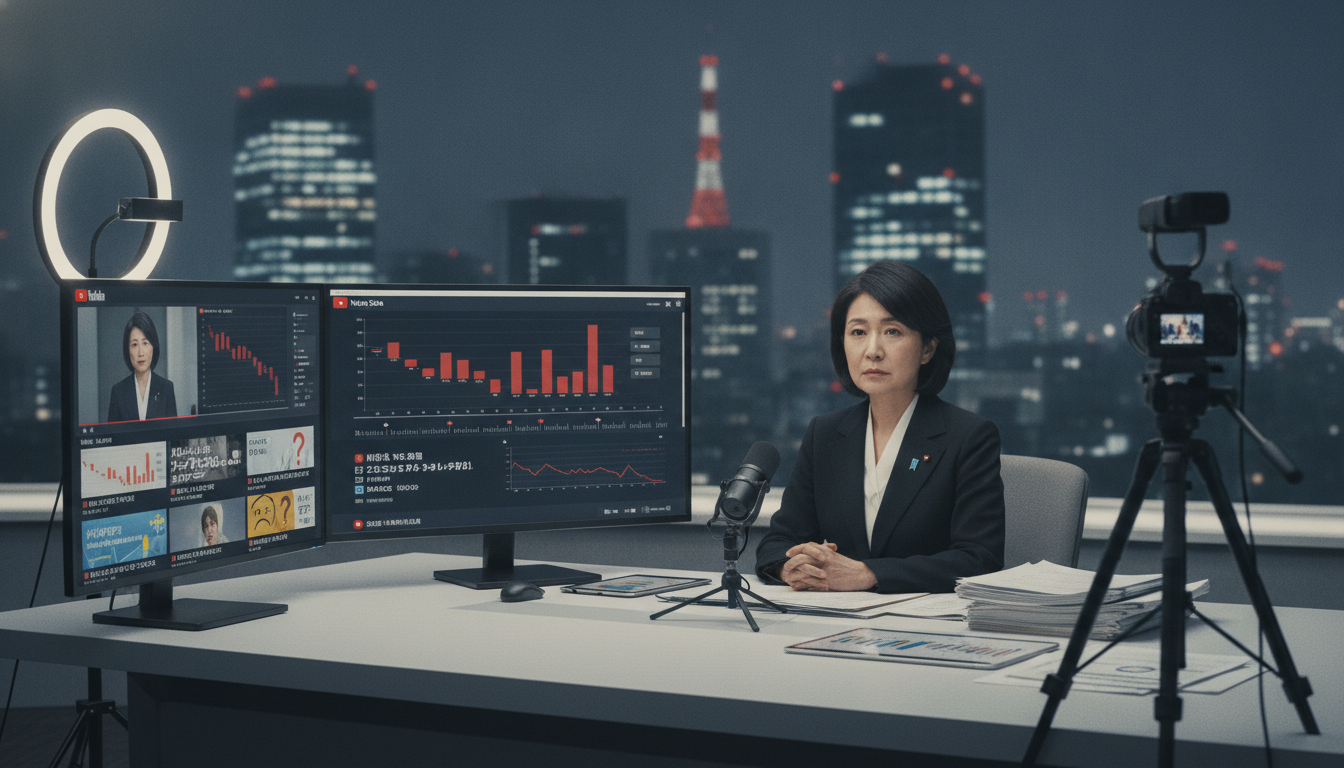
Takaichi YouTube videos show rising criticism since March, data team analysis finds
YouTube sentiment toward Prime Minister Sanae Takaichi has shifted: Takaichi YouTube videos were mostly positive around the election, but negative coverage rose from March and surpassed positive clips by late July.
The newspaper’s data analysis team examined weekly trends in YouTube coverage of Prime Minister Sanae Takaichi and found a clear change in tone over the past seven months. By analyzing the 25 most-viewed videos each week and classifying them as positive, negative or neutral, the team traced how online attention shifted from supportive content toward more critical material. The analysis shows that while positive videos dominated in the run-up to and immediately after the lower house election, the balance began to tilt in March and continued toward increased criticism through July.
Weekly sample and classification method
The research focused on the top 25 most-viewed YouTube videos about the prime minister each week to capture the content drawing the most public attention.
Analysts categorized each video as positive, negative or neutral based on tone, framing and explicit evaluative language, then tracked the share of views for each category over time.
This approach prioritizes high-reach material and provides a window into what large audiences were exposed to, but it does not capture every upload or viewer comment.
Early-year dominance of positive videos
In the weeks surrounding the election, positive Takaichi YouTube videos substantially outnumbered critical ones, reflecting a surge of favorable coverage and promotion.
Examples cited by the analysis included videos highlighting symbolic or upbeat moments, which attracted large audiences and were widely shared on social platforms.
That early dominance helped shape public visibility and set a baseline that began to erode in subsequent months.
March onward: growth in critical coverage
Beginning in March, analysts observed a gradual but steady rise in the proportion of critical YouTube videos about the prime minister.
The weekly sample shows the share of negative content increasing month by month, and by late July the number of critical videos among the top-ranked clips exceeded those classified as positive.
The shift was driven by several widely viewed uploads that presented skeptical assessments, investigative segments, or critical commentary that resonated with large audiences.
Content patterns and notable examples
Positive videos that initially ranked highly tended to emphasize ceremonial events, policy announcements framed favorably, or light-hearted interactions that attracted broad viewership.
Conversely, the more critical uploads that rose in prominence after March often focused on policy disputes, opposition responses, or editorialized analysis that questioned the prime minister’s decisions.
The data team also noted that particular episodes or controversies generated spikes in viewership for critical material, pushing those videos into the weekly top 25.
Contextual factors behind the tonal shift
Analysts suggest several factors likely influenced the change in YouTube sentiment, including evolving news cycles, policy debates, and strategic communications by political actors.
Media dynamics on video platforms — where algorithmic recommendation and audience engagement amplify controversial or explanatory content — can accelerate attention to critical perspectives.
The timing of the shift corresponds with sustained public scrutiny of government actions and with episodes that produced high-engagement coverage across multiple outlets.
Limitations and implications for political messaging
The study’s focus on the most-viewed videos each week offers a tractable measure of public exposure but leaves gaps: smaller channels, non-YouTube platforms and long-tail content were not included.
Sentiment classification involves judgment calls that can affect categorization, and view counts alone do not directly measure persuasive impact on individual voters.
Nonetheless, the trend signals a changing information environment for the prime minister that communications teams and policymakers cannot ignore.
The rise in critical Takaichi YouTube videos underscores the growing role of video platforms in shaping political narratives and public debate.

