
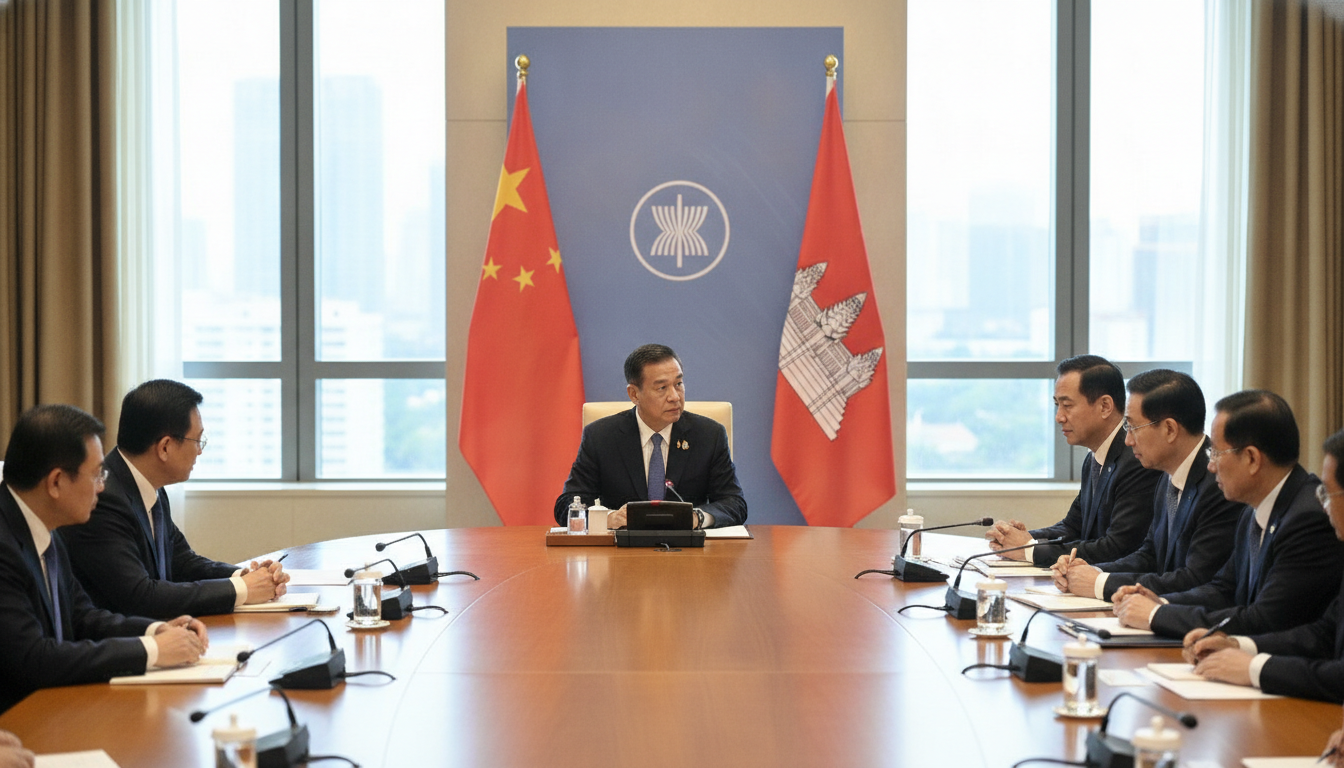
Thailand’s Response to the Cambodia Conflict Signals a Shift in Southeast Asian Diplomacy
Thailand’s response to the Cambodia conflict is reshaping regional diplomacy, testing ASEAN mechanisms as China expands its mediation role and regional alignments shift. The issue surfaced during a week of ASEAN-led foreign ministers’ meetings that culminated at the ASEAN Regional Forum in July. Responses from Bangkok and partner capitals now reflect a more contested diplomatic environment across Southeast Asia.
ASEAN Regional Forum frames latest diplomatic push
The ASEAN Regional Forum, which brings together 27 countries and territories, provided the platform for renewed diplomacy this July. The forum capped a series of ASEAN-led foreign ministers’ meetings that remain Asia’s longest-running multilateral dialogue. Delegations used the event to signal urgency about cross-border tensions and to recalibrate cooperative responses.
The July sessions underscored ASEAN’s continuing role as the principal diplomatic convenor in the region. Yet debates at the forum revealed friction over how to balance neutrality with active mediation. Member states pushed for stronger mechanisms even as great-power influence complicated unified action.
Bangkok’s diplomatic pivot after cross-border clashes
Thailand’s government moved from cautious statements to more proactive engagement as clashes along the Cambodia border intensified. Bangkok pursued visible diplomacy both within ASEAN settings and through bilateral contacts, aiming to contain escalation and protect stability along its frontier. Thai officials argued that a measured, statesmanlike response was necessary to prevent broader destabilization.
At a high-profile ceremony in Malaysia in October 2025, Thailand’s prime minister joined counterparts in a symbolic peace accord aimed at de-escalating tensions. The ceremonial diplomacy reflected Bangkok’s intent to lead regional confidence-building, even as fighting resumed months later and complicated implementation of agreements.
China steps into a larger mediation role
The return of hostilities after the October accord created space for China to increase its mediation footprint in the dispute. Beijing’s more visible involvement was presented as pragmatic conflict management by some capitals and as strategic influence by others. China’s role has been framed by a mix of shuttle diplomacy, special envoys, and public statements urging restraint.
This shift has prompted anxiety among ASEAN members about external influence over intra-regional conflicts. Some smaller states welcomed an extra channel that could produce rapid de-escalation, while others warned that reliance on great-power mediation could undermine ASEAN’s centrality. The balance between pragmatic outcomes and long-term institutional costs remains a live policy question.
Impacts on ASEAN unity and small-state diplomacy
The Cambodia dispute has exposed fault lines in ASEAN consensus-building, testing the bloc’s famed preference for quiet diplomacy and non-interference. Divisions emerged over whether to prioritize immediate de-escalation or to insist on independent, ASEAN-led mechanisms for conflict resolution. Those differences reflect varying threat perceptions and strategic ties among member states.
For smaller Southeast Asian states, the episode highlights the limits of neutrality in a crowded strategic environment. Governments must now weigh bilateral relationships with major powers against commitments to collective ASEAN principles. The result is a more transactional and interest-driven diplomacy across capitals in the region.
Practical steps and prospects for regional stability
Diplomats at the ASEAN Regional Forum endorsed steps aimed at improved communication, monitoring, and confidence-building along contested border areas. Proposals included joint observation mechanisms, crisis hotlines between defense establishments, and renewed emphasis on implementing prior accords. These measures aim to reduce the risk of inadvertent clashes and to create structured channels for rapid dialogue.
However, experts caution that durable stability will require political will, enforcement capacity, and sustained engagement from all parties. Without follow-through, symbolic agreements risk collapse when local tensions flare. ASEAN will need to demonstrate that collective action can coexist with individual member states’ strategic calculations.
The Cambodia border dispute has become a test case for how Southeast Asia manages interstate friction in a changing strategic landscape. Thailand’s response—visible, pragmatic and at times assertive—reflects broader regional recalibrations as capitals seek to protect sovereignty while avoiding military escalation. The ASEAN Regional Forum and subsequent diplomatic engagements show the bloc remains the primary venue for discussion, but the growing role of external mediators like China underscores the complex interplay of regional agency and great-power influence.
As talks continue, the trajectory of diplomacy will depend on whether ASEAN members can convert forum-level commitments into on-the-ground confidence-building and whether external actors respect ASEAN-driven processes. The coming months will be decisive for both the immediate security of border communities and for the longer-term question of who shapes dispute resolution in Southeast Asia.

