
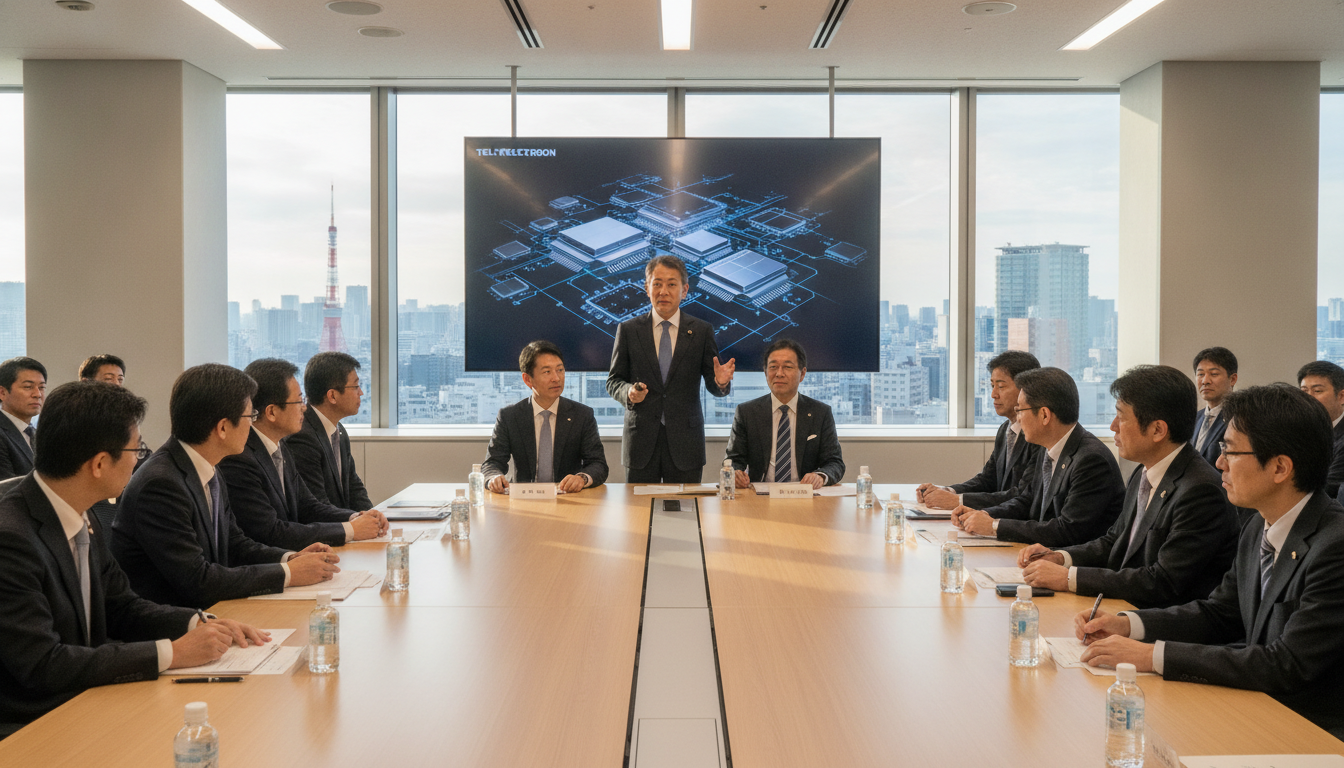
Tokyo Electron says it can outpace Chinese rivals as chips equipment demand lifts Japan’s industry
Tokyo Electron confident it can keep a technological edge despite Chinese self-sufficiency drive, positioning semiconductor equipment as a growth pillar for Japan.
Tokyo Electron President and CEO Toshiki Kawai said in Tokyo on June 9 that the company expects to maintain its technological edge even as China accelerates efforts to build a self-sufficient semiconductor industry. The remarks came amid rising global competition in semiconductor equipment, with new entrants appearing as nations seek domestic supply chains. Kawai framed the challenge as an opportunity for Tokyo Electron to reinforce investment in research and development and to support Japan’s broader industrial policy goals. He suggested the semiconductor equipment sector could become a key pillar of Japan’s economy if firms sustain innovation and scale.
Competitive pressure from China on equipment suppliers
Tokyo Electron faces increasing competition as Chinese firms and state-backed programs push to localize semiconductor production and tooling. Chinese efforts to develop homegrown equipment suppliers have accelerated, drawing attention across the global supply chain. Company executives acknowledge the emergence of new competitors but emphasize that building mature, high-performance toolsets requires sustained engineering depth and customer trust. Tokyo Electron argues its decades-long experience and specialized processes provide a lead that is not easily replicated.
R&D and technology as the defence
Kawai emphasized research and development as Tokyo Electron’s primary defence against competition, saying the company will continue investing in advanced process technologies. The firm has long focused on precision machinery and process integration, areas that underpin yield improvement for chipmakers. Executives view incremental tech advances and close collaboration with major semiconductor customers as crucial to retaining market share. The strategy hinges on delivering higher throughput, better yields and reliability that emerging rivals will find difficult to match quickly.
Implications for Japan’s industrial strategy
Japan’s government and industry leaders are watching the chip equipment sector as a potential engine for broader economic growth. Policymakers have signalled interest in strengthening domestic semiconductor-related capabilities through incentives and partnerships. Tokyo Electron’s push to maintain leadership fits into a national narrative that prioritizes strategic industries and technological sovereignty. If the sector scales, it could support suppliers, machine builders and specialized materials firms across Japan.
Supply chain resilience and export controls
The global semiconductor supply chain has become more geopolitically sensitive, prompting companies to balance market access with compliance and security concerns. Export controls and trade restrictions have reshaped where and how advanced tools are sold and supported. For Tokyo Electron, navigating regulatory constraints while meeting customer needs requires careful compliance and a nuanced sales strategy. The company must also manage logistics, service networks and intellectual property protection as it expands sales across diverse regions.
Customer demand and market outlook
Demand from foundries and memory manufacturers remains a core driver for equipment makers, and Tokyo Electron expects ongoing capital expenditure cycles to support business momentum. Chipmakers chasing advanced nodes and higher production volumes will continue to require cutting-edge deposition, etch and inspection tools. While near-term demand can fluctuate with macroeconomic conditions, Tokyo Electron and peers foresee long-term growth as semiconductor content rises across industries. The company is positioning itself to capture opportunities in automotive, AI accelerators and communications markets where advanced processes matter.
Workforce, partnerships and investment plans
Maintaining technological leadership will require skilled engineers, tighter industry partnerships and continued capital investment. Tokyo Electron plans to deepen collaboration with customers and suppliers to accelerate co-development and qualification of new tools. Recruiting and retaining specialized talent is central to sustaining engineering output, while partnerships can shorten development cycles and spread risk. Investment decisions will likely balance factory capacity, R&D facilities and after-sales service expansion to support global customers.
Tokyo Electron’s stance reflects a broader industry dynamic: as nations pursue semiconductor self-reliance, incumbent toolmakers must reinforce innovation, compliance and customer intimacy to stay ahead. The company’s confidence in its technological lead and its framing of the semiconductor equipment sector as a strategic industrial pillar underscore how vital chip manufacturing tools have become to national economic plans. The coming years will test whether sustained investment and close customer ties are enough to preserve Japan’s position in a rapidly shifting global semiconductor landscape.

