
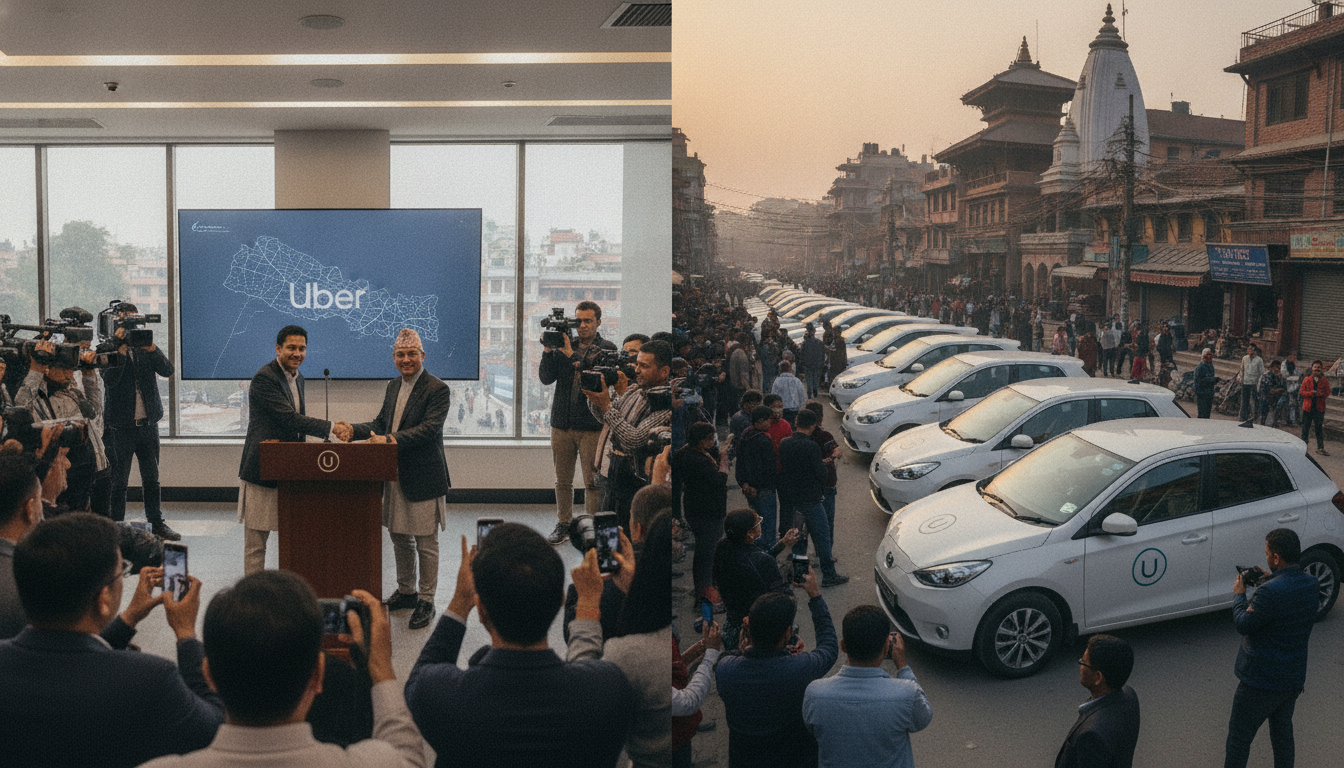
Uber Nepal Launches in Kathmandu, Eyes Tourists and Local Partnerships
Uber Nepal launches in Kathmandu with a June 5 soft launch, aiming at tourists and local partners while facing about 30 rivals amid unclear ride‑hailing rules.
Uber Nepal officially entered Nepal’s ride‑hailing market with a soft launch in Kathmandu, the company and local officials confirmed. The move positions Uber to leverage its global brand and tourist recognition while operating through a local‑partner model in a market crowded with roughly 30 domestic and foreign competitors. Company executives and Nepali regulators described the rollout as the start of broader operations that will test demand, fares and regulatory frameworks in the Himalayan nation. Observers say success will depend on how quickly regulators clarify rules and on Uber’s ability to meet local safety and driver concerns.
Soft launch attended by U.S., Uber and Nepali officials
A soft‑launch event in Kathmandu on June 5 included officials from the U.S. Embassy and senior Uber Asia‑Pacific executives, signaling diplomatic and corporate backing for the entry. Acting Deputy Chief of Mission Chelan J. Bliss and Uber’s Vice President and Regional General Manager for Mobility in Asia‑Pacific, Dominic Taylor, were present alongside Nepal’s Director General of the Department of Tourism, Ramkrishna Lamichhane. Company representatives described the event as an initial operational phase rather than a full commercial rollout, intended to onboard drivers and test the app in real urban conditions. The presence of foreign and Nepali officials underscored the international interest in the market despite its regulatory ambiguities.
Company strategy centers on tourists and local partners
Uber’s market pitch in Nepal emphasizes tourist familiarity with the brand and a local‑partner structure to manage operations. Officials said the service will cater initially to major urban centres and tourist corridors where international visitors already use Uber in other countries. The local‑partner model will allow Uber to work with Nepali firms and drivers for licensing, vehicle sourcing and customer support while supplying its global platform, mapping and payment technology. Executives argued that these combined assets could allow Uber to differentiate on reliability and payment convenience compared with smaller, homegrown apps.
A crowded landscape of about 30 rivals awaits
Market analysts note that Uber faces intense competition from roughly 30 domestic and foreign ride‑hailing and taxi services already operating in Nepal. Local apps and traditional taxi operators have entrenched networks in Kathmandu and secondary cities, while motorcycle taxis and informal shared‑ride services remain widely used for short trips. Several international players have also tested Nepalese operations in recent years, contributing to a fragmented market. For Uber to gain meaningful share, it will need to win both drivers and riders away from well‑established incumbents and navigate localized pricing expectations.
Regulatory uncertainty poses a major obstacle
Nepal’s ride‑hailing sector currently lacks comprehensive, clear regulations governing licensing, insurance, pricing and data handling, industry sources said. Regulators have indicated that new rules may be forthcoming, but specific standards and timelines remain uncertain. That ambiguity complicates investment decisions and raises operational risks for companies and drivers, particularly on liability and fare disputes. Authorities and operators will need to reach agreement on a framework that balances consumer protection, road safety and the economic interests of drivers and platform companies.
Safety, fares and driver relations under scrutiny
Ride‑hailing expansions typically prompt scrutiny over passenger safety, fare transparency and driver earnings, and Nepal is no exception. Stakeholders have raised questions about insurance coverage for passengers and drivers, background checks, and procedures for handling complaints and accidents. Driver groups and unions may seek assurances about commission rates, working conditions and dispute resolution as Uber scales up. Regulators will likely monitor these areas closely as they consider formal licensing and enforcement mechanisms.
Growth prospects tied to tourism rebound and urban demand
Analysts say Uber Nepal’s prospects hinge on the pace of tourism recovery and continued urbanization in Nepal’s major cities. A rebound in international arrivals would boost demand for app‑based mobility, while a growing middle class could drive greater adoption among local commuters. Expansion beyond Kathmandu will depend on the company’s ability to adapt to local transport habits and to recruit enough drivers to ensure reasonable wait times and competitive fares. The company’s global experience gives it operational tools, but translating those into sustained market share will require careful local execution.
The launch marks the beginning of a test phase in which Uber will measure user uptake, negotiate regulatory expectations and refine partnerships with Nepali firms and drivers. The coming months are likely to determine whether Uber Nepal can convert brand recognition into a durable position in a market defined by intense competition and evolving rules.

