
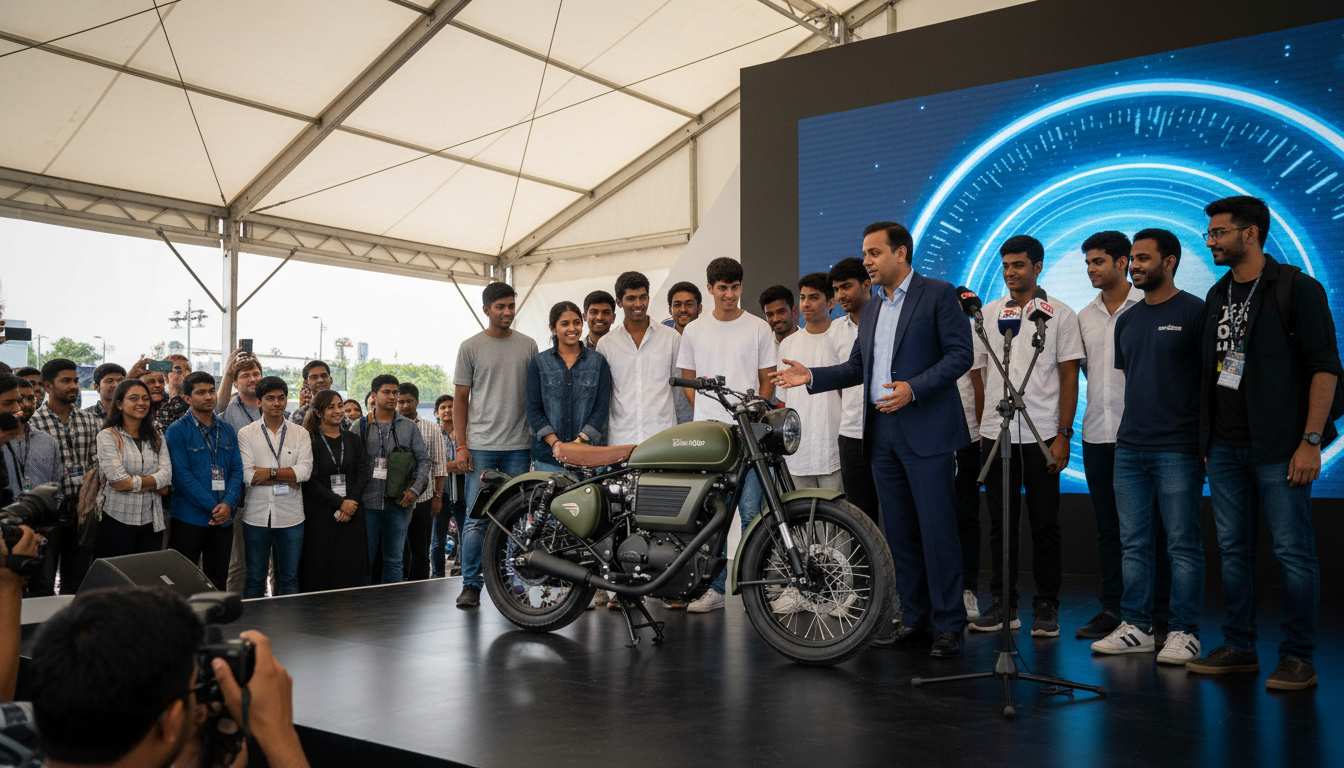
Royal Enfield Flying Flea: Lighter, Quieter Electric Motorbike Targets New Riders
Royal Enfield unveils the Flying Flea electric motorbike, a lighter, quieter entry designed to attract new riders as the company accelerates its EV transition for urban riders.
Royal Enfield’s new model, the Flying Flea, marks the manufacturer’s first production step into electric motorbikes and signals a strategic shift for the storied Indian brand. The company has presented the bike as markedly lighter and less noisy than its signature thumping models, aiming to broaden its appeal beyond long-time enthusiasts.
Flying Flea Revealed as Royal Enfield’s First Electric Model
The Flying Flea is positioned by Royal Enfield as a departure from the heavy, vibration-rich machines that have defined its lineup. Company presentations and early demonstrations emphasized ease of use, muted sound and a reduced weight that make the bike easier to handle in tight urban environments.
The move to an electric platform with the Flying Flea is intended to show a new side of the brand while retaining visual cues that connect it to Royal Enfield’s heritage. The design choices suggest the company is balancing familiarity with accessibility to entice riders who prioritize simplicity and daily practicality.
Design and Riding Experience
Royal Enfield engineers focused on a compact chassis and a simplified control layout to create a gentler learning curve for novice riders. Reduced mechanical noise and a smoother power delivery change the sensory identity of the bike, replacing the long-standing “thump” with a quieter, more predictable character.
The Flying Flea’s ergonomics indicate a clear urban intention: lower seat height, nimble steering and a riding posture tailored for short trips and congested streets. While specific technical specifications have not been universally disclosed, the overall presentation highlights usability and low-speed maneuverability over high-speed performance.
Appeal to New and Urban Riders
The Flying Flea is intentionally aimed at people who have not historically considered Royal Enfield, including younger urban commuters and first-time two‑wheel buyers. For many established Royal Enfield owners, the brand’s appeal began in childhood or through family influences; one early customer described a long association with the marque sparked by relatives who rode older Classic models.
By offering a lighter and quieter alternative, Royal Enfield hopes to capture riders who prioritize convenience, ease of ownership and the lower operating costs associated with electric vehicles. Dealers are expected to present the Flying Flea as an affordable, approachable entry point to motorcycling rather than a direct replacement for the company’s larger combustion models.
Strategic Move Toward Electrification
The Flying Flea represents a tactical experiment in Royal Enfield’s broader electrification strategy, allowing the firm to evaluate customer response and operational challenges at scale. Introducing an accessible EV is a common approach for legacy manufacturers that must reconcile heritage styling with rapidly changing regulatory and consumer preferences.
Royal Enfield’s launch of this model adds a learning platform for battery integration, charging solutions and dealer training. The company appears to be using the Flying Flea to test market acceptance and refine supply-chain and service networks before committing to a wider electric lineup.
Market Competition and Challenges
The entry of the Flying Flea intensifies competition in a market where several manufacturers are already developing electric two-wheelers tailored to city use. Success will depend on price, local charging infrastructure, and how effectively Royal Enfield translates brand loyalty into interest among buyers who value quiet, emissions-free commuting.
Beyond consumer acceptance, the firm faces operational challenges such as educating its dealer network, providing after-sales support for battery systems, and aligning production with fluctuating demand during a transitional period. Maintaining the balance between preserving Royal Enfield’s traditional identity and pursuing modern powertrains will be pivotal.
Early Customer and Dealer Response
Initial reactions from customers and dealers suggest a mix of curiosity and cautious optimism. Long-time riders may regard the Flying Flea as an experiment rather than a wholesale change, while newcomers see it as an inviting option that lowers barriers to ownership. Dealer groups are reported to be adapting sales pitches and service offerings to include battery care and urban use cases.
Royal Enfield’s rollout strategy appears to rely on localized demonstrations and short test-ride programs to showcase the Flying Flea’s usability. Those early touchpoints will be critical in converting interest into sales and in guiding subsequent product decisions.
The Flying Flea stands as Royal Enfield’s first public probe into electric motorbikes and a calculated attempt to broaden the brand’s customer base without abandoning the visual and cultural ties that made it successful. How quickly the model is adopted, and whether it leads to a broader electric portfolio, will shape the company’s position in the evolving two‑wheeler market.

