
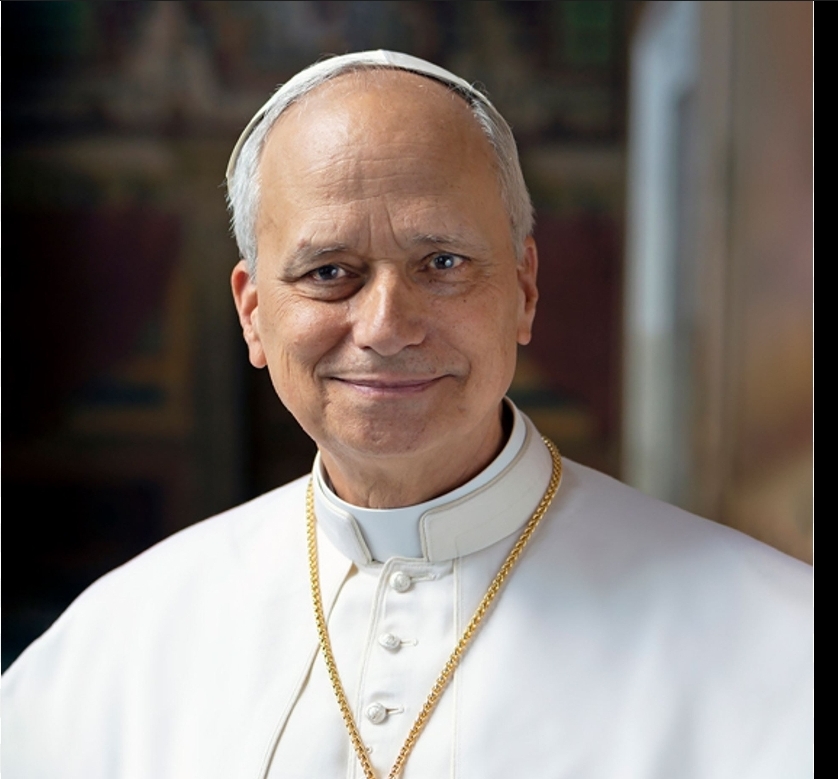
Pope Leo XIV Condemns Threats Against Iran and Urges Dialogue Over Rearmament
Pope Leo XIV condemned threats against Iran and called for dialogue instead of rearmament, urging world leaders to choose mediation over military escalation amid rising tensions.
Pope Leo XIV on Sunday issued a forceful public rebuke of recent threats toward Iran, framing the crisis as a moral as well as a political test for global leadership.
In a homily and a prayer for peace at St Peter’s Basilica, the pontiff urged an end to displays of military might and appealed for renewed commitment to dialogue and protection of innocent civilians.
The Vatican’s stance, delivered in unequivocal language, drew a sharp response from U.S. officials and underscored growing institutional tensions between the Holy See and Washington.
Pope Leo XIV Denounces Threats Against Iran
Pope Leo XIV said the use of religious language to justify military action is unacceptable and emphasized that the church cannot be enlisted to sanctify war.
He warned that calls for violence and retribution threaten civilian lives and violate the core teachings he said the church represents, urging leaders to consider the human cost of escalation.
The pontiff’s remarks included a pointed critique of those he described as invoking faith to legitimize force, signaling an explicit challenge to political figures who have framed military intervention in moral terms.
Prayer at St Peter’s Emphasizes Peace and Mediation
During a Saturday prayer service and a Sunday homily, the pope reiterated the Vatican’s long-standing preference for negotiation, mediation, and international law over unilateral military measures.
Church officials said the pontiff called for leaders to “sit at the table of dialogue and mediation” rather than planning rearmament or deadly operations, and he appealed directly for concern for innocent victims.
The liturgical setting and timing of the remarks were noted by observers as a deliberate effort to raise the moral stakes of the current diplomatic crisis.
Vatican-U.S. Exchange and Reported Warning
According to reports, a senior Pentagon official met privately with the Vatican’s U.S. envoy and issued a stark reminder of American military capabilities.
Cardinal Christophe Pierre, the Vatican nuncio in Washington, was told in the meeting that the United States “has the military power to do whatever it wants,” a remark that Vatican interlocutors interpreted as a pressure tactic.
Vatican sources described the encounter as tense and said it reinforced the pope’s determination to speak publicly about the conflict and the moral implications of threatening large-scale military force.
Pope Frames Strength as Service to Life
In his public remarks the pontiff framed moral authority and true strength in terms of protecting life and rejecting aggression, a formulation that rejects appeals to dominance as a sign of leadership.
He contrasted what he called the “delusion of omnipotence” among some political leaders with the church’s view that legitimate authority is exercised through service, dialogue, and care for the vulnerable.
Analysts say the pope’s language seeks to shift public debate away from displays of power and toward norms that prioritize human security and international cooperation.
Remarks Intended for Multiple Leaders
While the Vatican did not name specific individuals in its formal statements, observers and journalists reported that the pope’s comments were aimed at leaders advocating or threatening force, including the president of the United States and the prime minister of Israel.
The pope’s references to the “hands full of blood” and the misuse of religious rhetoric to justify violence were widely read as criticism of recent statements by political figures and allied religious voices that have supported hardline responses.
The intervention is being seen as a rare instance of the Vatican publicly confronting high-level policymakers over immediate military planning.
Regional Tensions and Calls for International Mediation
The pope’s appeal arrives amid heightened tensions in the Middle East and growing international concern about a potential broader conflict that could destabilize the region.
Diplomats and civil society groups echoed the Vatican’s call for de-escalation, urging renewed use of multilateral forums and third-party mediation to defuse the crisis.
International legal experts also stressed the importance of adhering to established norms and institutions to prevent civilian harm and preserve channels for negotiation.
Pope Leo XIV’s remarks mark a notable moment in the church’s engagement with contemporary geopolitics, as the Vatican publicly pressed for restraint from powerful states while underscoring the moral dimensions of international decision-making.
The pope’s insistence on dialogue over rearmament adds new pressure on world leaders to justify their strategies in terms of humanitarian impact and long-term peace prospects.

