
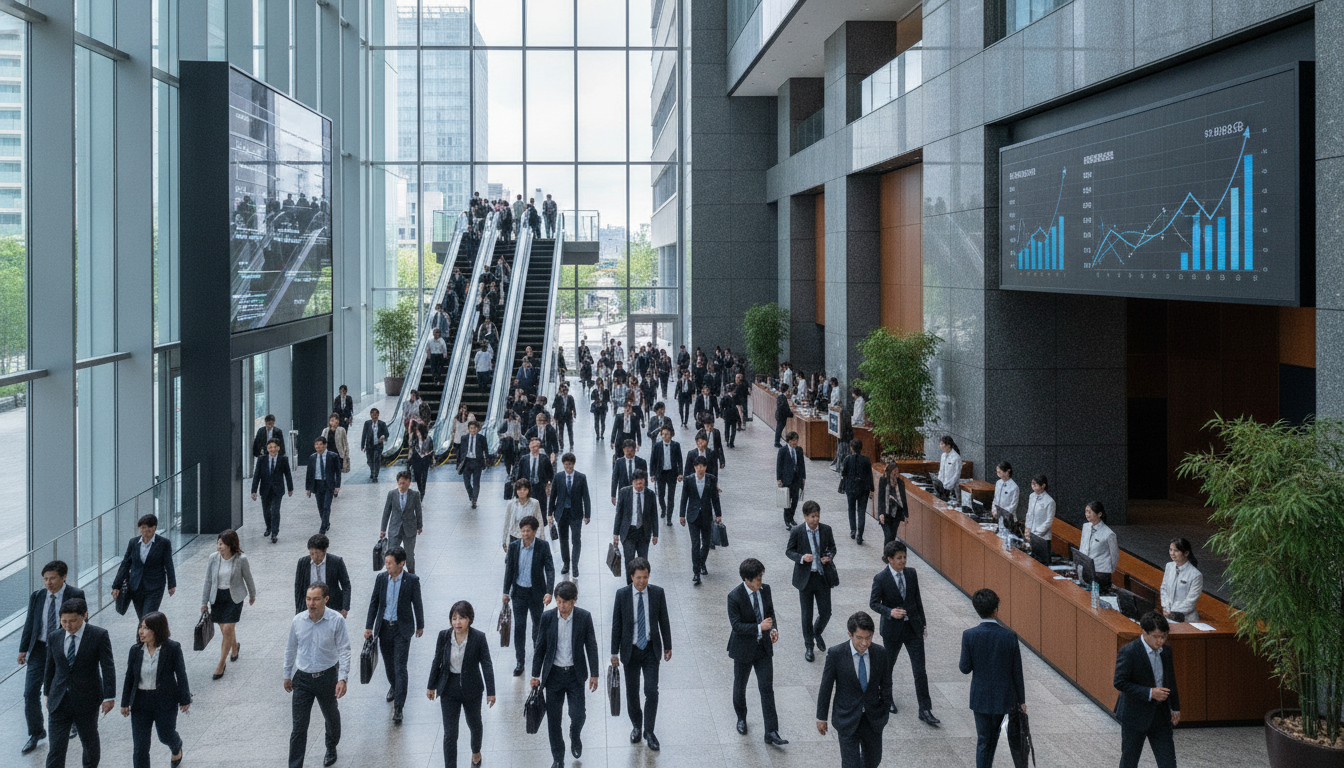
Tokyo office vacancy rate falls to 1.5% as employees return to workplaces
Tokyo office vacancy rate fell to 1.5% in Q1 2026 as companies bring staff back to the office, boosting demand and placing upward pressure on rents and investor interest.
Sharp drop in vacancy across central Tokyo
The Tokyo office vacancy rate dropped to 1.5% in the first quarter of 2026, the lowest level recorded among major global cities. This decline reflects a pronounced shift as more companies prioritize in-person collaboration and restart fuller occupancy of central business district space. Market participants say the pace of decline surprised some investors who had expected hybrid work to keep vacancy elevated for longer.
Analysts note that the 1.5% figure marks a clear post-pandemic inflection in demand for conventional office space. Landlords in prime locations report stronger leasing inquiries and reduced availability of large contiguous floors. The tightening market is reshaping leasing strategies and prompting firms to act more quickly when suitable space becomes available.
Companies cite face-to-face collaboration as a driver
Corporate decisions to increase on-site presence are being driven by the perceived value of face-to-face interaction for teamwork, onboarding and client engagement. Companies across sectors—from finance to technology—have revised internal policies to require more regular in-person attendance for core teams. Human resources leaders describe improved coordination and faster decision-making when employees spend more time together in the office.
Employers are also using office time for intensive activities such as project sprints, leadership meetings and training that are harder to replicate remotely. As a result, demand is strongest for flexible, collaborative floorplates that support meetings and team-based work. Tenants are favoring locations that combine accessibility with amenities that support short, high-value visits to the office.
Slower AI adoption tempers remote work transformation
A slower-than-expected roll-out of generative AI and related automation has reduced the urgency for fully remote workflows, according to corporate sources. Firms that had considered a radical shift to remote-first models are instead maintaining on-site headcount to preserve institutional knowledge and hands-on supervision. That slower uptake of workplace automation has kept the human element central to many operating models.
Occupiers say that while AI is being integrated into workflows, the technology has not yet substituted for key collaborative tasks that benefit from in-person interaction. As a result, organizations are investing in offices designed to complement digital tools rather than replace physical meetings. Real estate planners are reconfiguring space to blend tech-enabled meeting rooms with open collaboration zones.
Rents and investor interest respond to tighter supply
The tightening vacancy has translated into firmer leasing conditions and upward pressure on rents, especially in premium districts within central Tokyo. Landlords have more leverage in negotiations and are seeing quicker lease commitments for well-located, modern properties. Institutional investors and real estate funds are reallocating capital into Tokyo offices, viewing the market as a resilient core asset amid global uncertainty.
Development pipelines remain constrained by long lead times and planning restrictions, which limits near-term additions to supply. As a result, landlords are increasingly focused on refurbishments and amenity upgrades to capture higher rents. At the same time, flexible office operators and coworking providers are adapting by securing smaller, high-turnover sites to meet demand for occasional in-office days.
Potential headwinds for landlords and occupiers
Despite the current momentum, several risks could temper the recovery in Tokyo’s office market. Economic volatility, rising borrowing costs and shifts in corporate budgets could reduce expansion plans or prompt downsizing. Persistent adoption of hybrid models in some sectors may sustain demand for smaller, decentralized footprints rather than large single-site leases.
Demographic trends and longer-term shifts in business travel patterns also present uncertainties for downtown office demand. Landlords may need to accelerate strategies to repurpose lower-quality space into residential, logistics or mixed-use assets if demand diverges by submarket. Market observers advise firms to build flexibility into lease terms and space design to respond to changing occupancy patterns.
Investors and occupiers adapt to a new equilibrium
The current environment is prompting a reassessment of what tenants require from office space and how owners generate value. Tenants are prioritizing workplaces that facilitate collaboration, attract talent and integrate technology, while investors seek properties that can deliver stable income and potential for active management. Both groups are placing greater emphasis on sustainability and amenities as differentiators in a competitive market.
Short-term leasing activity is outpacing speculative development, creating opportunities for value-add investment and targeted refurbishments. The market’s trajectory will depend on how quickly firms translate their stated office preferences into enduring occupancy and how technological adoption reshapes workflows over the next several quarters.
Tokyo’s low vacancy rate underscores a broader recalibration in corporate real estate strategies as companies balance digital tools with the demands of human collaboration. The immediate outlook favors landlords of high-quality assets, but the longer-term picture will hinge on economic conditions, technology adoption and evolving workplace norms.

