
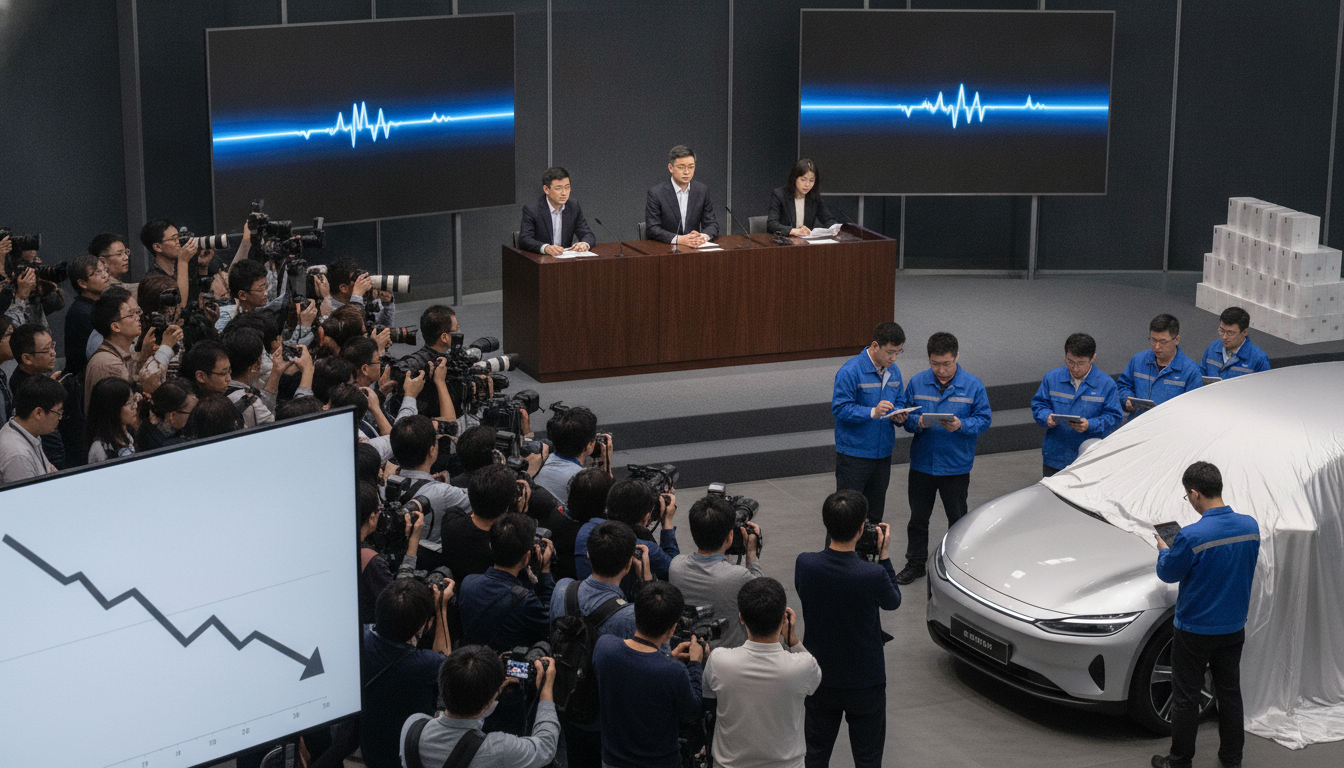
Xiaomi’s Q2 Profit Plunges as Memory Costs Bite and EV Push Strains Capital
Xiaomi Q2 adjusted net profit fell about 43% as rising memory costs and soft gadget demand squeezed handset margins, while heavy EV spending added strain.
Xiaomi reported a sharp drop in adjusted net profit for the quarter ended June 30, 2026, underscoring mounting pressure on its core smartphone business even as the group accelerates investment in electric vehicles and AI. The company said revenue reached RMB108.9 billion and adjusted net profit was RMB6.22 billion, down roughly 42.6% year‑on‑year, with management pointing to higher component costs and softer gadget demand. (ir.mi.com)
Quarterly profit plunges
In its interim results announcement, Xiaomi confirmed that second‑quarter adjusted net profit fell to RMB6.2 billion from RMB10.8 billion a year earlier, marking the steepest year‑on‑year decline in recent quarters. The company recorded RMB108.9 billion in revenue for Q2, with overall profit for the period also down, reflecting a squeeze on gross margins across segments. (ir.mi.com)
The decline was driven by a combination of rising component costs and strategic shifts in product mix that boosted average selling prices but narrowed margins. Xiaomi said operating profit and profit before tax were also lower year‑on‑year even as quarter‑on‑quarter metrics showed some recovery, illustrating a mixed near‑term picture for earnings. (ir.mi.com)
Handset margins under pressure from memory prices
Xiaomi’s smartphone unit continued to face headwinds as global memory prices rose sharply, lifting input costs for phone makers and eroding handset gross margins. The company reported smartphone revenue of RMB42.1 billion in the quarter and a smartphone gross margin of 8.5%, while noting that memory and other key component cost increases materially affected industry‑wide profitability. (ir.mi.com)
Industry observers have highlighted that stronger demand for AI and data‑centre customers has tightened consumer memory supply and pushed up prices, a dynamic that has compressed margins for OEMs selling consumer devices. Xiaomi responded by pursuing premiumisation — raising its average selling price — but that strategy only partially offset the cost shock. (marketscreener.com)
EV expansion adds capital and margin strain
Xiaomi’s push into smart electric vehicles is beginning to contribute meaningfully to revenue but remains capital‑intensive and margin‑dilutive. The company disclosed RMB24.9 billion in revenue from its smart EV, AI and new initiatives segment for the quarter and said it delivered 104,199 vehicles in the period, up more than 28% year‑on‑year. At the same time, Xiaomi allocated substantial capital expenditure to the EV and AI segments, including roughly RMB2.4 billion in capex for smart EV projects during the quarter. (ir.mi.com)
Separately, sector reports show Xiaomi’s EV arm has fluctuated between narrow operating profit and loss as deliveries scale, a pattern common among fast‑growing EV entrants that prioritize market share and production ramp‑up over short‑term margins. Analysts warn continued heavy investment will keep pressure on consolidated profitability until unit economics improve. (electrive.com)
Market reaction and shareholder moves
Hong Kong trading in Xiaomi shares reacted to the results and the margin outlook, with the stock slipping on investor concern over component costs and near‑term earnings visibility. The company has sought to shore up investor confidence by stepping up share repurchases this year and launching a HKD20 billion buyback programme, a move aimed at supporting the share price while management executes a long‑term transformation. (itiger.com)
Management emphasized that buybacks have already exceeded last year’s total repurchases and that the group remains committed to enhancing shareholder value even as it invests in foundational technologies. Investors will be watching whether buybacks and improving operating efficiency can offset the profit hit from higher input costs. (ir.mi.com)
Management stance and forward guidance
Xiaomi’s management framed the earnings drop as the result of cyclical and structural factors that the company plans to address through product mix optimisation, cost control and continued investment in AI and connected‑device ecosystems. The firm highlighted advances in its MiMo foundation models and new AI initiatives as strategic priorities that should bolster long‑term competitiveness. (ir.mi.com)
Executives signalled confidence in maintaining a top‑three global smartphone shipment ranking while expanding overseas sales, and reiterated a multi‑year commitment to R&D that will elevate AI, robotics and EV capabilities. Management also flagged that operating efficiency gains in retail and services should help margins over time, though benefits may be gradual. (ir.mi.com)
Analysts say the near‑term outlook hinges on memory price trends, smartphone shipment cycles and the pace at which Xiaomi’s EV business approaches profitability. Several broker notes stress that a sustained easing of memory costs or better EV unit economics would be the clearest catalysts for margin recovery. (pdf.dfcfw.com)
Xiaomi’s second‑quarter results paint a picture of a company in transition: its core handset franchise remains large and globally significant, but rising component costs and a capital‑hungry EV push have combined to compress near‑term profits. Investors and customers alike will be watching whether Xiaomi can translate heavy upfront investment into durable revenue streams and healthier margins in the coming quarters.

