
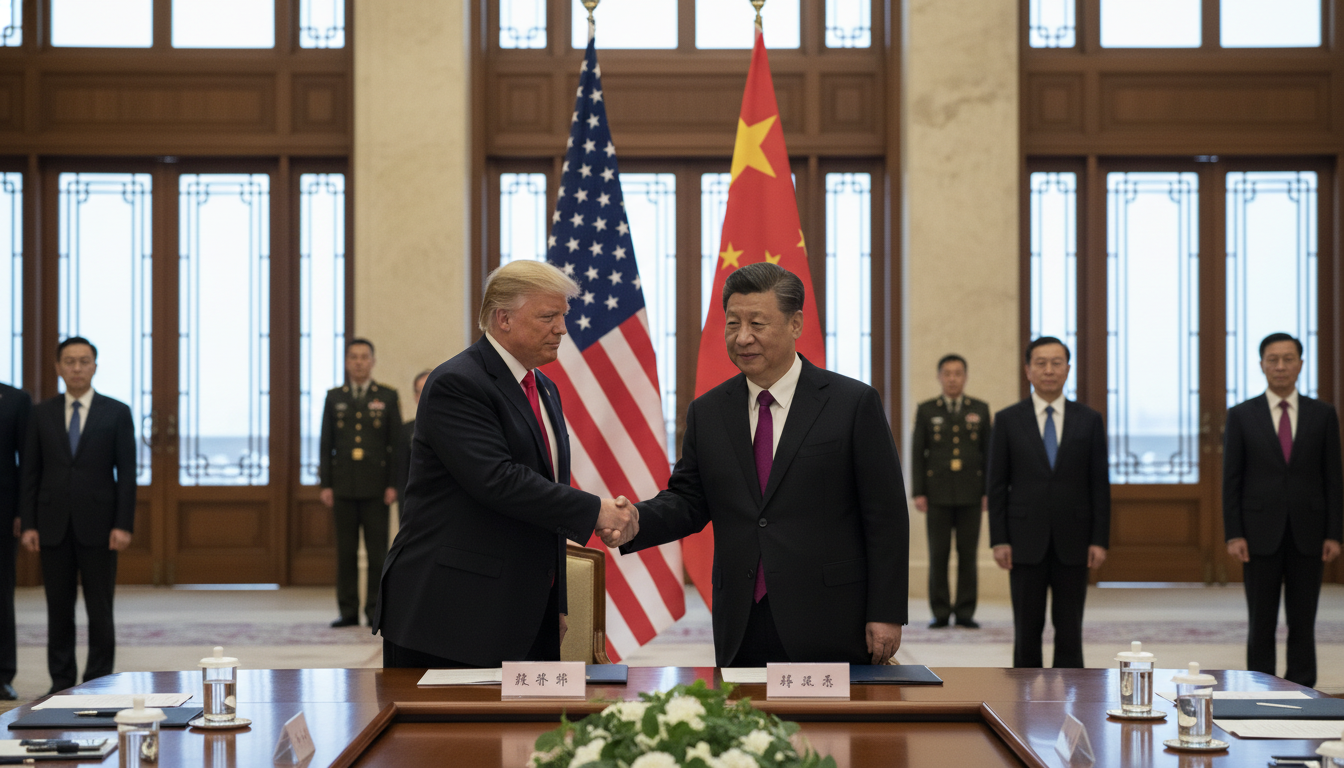
Trump and Xi meeting in Beijing begins as leaders seek to steady U.S.-China ties
Trump and Xi meeting in Beijing begins May 14, 2026, as leaders discuss trade, AI, Taiwan and Iran to stabilize U.S.-China ties ahead of U.S. midterms.
The meeting between U.S. President Donald Trump and Chinese President Xi Jinping began on the morning of May 14, 2026, in Beijing with the stated goal of managing rivalry and reducing bilateral tensions. Trump arrived late on May 13 and was greeted at the airport by senior Chinese officials, setting the stage for talks aimed at addressing trade, technology and regional security. The summit takes place against an uncertain backdrop over Iran and rising concerns over Taiwan, with both sides signaling interest in creating mechanisms to reduce friction.
Welcome Ceremony at the Great Hall of the People
President Trump and President Xi exchanged handshakes and brief pleasantries in front of the Great Hall of the People as a formal welcome ceremony opened the summit. Children waving the two nations’ flags greeted the leaders, and the interactions were described by observers as cordial though carefully scripted. Both leaders entered the hall together for the main meeting, which began in the late morning local time and was expected to continue through a series of bilateral sessions.
Trade, Tariffs and Investment Frameworks on the Table
Trade and commerce are central items on the agenda, with discussions expected to focus on tariffs, export controls and supply-chain stability. U.S. officials are pressing for the easing of restrictions that have constrained bilateral commerce, while China wants assurances against protectionist measures. Delegations from both sides are reported to be exploring institutional arrangements, including proposals for a U.S.-China trade commission and an investment committee, intended to create formal channels for dispute management and to facilitate agricultural and industrial exports.
Technology Controls, Rare Earths and AI Safety
Technology and resource controls are likely to feature prominently, including U.S. concerns over semiconductor and AI-related transfers and Chinese limits on rare-earth exports. Both capitals have expressed interest in establishing protocols for the governance of artificial intelligence and other cutting-edge technologies to mitigate risk. Industry leaders and government technical teams are expected to be involved in side discussions aimed at balancing national security priorities with commercial flows.
Security Questions: Iran, Taiwan and Regional Stability
The leaders are also addressing broader security issues, with Iran’s evolving posture cited as a complicating factor for diplomacy. Officials said that discussions would cover how the two powers can avoid unintended escalation in hotspots while maintaining strategic competition. Taiwan remains a core tension point; Beijing reiterates its red lines, and Washington underscores commitments to deterrence and regional allies, making risk-management and crisis communication mechanisms key topics during the summit.
Diplomatic Rituals and Planned Visits in Beijing
Following the formal meeting, the two leaders were scheduled to visit the historic Temple of Heaven and to attend a state banquet that evening, underscoring the ceremonial dimension of the visit. A working lunch and additional talks were set for May 15 before the U.S. delegation departs Beijing, according to itinerary outlines released by officials. Those symbolic gestures and public moments are designed to send signals of détente even as difficult negotiations continue behind closed doors.
Domestic Politics and Strategic Timing Ahead of U.S. Midterms
The timing of the Trump and Xi meeting comes as the U.S. approaches its midterm elections in November 2026, a factor Washington observers say will shape the administration’s negotiating posture. President Trump is reported to be seeking tangible concessions or cooperative steps that can be presented as economic wins for U.S. producers, including increased agricultural purchases. Chinese leaders, for their part, appear willing to discuss limited accommodations while preserving core strategic interests.
Despite the ceremonial warmth in Beijing, analysts caution that durable change will depend on formal mechanisms and verification measures agreed by both sides. The summit is likely to produce a mix of public commitments and agreements to continue technical-level talks rather than sweeping resolutions. How those measures affect supply chains, regional security, and relations with U.S. allies in Asia will become clearer as negotiators work to translate summit-level diplomacy into concrete policies.

