
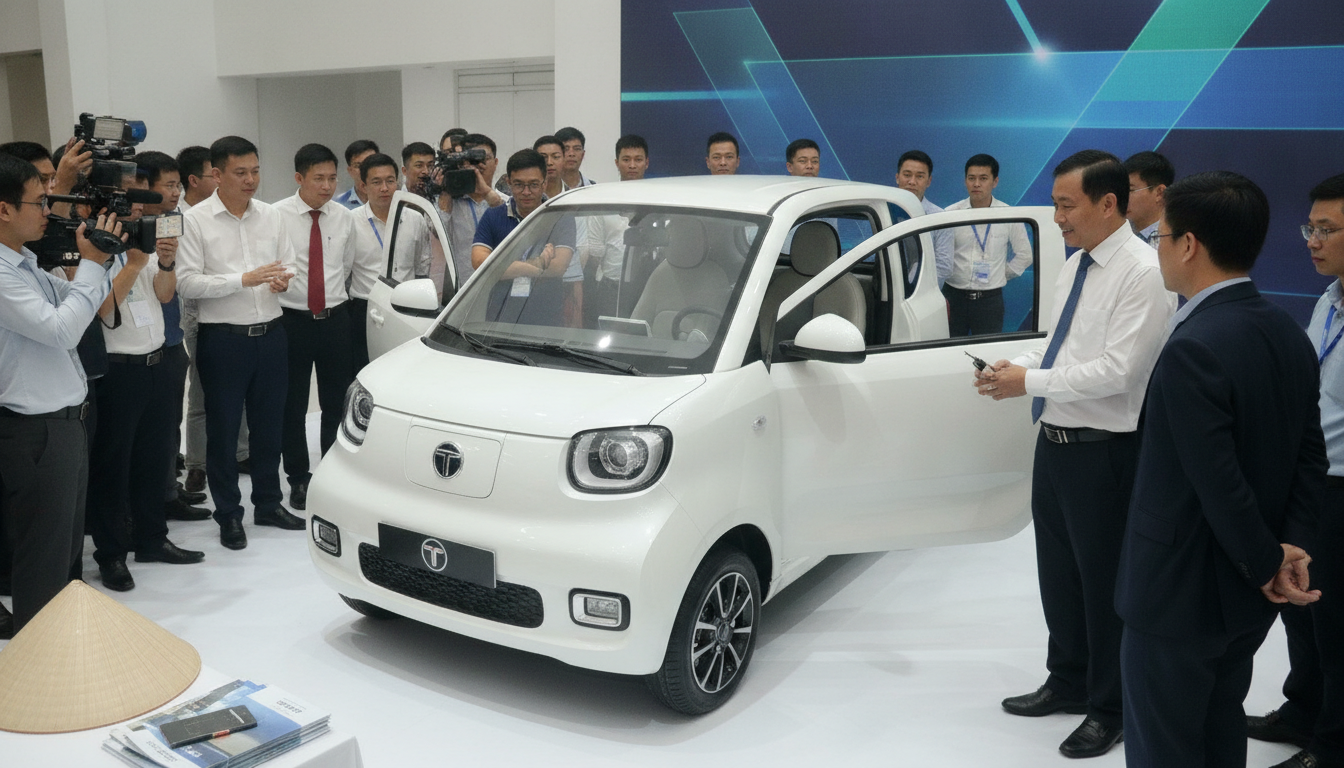
TMT Motors electric microcar Nano S05 priced at 148 million dong to target Vietnam’s cities
TMT Motors launches the two-seat Nano S05 electric microcar in Vietnam at 148 million dong ($5,650), aiming at urban commuters with pricing close to premium motorbikes.
TMT Motors introduces the Nano S05 to Vietnamese market
TMT Motors has unveiled the two-seat Nano S05 electric microcar, priced at 148 million dong ($5,650), positioning it among the most affordable electric vehicles in Vietnam. The company says the Nano S05 is designed for urban commuters and packed into a compact footprint suited to crowded city streets. The announcement signals TMT’s move from truck assembly into small electric passenger mobility, a pivot the firm hopes will capture demand for low-cost, practical EVs.
Pricing framed against premium motorbikes
TMT positions the Nano S05’s 148 million dong price as comparable to a premium motorbike in Vietnam, seeking to convert two-wheeler buyers to four-wheeled, weather-protected transport. That price point is significant in a market where motorbikes dominate daily travel, and affordability often dictates purchasing decisions. By targeting the premium end of the motorbike segment, TMT aims to offer a new alternative for consumers who want the convenience of a compact car without a large price premium.
Company background and production capacity
TMT Motors is already known in Vietnam as a truck manufacturer and assembler for global brands, including India’s Tata Motors and China’s Sinotruk. The firm has existing assembly lines and supply-chain relationships that it can leverage to produce the Nano S05 domestically. Executives and industry watchers see that background as a potential advantage in scaling production quickly and keeping costs down for a price-sensitive market.
Market opportunity in congested urban areas
Vietnam’s densely populated cities, with narrow streets and heavy traffic, present a clear use case for compact EVs that offer protection from weather and improved safety over motorbikes. The Nano S05’s two-seat layout is tailored to short urban trips, last-mile commutes and intra-city errands where parking and maneuverability are priorities. For families or paired commuters who currently rely on motorbikes, a low-cost microcar could present an appealing step up in comfort and convenience.
Unreleased technical details and consumer expectations
At launch, TMT has not disclosed comprehensive technical specifications such as battery capacity, range or charging times for the Nano S05. Prospective buyers and fleet operators will be watching for those figures, which are likely to influence uptake alongside price. Features, safety equipment, and after-sales support will also matter in convincing motorbike owners to switch, and TMT’s announcement leaves those critical purchase factors to be revealed nearer to sales start.
Infrastructure, regulation and adoption hurdles
Wider adoption of micro EVs like the Nano S05 will depend on charging infrastructure and regulatory frameworks that support small electric vehicles. Urban charging access, parking rules, and safety standards for microcars can affect buyer confidence and total cost of ownership. TMT’s success will also hinge on its ability to provide affordable servicing, parts availability and reliable warranties in a market where consumers value low operating costs.
Potential impact on Vietnam’s mobility landscape
If the Nano S05 achieves the price and practicality TMT promises, it could nudge a segment of motorbike users toward compact electric cars, altering commuting patterns and urban parking dynamics. Adoption of low-cost EVs could accelerate demand for charging solutions and prompt policymakers to refine regulations for microcars. For manufacturers, a viable microcar market would open new product strategies focused on cost-efficient, city-centric vehicles.
TMT’s Nano S05 launch underscores growing interest in small, affordable electric vehicles tailored to Southeast Asian cities, and the coming months will show whether pricing alone is enough to persuade motorbike-centric consumers to change habits.

