
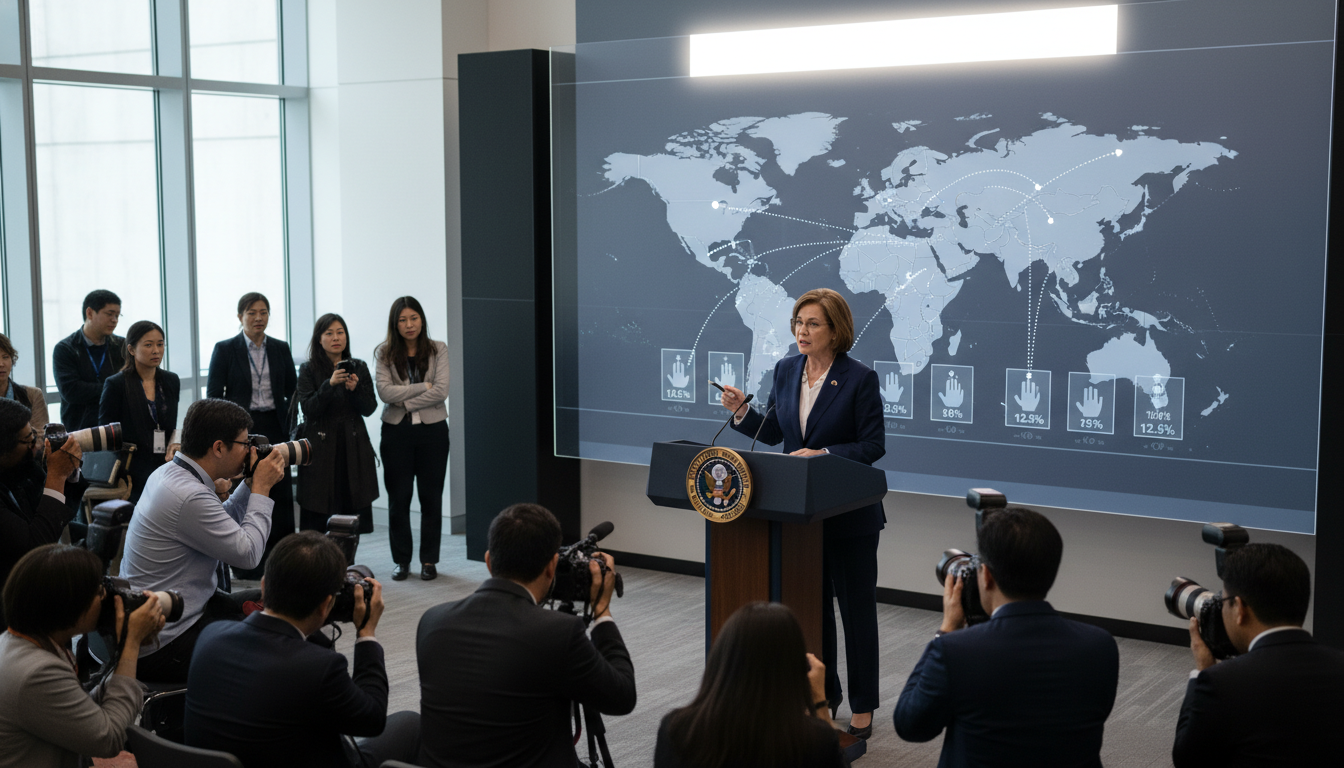
Trump tariffs: USTR recommends up to 12.5% duties on imports from 60 economies
USTR proposes tariffs up to 12.5% on imports from 60 economies, including Japan, South Korea and India, citing failures to block goods made with forced labor.
USTR proposes up to 12.5% additional tariffs
The U.S. Trade Representative has recommended imposing additional tariffs of as much as 12.5% on imports from dozens of economies after a Section 301 probe into failures to address forced labor in supply chains.
The proposal would place many major trading partners in a higher-duty category while others could face a smaller, 10% surcharge depending on their enforcement record. (apnews.com)
Countries and regions named in the recommendation
The list under review includes large Asian economies such as China, Japan, South Korea and India, alongside a wide range of other partners spanning Europe, the Americas and Southeast Asia.
USTR documents and contemporaneous reporting indicate roughly 60 economies are in scope for the forced-labor investigation, with several additional investigations focused on excess manufacturing capacity. (ustr.gov)
Legal basis and investigatory process under Section 301
The tariff proposal stems from Section 301 of the Trade Act, the statute that allows the United States to investigate foreign government practices it deems unreasonable or unfair to U.S. commerce.
USTR initiated the forced-labor probe in March and opened public dockets and hearings to gather comments and evidence before making final determinations. (ustr.gov)
USTR’s rationale: forced labor and unfair competition
USTR officials say failure by trading partners to take sufficient action against imports made with forced labor creates an uneven playing field for American workers and producers.
The agency argues that where enforcement is weak or absent, goods produced under abusive labor conditions can undercut competitors and harm U.S. industries. (apnews.com)
Potential impact on supply chains and industry
Analysts warn that a 10–12.5% add-on tariff applied broadly could raise costs across apparel, footwear, electronics assembly and other sectors reliant on complex, cross-border supply chains.
Importers and logistics firms have been urged to model tariff scenarios, review sourcing arrangements and prepare for potential entry-level duties that would alter procurement and pricing decisions. (freightfigures.com)
Timing, consultations and next procedural steps
USTR has set a public-comment period and scheduled hearings to refine the scope of affected products and partner economies, with a timeline that could lead to proposed duty actions later in the year.
Stakeholders will have opportunities to submit evidence, argue for narrower targeting or demonstrate enforcement improvements that could change a country’s tariff classification. (ustr.gov)
Implications for Japan, South Korea and India
For major Asian suppliers such as Japan, South Korea and India, inclusion in the higher-duty category would carry meaningful economic and political consequences given their deep trade ties with the United States.
Governments and exporters in the region face pressure to show they are enforcing import bans on forced-labor goods and to engage U.S. officials during the consultation window to avert or mitigate duties. (apnews.com)
The USTR action marks a significant escalation in the use of trade remedies tied to human-rights concerns, combining labour standards enforcement with tariff leverage in a way that could reshape sourcing decisions and bilateral trade dynamics in the months ahead.

