
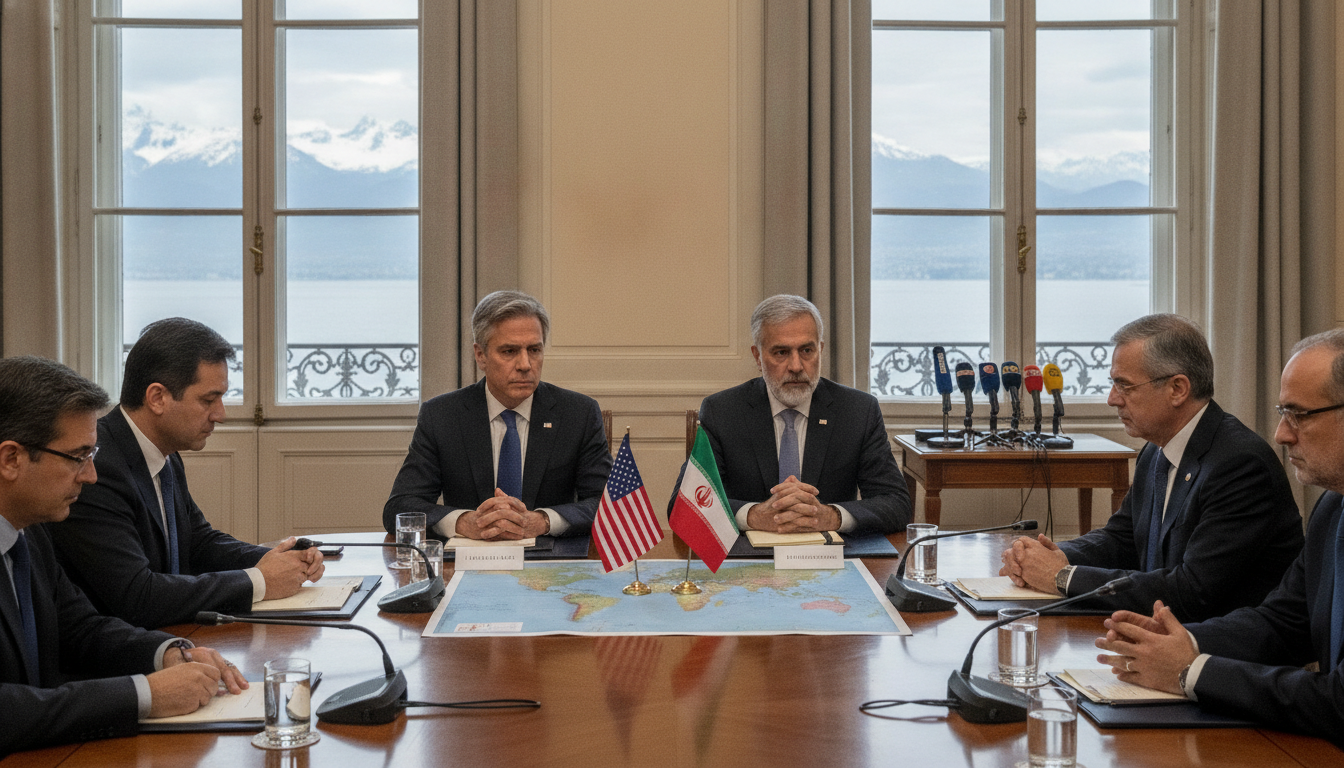
U.S.-Iran talks begin in Bürgenstock with nuclear issue at center and Lebanon tensions rising
U.S.-Iran talks opened on June 21, 2026, in Bürgenstock, Switzerland, to seek a final agreement ending regional fighting, with Iran’s nuclear program and Lebanon hostilities as central issues.
U.S.-Iran talks open in Bürgenstock on June 21
The U.S.-Iran talks began on June 21, 2026, under a 60-day timetable set by a memorandum signed on June 17, 2026, aimed at reaching a final agreement to halt regional combat. Delegations from Washington and Tehran arrived at the Bürgenstock resort in central Switzerland to begin intensive negotiations intended to address combat cessation and wider security concerns.
Officials on both sides framed the talks as a last opportunity to translate the June 17 memorandum into enforceable steps, with high-level envoys and senior ministers present to speed decision-making. The opening came as tensions spiked in other theaters, complicating the diplomatic effort.
Nuclear program is the negotiation’s primary focus
Negotiators made clear that Iran’s nuclear dossier is the single largest subject on the agenda, reflecting longstanding U.S. concerns about enrichment activities and verification mechanisms. U.S. representatives said they expect technical and political compromises to be hammered out within the 60-day window to create durable monitoring and enforcement arrangements.
Iranian officials likewise signaled readiness to discuss nuclear constraints, but they emphasized reciprocity and the lifting of certain sanctions as essential elements of any deal. Both sides face tight domestic timetables that heighten pressure to produce tangible progress quickly.
Lebanon fighting emerges as the major destabilizing factor
Although the nuclear issue dominates, the outbreak and continuation of fighting in Lebanon between the Israel Defense Forces and the Iran-aligned Hezbollah militia have become the most immediate source of instability. The June 17 memorandum included provisions calling for cessation of hostilities in Lebanon, but combat has continued there, undermining trust and complicating negotiations.
Iran’s delegation has repeatedly linked its expectations over Lebanese ceasefires to broader obligations by other parties, signaling that progress on Lebanon will be seen as part of a package rather than a side issue. Observers warn that unresolved violence in Lebanon could scuttle otherwise negotiated technical agreements.
Strait of Hormuz closure raises regional alarm ahead of talks
On June 20, 2026, Iran announced it would reimpose a closure of the Strait of Hormuz in response to Israeli strikes and regional escalation, a move that heightened urgency in Bürgenstock and underscored potential economic fallout. The Strait of Hormuz is a strategic chokepoint for global energy shipments, and its closure elevates the stakes for markets and navies monitoring the region.
Diplomats at the Swiss meeting said the announcement increased the imperative for a rapid de-escalation package that addresses both military actions and the security of commercial routes. The prospect of maritime disruption added leverage to the U.S. position in negotiations while raising the risk that tactical responses could outpace diplomatic progress.
Delegations composed of senior political and technical figures
The U.S. delegation was led by the vice president and included Special Envoy Witkoff alongside senior White House advisers and representatives closely tied to political leadership. The presence of top-level U.S. figures signaled Washington’s intent to negotiate directly and to settle contested political as well as technical matters.
Iran’s team comprised the speaker of parliament, the foreign minister and the central bank governor, reflecting Tehran’s desire to include both diplomatic and economic instruments in any agreement. Iran’s Foreign Ministry spokesman stressed that the delegation would press the United States to meet obligations included in the June 17 memorandum, particularly on issues tied to Lebanon and sanctions relief.
Regional mediators and international stakes in the balance
Pakistan and Qatar are expected to play active mediating roles, with senior leaders from both countries attending to support a framework for de-escalation. Mediators have been working since the memorandum was signed to bridge gaps, coordinate confidence-building measures and propose verification steps that neutral parties might oversee.
International actors beyond the immediate parties are watching for signs of a broader normalization that could reduce the risk of wider conflict. Energy markets, allied defense planners and humanitarian agencies all stand to be affected by the pace and content of any agreement emerging from the Bürgenstock talks.
Timetable, verification and the road ahead
The June 17 memorandum set a 60-day deadline for negotiators to convert political commitments into a concrete, enforceable accord, which places heavy emphasis on the coming weeks for tangible progress. Negotiators must balance complex verification requirements on nuclear activity with mechanisms that can credibly ensure ceasefires in Lebanon and safeguard maritime routes.
Even if negotiators reach a draft settlement within the 60-day period, implementing and verifying compliance will require further technical work and likely the involvement of international organizations. Both sides will also need to manage domestic political responses that could influence whether agreed steps are sustained.
The outcome of the U.S.-Iran talks in Bürgenstock will hinge on whether negotiators can package nuclear restraints, sanctions relief and concrete steps to end fighting in Lebanon into a single framework acceptable to capitals across the region. The next several weeks will test whether diplomacy can outpace the dynamics of military escalation and secure a pathway toward a durable halt to hostilities.

