
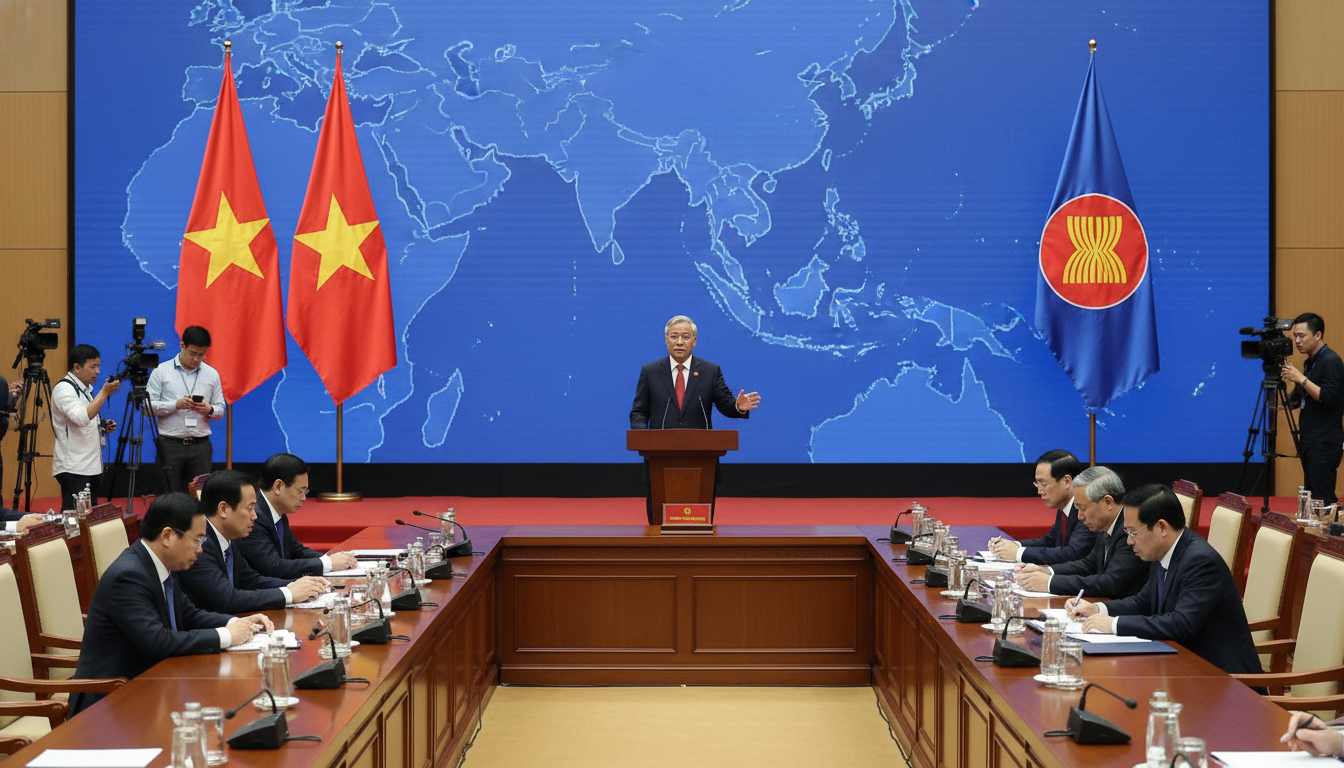
To Lam at the Shangri-La Dialogue Frames Hanoi’s Response to Rising Geopolitical Tensions
Vietnamese President To Lam used his keynote at the Shangri-La Dialogue in Singapore on May 29, 2026, to outline Hanoi’s approach to escalating regional pressures and security challenges. The speech positioned "To Lam at the Shangri-La Dialogue" as the focal point of Vietnam’s message of cautious diplomacy and strategic balancing amid U.S.-China rivalry. Delegates at Asia’s premier defense forum listened for clues about how Vietnam plans to navigate contested waters and deepen partnerships without provoking confrontation.
To Lam’s Strategic Message at Shangri-La Dialogue
To Lam, who serves as both president and Communist Party chief, framed Vietnam’s policy in measured, state-centric terms during his keynote address. He emphasized the need for stability, clear rules, and predictable behavior among major powers to prevent miscalculation and to preserve regional peace. The address underscored Hanoi’s preference for multilateral engagement and diplomatic channels as the primary means of managing disputes.
To Lam avoided hardline rhetoric while reiterating Vietnam’s insistence on sovereignty and the peaceful resolution of disagreements. His remarks signaled that Hanoi seeks to protect national interests without being drawn into exclusive security arrangements. Observers noted the speech balanced deterrence with diplomatic outreach.
Vietnam’s Security Priorities and Defense Posture
In Singapore, To Lam outlined broad security priorities that focused on safeguarding territorial integrity and modernizing defense capabilities. He highlighted the importance of building resilient armed forces and of improving interoperability with partners in non-combat areas such as maritime search-and-rescue, humanitarian assistance, and disaster relief. The intent is to strengthen national defense while keeping avenues open for cooperation.
The president’s remarks suggested an incremental approach to defence modernization, prioritizing systems and training that enhance situational awareness and domain control. Hanoi appears intent on acquiring capabilities that deter coercion but stop short of aggressive power projection, aligning capability development with a defensive doctrine.
Balancing Relations with Major Powers
A central theme of To Lam’s address was the imperative for Southeast Asian states to avoid being coerced into zero-sum alignments. He urged major powers to respect the region’s agency and abide by international law and accepted norms. The speech implicitly referenced the strategic competition between the United States and China and urged both to act responsibly.
To Lam called for tangible commitments to freedom of navigation, unimpeded commerce, and dispute-management mechanisms. While he did not single out nations for blame, his remarks were a clear appeal for predictability from all parties with interests in the region.
Diplomatic Outreach and ASEAN’s Role
The Vietnamese president used the platform to reaffirm Hanoi’s support for ASEAN centrality as the core architecture for regional dialogue. He stressed that collective frameworks and consultation are essential to preventing misunderstandings and escalating tensions. To Lam highlighted diplomacy, confidence-building measures, and expanded economic cooperation as tools for enhancing regional resilience.
His address also signaled a willingness to broaden bilateral ties beyond traditional partners, emphasizing deeper engagement with middle powers and like-minded states. That strategy mirrors Hanoi’s long-standing effort to diversify relationships and reduce strategic dependence on any single external power.
Reactions Among Delegates and Regional Capitals
Delegates at the Shangri-La Dialogue responded to To Lam’s speech with keen interest, viewing Vietnam as a pivotal middle power in Southeast Asia. Analysts at the forum described the address as a careful blend of assertiveness on sovereignty and pragmatic calls for dialogue. Regional capitals will be watching Hanoi’s next moves to see whether words translate into diplomatic initiatives or concrete security arrangements.
Several attendees noted that Vietnam’s stance reflects broader trends across the region, where smaller states seek to hedge amid intensifying great-power competition. The speech is likely to prompt follow-up discussions among defense officials and diplomats over confidence-building and crisis-avoidance measures.
Implications for Japan and Regional Security Partnerships
To Lam’s message carries particular resonance for Japan, which has deep security and economic ties across Southeast Asia. Tokyo may interpret Hanoi’s emphasis on multilateralism and capability-building as an opening for expanded cooperation in areas such as maritime safety, infrastructure, and capacity-building. Japan’s role as a provider of non-lethal assistance and technology could align with Vietnam’s modernization goals.
For ASEAN partners and U.S. allies, the address underscores the importance of calibrated engagement that strengthens deterrence while preserving diplomatic space. The speech signals opportunities for practical cooperation that bolster stability without forcing states into exclusive blocs.
Vietnam’s keynote at the Shangri-La Dialogue reflects a deliberate and nuanced policy response to an increasingly fraught security environment. By advocating for rules, diplomacy, and capability enhancement, To Lam positioned Hanoi as both a defender of national interests and a proponent of regional mechanisms to manage conflict. The coming months will test whether that balancing act can be sustained amid shifting strategic dynamics and a crowded security agenda.

