
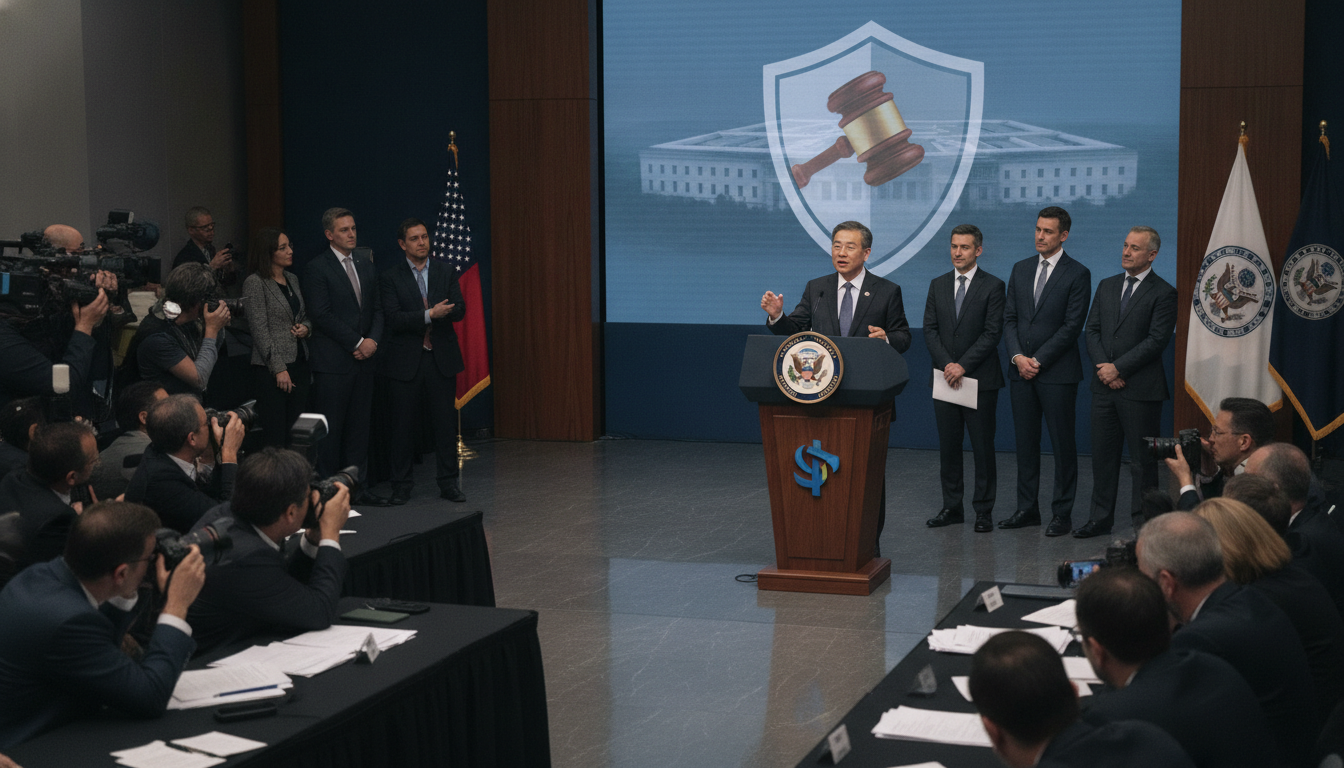
U.S. Judge Temporarily Blocks Pentagon from Enforcing ‘Chinese Military’ Label on WuXi AppTec
A federal judge has temporarily barred the U.S. Department of Defense from enforcing its designation of WuXi AppTec as a “Chinese military company,” granting the Chinese contract research and manufacturing firm relief while the court examines the legality of the listing. The judicial hold prevents immediate procurement and contracting consequences tied to the Pentagon’s Section 1260H list as the dispute moves through the U.S. District Court in Washington. (wuxiapptec.com)
Court Order and Immediate Effect
The temporary order came after WuXi AppTec filed suit seeking to nullify the Pentagon’s decision and to block any steps taken to operationalize the designation. The company argued that the label was based on inaccurate information and that it had already caused and would continue to cause irreparable reputational and commercial harm. (wuxiapptec.com)
Under the judge’s limited relief, the Department of Defense is restrained from employing the listing against WuXi in procurement or other administrative actions pending further proceedings. The order does not resolve the underlying merits but pauses the practical consequences that would have flowed from the designation. (law360.com)
Pentagon’s 1260H Designation and Its Reach
The listing of WuXi AppTec was part of an expanded Pentagon update under Section 1260H of U.S. law, a statutory mechanism created to identify companies the department regards as controlled by, affiliated with, or contributing to the People’s Liberation Army or China’s defense industrial base. The June update added dozens of firms and put a June 30 deadline on some direct-contracting prohibitions for listed entities. (apnews.com)
Although the 1260H roster by itself does not impose export controls or financial sanctions, Congress has tied the designation to procurement restrictions that can bar the Defense Department from entering into or renewing contracts with listed firms. For companies operating globally, the label carries immediate reputational costs and potential disruption to U.S. business relationships. (legalclarity.org)
WuXi’s Legal Case and Arguments
In court filings, WuXi AppTec said the Pentagon’s inclusion of the company was “erroneous and unsupported by the facts or the legal criteria” required under the statute and that the agency failed to provide a fair process. The company requested a judicial declaration that the designation be vacated and asked for injunctive relief to prevent the government from implementing restrictive measures while litigation proceeds. (wuxiapptec.com)
WuXi also stressed the commercial fallout of the listing, saying customers and partners rely on certainty for sensitive research, development and manufacturing engagements. The firm warned that sustained enforcement of the designation would harm contracts, investment and the ability of U.S. and global clients to continue collaborations. (wuxiapptec.com)
Defense Department’s Response and Legal Position
The Pentagon has defended its analysis, arguing in filings that the agency followed statutory criteria and that the company meets the definition of a covered entity due to alleged indirect ties or affiliations with state bodies involved in national defense. The department urged the court to deny injunctive relief, saying its designation serves national security objectives and is backed by classified and unclassified information. (biocentury.com)
Government lawyers also contended that courts should defer to the executive branch on national security assessments and that the public interest weighs against judicial interference with defense determinations. The litigation therefore sets up a clash over the scope of judicial review in national security and procurement contexts. (biocentury.com)
Market Reaction and Industry Implications
The listing and subsequent legal fight have already rippled through markets and the life-sciences supply chain. Shares of WuXi AppTec and related stocks moved on initial news of the Pentagon update, and analysts flagged potential disruptions for pharmaceutical and biotech partners that rely on contract development and manufacturing organizations. Industry observers say the temporary court stay reduces immediate risk but leaves clients and vendors in a period of legal and commercial uncertainty. (english.sse.com.cn)
Some analysts say the ruling could limit near-term supply disruptions because many U.S. government procurement changes require planning time, grandfathering clauses, or further regulatory steps. Nonetheless, companies in global life sciences networks now face new legal and compliance complexities as the United States tightens scrutiny of foreign suppliers. (streetaccount.com)
Next Steps in Court and Policy Stakes
With the temporary block in place, the court will consider the legal standards for vacating or upholding the Pentagon’s listing, including procedural due process claims and whether the designation rests on sufficient factual support. Both sides are expected to submit additional briefing and evidence, and the judge’s ultimate decision could be appealed. (law360.com)
Beyond this case, the outcome may influence other companies that were added to the expanded list and shape how the Pentagon documents and defends its designations. Legal experts note that a broader judicial check could force agencies to adopt clearer processes and standards when tying commercial firms to national defense concerns. (biocentury.com)
The temporary injunction gives WuXi AppTec breathing room while the courts evaluate the substantive and constitutional questions raised by the government’s labeling power. Observers say the case will be watched closely by multinational companies, U.S. contractors and policymakers navigating an increasingly fraught U.S.-China strategic and economic relationship.

