
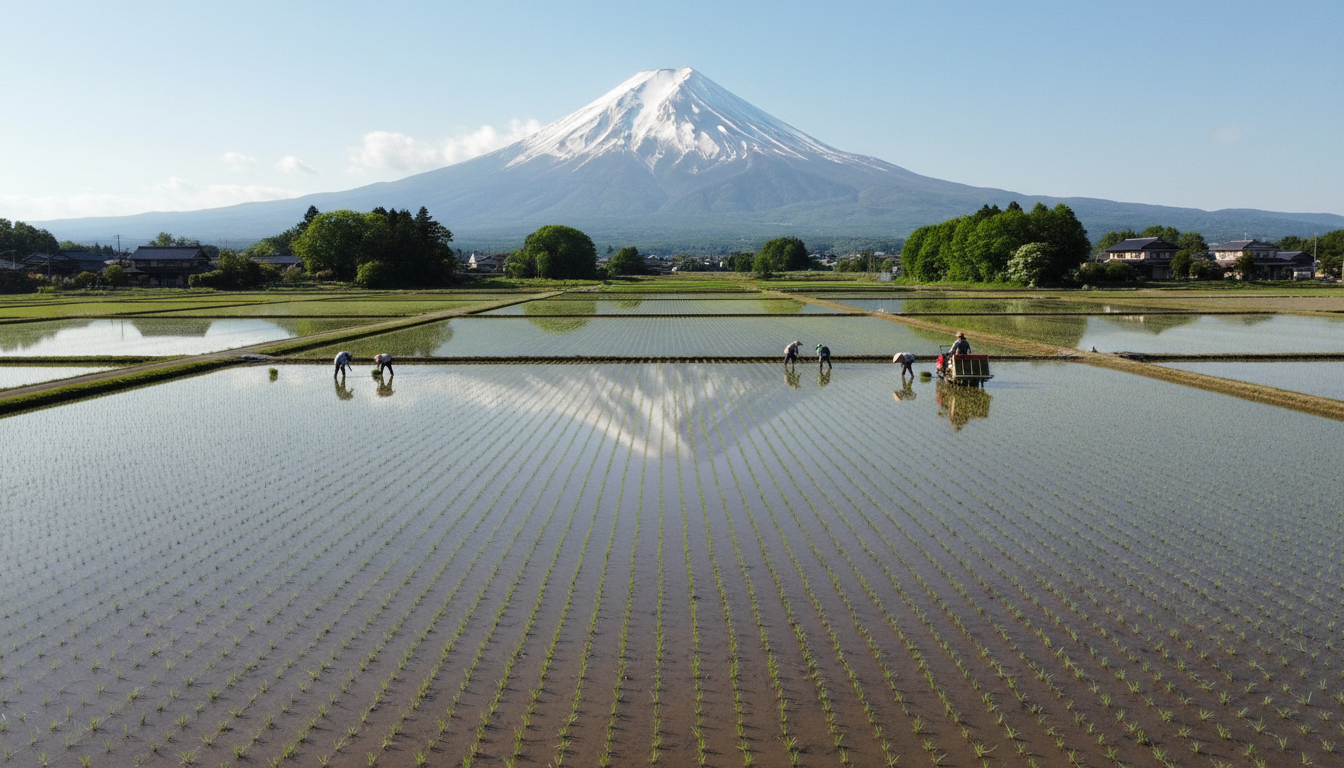
Rice planting in Yamagata peaks on Shonai Plain under reflected Mt. Chokai
Rice planting in Yamagata peaks on the Shonai Plain as farmers transplant Haenuki beneath mirrored Mt. Chokai views, balancing tradition and weather risks.
A surge of activity on the Shonai Plain marked the height of rice planting in Yamagata on Monday, as farmers moved to transplant young seedlings into flooded paddies that mirror the snow-capped slopes of Mt. Chokai. The region’s distinctive upside-down Chokai reflections — locally called sakasa Chokai — framed machines and workers across the water, signaling the start of the critical growing season. Growers are focusing on staple varieties such as Haenuki, while watching weather forecasts closely for heatwaves and typhoons that could affect yields.
Peak planting activity on the Shonai Plain
The planting season is now at its peak on the Shonai Plain, one of Japan’s most productive rice-growing areas. Mechanical transplanters moved row by row across paddies, allowing farmers to cover large tracts quickly during the narrow window suitable for transplanting. One local grower prepared to plant an 18-hectare paddy this week, reflecting the scale of operations that sustain both local markets and broader supply chains.
Reflections of Mt. Chokai draw attention
Clear weather revealed the familiar upside-down image of Mt. Chokai on flooded fields, a scene that has become emblematic of spring work in the region. Photographers and visitors occasionally pause along rural roads to capture the mirrorlike view, which also underscores the cultural ties between landscape and agriculture. The visual spectacle is a seasonal reminder of the interdependence of mountain snowmelt, irrigation resources, and rice cultivation success.
Varieties and planting choices: Haenuki leads
Farmers on the Shonai Plain are transplanting widely planted cultivars such as Haenuki, chosen for its quality and regional suitability. Decisions about variety mix and planting density are shaped by market expectations and growers’ experience with local soils and water conditions. Many producers reported following established schedules that optimize seedling age and field preparation to improve uniformity and reduce later management costs.
Weather concerns shape growers’ expectations
Despite the optimistic planting pace, concern over weather conditions is prominent among cultivators who hope for a stable growing season. Warm nights and early-season heat can stress young rice plants, while the typhoon season raises the risk of lodging and flood damage during crucial development stages. Farmers said they are monitoring forecasts closely and adjusting field practices, including drainage management and planting dates, to mitigate potential losses.
Economic importance for local communities
Rice remains a central contributor to the Shonai Plain’s rural economy, supporting farm incomes, local processing facilities and seasonal employment. Successful planting and a favorable season would bolster deliveries to cooperatives and commercial buyers, while also sustaining ancillary businesses in equipment, fertilizer and transport. Regional officials and agricultural cooperatives are offering guidance and resources to help producers manage risks and improve productivity.
Farmers working this week expressed cautious optimism: they welcomed the clear skies that revealed Mt. Chokai’s reflection and allowed rapid transplanting, but they also emphasized the vulnerability of the crop to extreme heat and storm events. Local agricultural groups stressed the importance of early monitoring and cooperation to protect young rice stands and sustain yields through harvest.

