
Yasukuni Shrine Visits Stir Tension as Prime Minister Sends Offering on Aug. 15, 2026
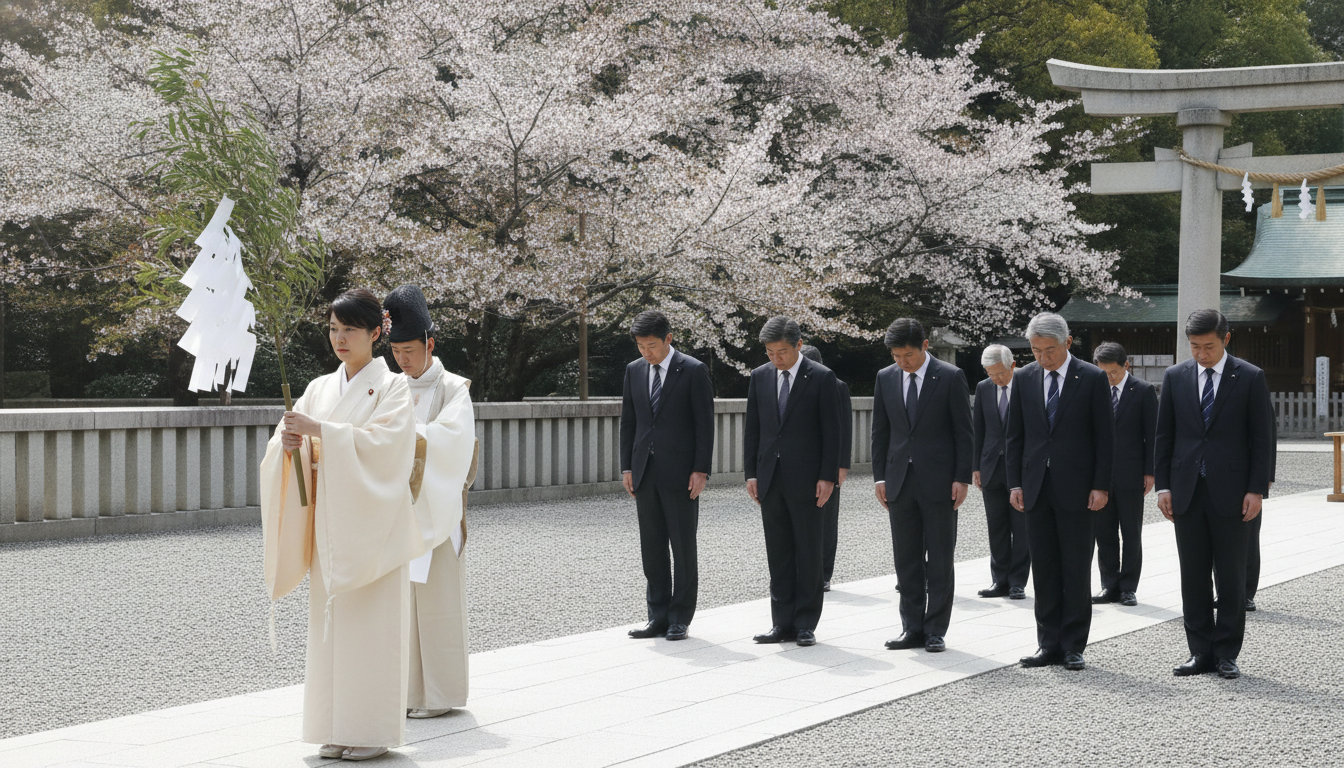
Prime Minister Sanae Takaichi sent a ritual offering to Yasukuni Shrine in Tokyo on August 15, 2026, while Defense Chief Shinjiro Koizumi visited the site, stoking tensions. The actions took place as Japan observed the 81st anniversary of the nation’s surrender in World War II. The Yasukuni Shrine, which honors Japan’s war dead including figures convicted as Class-A war criminals, remains a focal point for domestic politics and regional diplomacy.
Prime Minister’s Ritual Offering
Prime Minister Sanae Takaichi chose to mark the anniversary by sending a ritual offering rather than attending Yasukuni Shrine in person. Government officials described the offering as a customary expression of condolence to the war dead on August 15, 2026, the date that marks the end of World War II for Japan. The decision to send an offering instead of visiting directly reflects a careful balancing of domestic political expectations and international sensitivities. The move was immediately noted by both supporters, who view such acts as honoring the fallen, and critics who warn of diplomatic consequences.
Defense Chief Shinjiro Koizumi’s Visit
Defense Chief Shinjiro Koizumi attended the shrine on the same day, participating in rites that included the release of doves and other commemorative acts. Officials at the defense ministry confirmed his presence at the site during the morning ceremonies, and images from the event showed rituals observed by several visitors. Koizumi’s attendance as a serving defense minister underscores the continuing overlap between state figures and visits to Yasukuni. The presence of a high-ranking cabinet member at the shrine is likely to draw particular attention from neighboring countries and domestic opponents.
Contested Enshrinement and Historical Sensitivities
Yasukuni Shrine honors more than 2.4 million of Japan’s war dead and includes the names of several individuals convicted as Class-A war criminals after World War II. That enshrinement has made the site one of the most contentious symbols of Japan’s wartime legacy, provoking protests and diplomatic protests across East Asia for decades. Critics argue that official commemoration at Yasukuni can be seen as glossing over wartime aggression, while supporters maintain it is a place to mourn those lost in conflict. The shrine’s status continues to complicate efforts at historical reconciliation with countries that suffered under Japanese imperial rule.
Regional Diplomatic Repercussions
Visits or offerings by senior Japanese officials to Yasukuni Shrine typically prompt reactions from China and South Korea, where memories of wartime occupation and atrocities remain potent. Though no formal statements were issued immediately, diplomatic sources and analysts said such acts often lead to expressions of regret, summons of ambassadors, or public criticism in those capitals. The timing of the offering and visit on August 15, 2026 — the 81st anniversary of Japan’s surrender on August 15, 1945 — is likely to intensify scrutiny of Tokyo’s messaging on historical issues. Regional diplomats repeatedly urge restraint, noting that symbolic actions can quickly affect broader security and economic ties.
Ceremonies and Public Observance in Tokyo
Local ceremonies at Yasukuni on August 15 included the release of doves and offerings presented by visitors marking the annual memorial day for the war dead. Families of the deceased, veterans’ groups and other attendees observed traditional rites throughout the morning at the shrine complex in central Tokyo. The day is also observed nationwide with minutes of silence and memorial services across municipal halls and religious institutions. For many Japanese citizens, the anniversary remains a solemn moment of remembrance distinct from political debate, while for others it is inevitably intertwined with questions of history and responsibility.
Domestic Political Responses and Parliamentary Debate
Within Japan, reactions to the prime minister’s offering and the defense chief’s visit were split along political lines, with ruling party figures generally framing the acts as respectful commemorations. Opposition lawmakers criticized the gestures as unnecessarily provocative and argued they risk further straining relations with neighboring states at a sensitive juncture. Analysts noted that the events may sharpen debate in the Diet over how government leaders should mark wartime anniversaries amid ongoing discussions about national identity and security. Calls for clearer guidelines on official conduct regarding Yasukuni have resurfaced in past years and are likely to be renewed following the August 15 observances.
The decisions by Prime Minister Takaichi and Defense Chief Koizumi to mark the 81st anniversary at Yasukuni in different forms reflect the enduring complexity of wartime memory in Japan. As officials, diplomats and citizens registered the commemorations on August 15, 2026, the shrine once again became a litmus test for how Japan navigates the competing demands of domestic politics and regional diplomacy.

