
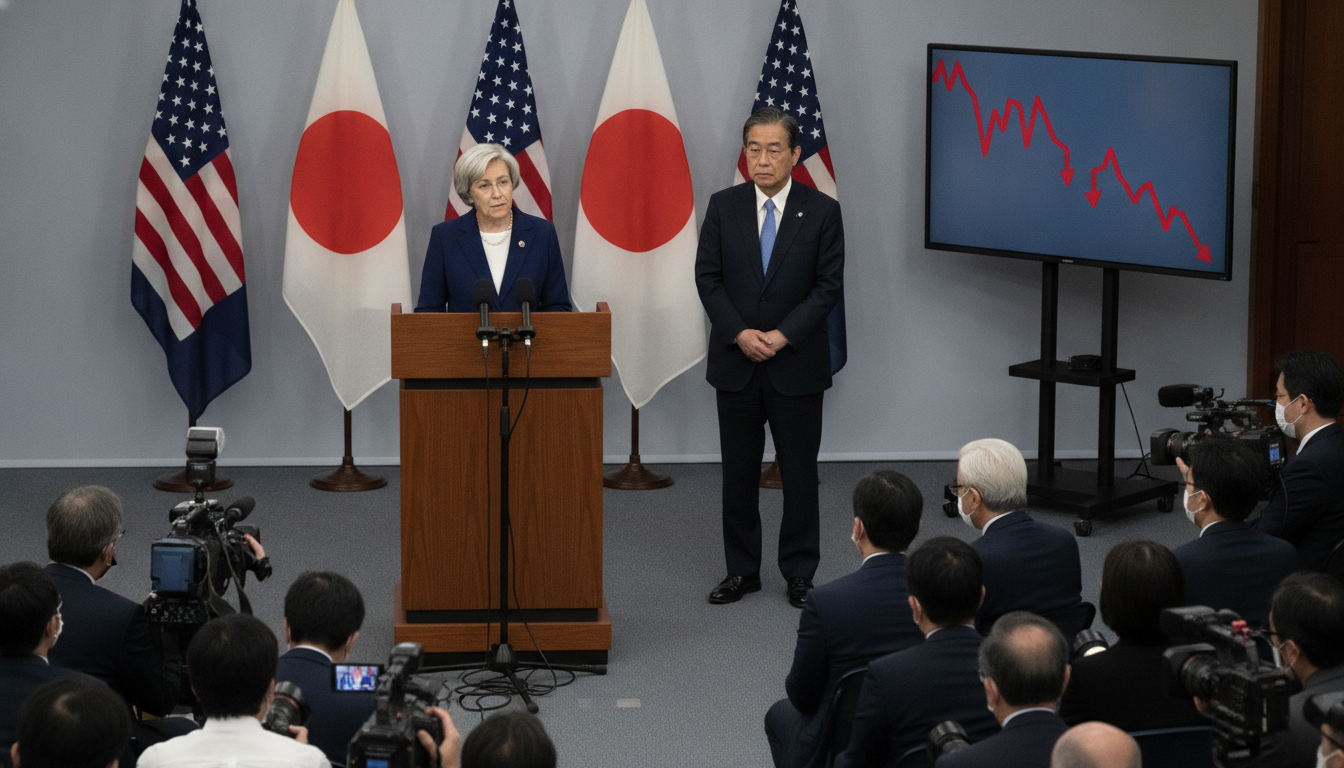
U.S.-Japan Action Halts Yen Slide but Raises Questions for Asian Currencies
A coordinated U.S.-Japan move to stabilize the yen arrested a sharp yen slide, but regional currency weakness and spillovers to the yuan remain key concerns for global markets.
Immediate market response to U.S.-Japan intervention
When Washington and Tokyo stepped in this month to address the yen slide, markets reacted promptly with a marked reduction in intraday volatility. The coordinated signals from the U.S. Treasury and Japanese authorities helped push the yen off its weakest levels against the dollar, calming traders who had been betting on further depreciation.
Liquidity in Asian FX markets improved as short-term speculative flows unwound and implied volatility for the yen fell. Global equity and bond markets took the move as a signal that major economies were prepared to coordinate to limit disruptive currency shifts.
Factors behind the broader Asian currency weakness
The yen slide occurred alongside a regional pattern of weakening in other Asian currencies, driven in part by a sustained rise in the U.S. dollar. Diverging monetary policies, where the U.S. maintained comparatively higher real yields, created persistent incentive for capital to flow into dollar assets.
External pressures also played a role, including slower global growth expectations and concerns about trade. Investor risk appetite has been uneven this year, amplifying outflows from economies perceived as more vulnerable to external shocks.
Why the United States backed Japan this month
U.S. support for Japan’s efforts reflected a concern that a disorderly decline in the yen could have global spillovers. Treasury officials signaled that currency stability is integral to broader financial stability, and that large, abrupt moves merit international attention.
The involvement of U.S. officials, including public comments by senior Treasury figures, underscored the interconnectedness of the two economies and the potential for rapid exchange-rate shifts to transmission across markets. The intervention aimed to buy time for domestic policy adjustments and to deter speculative positioning.
Policy tools and limitations for Japan and partners
While direct intervention can arrest sharp moves in the near term, its efficacy is constrained without supportive domestic measures. The Bank of Japan faces trade-offs between currency stabilization and its domestic objectives, including inflation targeting and financial system health.
Fiscal authorities can complement FX operations, but sustained support typically requires clear communication and, in some cases, coordination with other central banks. Market participants caution that interventions are most effective when they alter the economic calculus behind capital flows rather than serving as a recurrent backstop.
Implications for China’s yuan and regional spillovers
Markets are watching closely for knock-on effects on the yuan as the yen stabilizes. A stronger dollar trend or aggressive intervention in one currency can shift investor focus to other Asian currencies, increasing pressure on China to manage capital flows and exchange-rate volatility.
Chinese policymakers have historically relied on a mix of reserves, regulatory measures and targeted liquidity operations to smooth moves in the yuan. Any sustained dollar strength could prompt Beijing to recalibrate its stance, with potential consequences for trade competitiveness and regional financial conditions.
Market outlook and investor positioning after the intervention
In the wake of the coordinated action, traders have trimmed some of the most aggressive bearish positions on the yen, but uncertainty remains about medium-term direction. Analysts expect episodes of renewed volatility if global growth indicators or U.S. interest-rate expectations shift materially.
Investors are reassessing hedging strategies and the pricing of cross-currency risk, particularly in emerging Asian markets where foreign-currency debt and portfolio flows amplify sensitivity to exchange-rate swings. The intervention bought breathing room, but durable stability will likely depend on macroeconomic fundamentals and policy clarity.
The coordinated U.S.-Japan step this month halted an acute yen slide and briefly reduced stress across Asian currency markets, yet the episode highlights deeper structural pressures. With interest-rate differentials, growth uncertainty and capital-flow dynamics still in play, authorities face the challenge of balancing immediate stabilization with longer-term policy adjustments to prevent future disruptions.

