
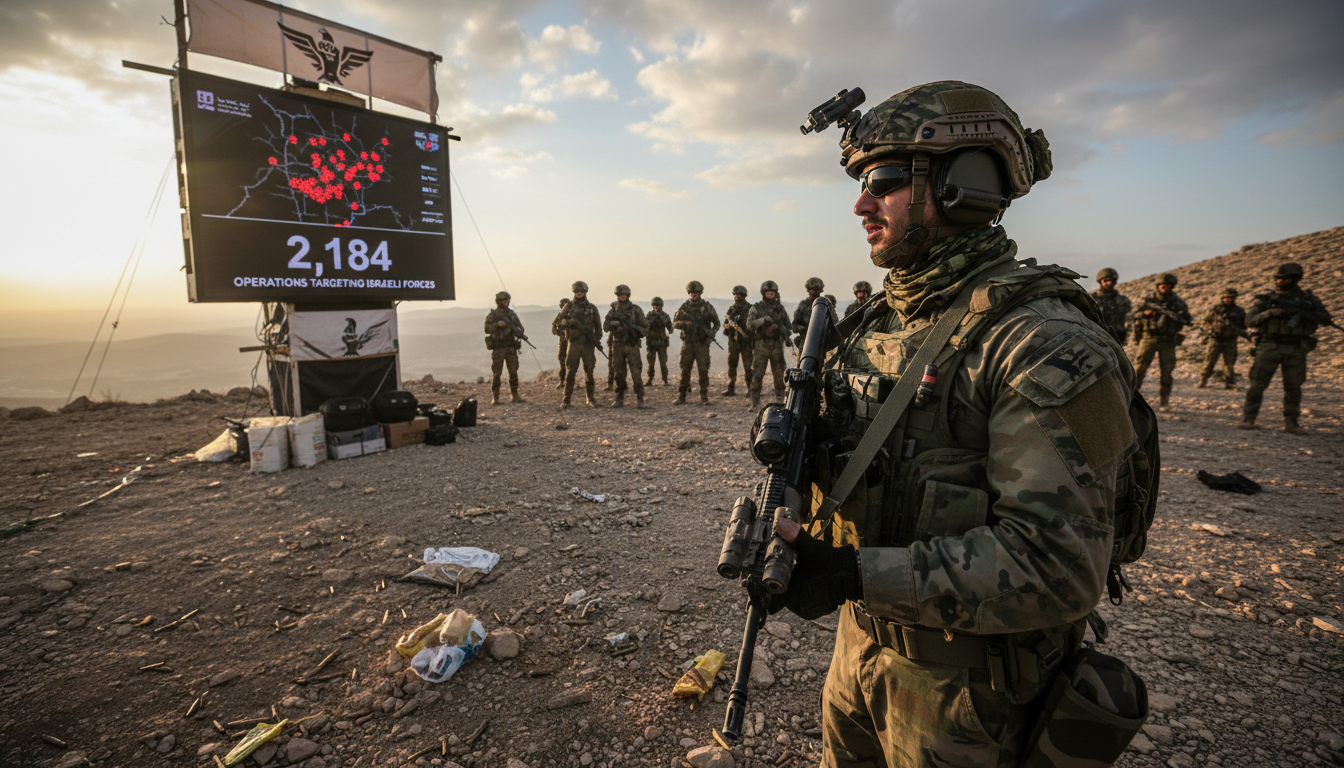
Hezbollah Military Operations: Group Reports 2,184 Actions from March 2 to April 16
Hezbollah said on Telegram it carried out 2,184 military operations from March 2 to April 16, warning Israel and reaffirming fighters’ readiness and covenant.
Hezbollah announced on Telegram that its forces conducted 2,184 military operations between March 2 and April 16, describing a campaign of strikes and confrontations along the Israel-Lebanon frontier.
The statement said the group had engaged Israeli forces inside Lebanese territory and struck targets inside areas it described as occupied Palestine.
The message stressed vigilance toward what it called enemy treachery and reiterated a long-standing commitment to its covenant and continued readiness to act.
Hezbollah Reports 2,184 Operations Between March 2 and April 16
Hezbollah provided a detailed tally of actions in its Telegram release, specifying the March 2 to April 16 timeframe for the reported operations.
The group characterized the activities as a mixture of confrontational engagements and targeted strikes against sites it identified as military positions, bases and barracks.
The bulletin framed the operations as responses to ongoing tensions along the border, and framed their tempo as sustained rather than episodic.
Officials did not provide an independent verification of each claimed action and offered limited detail on the weapons or tactics used in the reported engagements.
Nature of Engagements Along Israel-Lebanon Border
According to the statement, many of the reported operations involved direct confrontations with Israeli forces on Lebanese soil.
Hezbollah also said it targeted locations inside territory it described as occupied Palestine, a reference to Israeli-held areas, without specifying coordinates or unit-level details.
Analysts note that such operations can range from small-arms fire and rocket strikes to more complex, coordinated actions, though the statement did not enumerate those categories.
The lack of corroborating military releases or third-party verification makes it difficult to independently confirm the scale and effects of each incident described.
Group Signals Continued Readiness and Cautions
The Telegram release warned of what Hezbollah called enemy treachery and breaches of promise, signaling a wary posture toward future dealings.
It also said fighters’ hands would remain “on the trigger,” language intended to convey a sustained state of combat readiness.
That rhetoric underlines the organization’s intent to maintain pressure and deter perceived threats along the frontier.
Observers say the emphasis on readiness and covenantary commitment aims both to reassure supporters and to warn adversaries against escalatory moves.
Impact on Local Security and Civil Areas
Sustained exchanges and the reported frequency of operations raise concerns for communities near the border, which have faced periodic evacuations and disruptions during past flare-ups.
Local authorities and residents may confront restrictions on movement, heightened security measures and intermittent infrastructure damage when cross-border incidents occur.
Humanitarian and municipal agencies typically urge contingency planning and public alerts in affected districts, although the Telegram statement did not address civilian impacts.
The potential for miscalculation in crowded border areas increases the risk that military actions could produce broader security and humanitarian consequences.
Regional and International Reactions
Reactions from regional capitals and international actors typically emphasize de-escalation and the protection of civilians in statements following such announcements.
Diplomatic channels often work to prevent spillover, urging restraint from all parties involved in border confrontations.
Western and regional governments may call for independent monitoring or engage United Nations or other intermediaries to reduce tensions.
However, the effectiveness of such measures depends on both sides’ willingness to alter behavior and on the credibility of monitoring mechanisms on the ground.
Hezbollah’s public tally and its assertive language are likely to affect calculations in Beirut, Jerusalem and allied capitals, complicating diplomatic efforts to stabilize the frontier.
Military planners on all sides will monitor subsequent statements and movements for indications of escalation or de-escalation.
The reported operations underscore the fragility of the Israel-Lebanon frontier and the continuing role of non-state armed groups in shaping security dynamics.
Until independent verification is available and parties engage in clear confidence-building measures, the pattern of intermittent engagements and strong rhetoric is likely to persist.

