
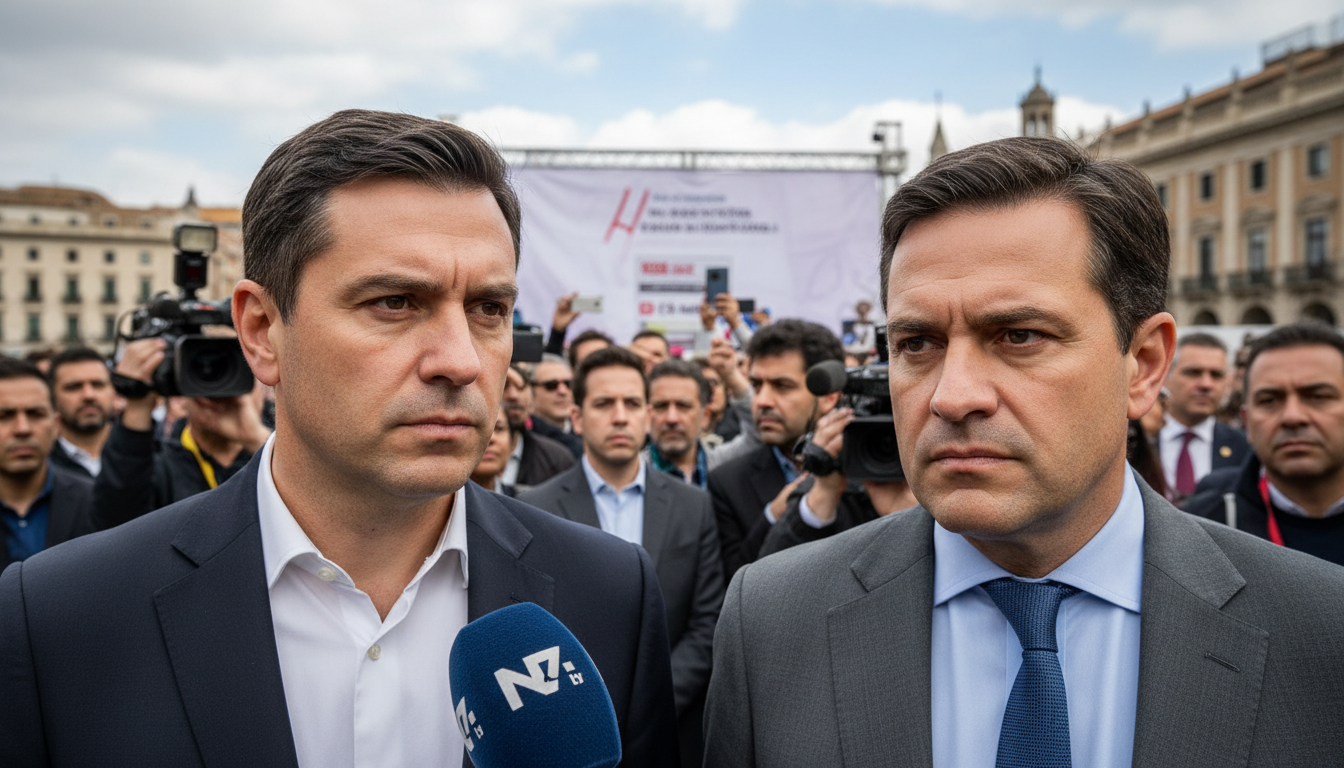
Palestine Football Association visa denials bar PFA president from FIFA Congress in Vancouver
Palestine Football Association visa denials prevent PFA leaders from attending FIFA Congress in Vancouver on April 30, 2026; PFA urges FIFA to press Canada.
The Palestine Football Association visa refusals have left PFA president Jibril Rajoub and two senior officials unable to travel to Vancouver to attend the FIFA Congress scheduled for April 30, 2026. The association says the officials were denied Canadian entry despite prior notifications of their intended participation at the governing body’s annual meeting. Canada’s immigration authorities declined to comment on individual cases, prompting the PFA to request direct intervention from FIFA.
Visa refusals block PFA delegation
Immigration, Refugees and Citizenship Canada confirmed that visa applications are assessed on a case-by-case basis and declined to disclose reasons for particular decisions. The PFA has described the denials as a de facto exclusion from a major international forum where they intended to raise urgent concerns. The delegation had planned to press FIFA on the hosting of matches in the West Bank and related governance questions.
The timing of the refusals has intensified scrutiny because the FIFA Congress occurs in a World Cup host nation, with Canada co-hosting the 2026 tournament. PFA officials say the decision prevents them from presenting evidence and making formal representations in person, a development that the association says undermines its ability to engage with member associations.
PFA asks FIFA to intervene
Following the visa decisions, the PFA formally urged FIFA to intervene with Canadian authorities to secure travel permission for its representatives. The association argues that FIFA has a responsibility to ensure equal access to its meetings for all member federations. The PFA also requested that FIFA provide protections or alternative arrangements so its concerns can be heard at the April 30 session.
FIFA has not publicly committed to a specific remedy in response to the PFA plea, and the association is now navigating diplomatic and procedural channels to seek reversal or accommodation. The outcome will be watched closely by other member associations and advocacy groups monitoring access and participation at international sports governance events.
FIFA’s position on West Bank matches
Earlier this year FIFA concluded an investigation into the status of matches played in the West Bank and said the final legal status of the territory remains unresolved under public international law. FIFA subsequently stated it would take no action based on its legal assessment, and that position has been cited by critics as insufficient and partial. The PFA had intended to use the Congress platform to press FIFA to reconsider its stance and address what it calls the practical consequences of matches being held on occupied land.
The debate hinges on both legal interpretation and the practical governance of football competitions, including which associations are permitted to host clubs and matches. PFA representatives planned to present documentation and appeals aimed at altering FIFA’s approach to competitions involving Israeli clubs and venues in disputed territory.
ICC complaint increases pressure on FIFA leadership
The visa denials arrive against a backdrop of wider legal confrontations involving FIFA leadership. In February a consortium of advocacy groups submitted a 120-page complaint to the International Criminal Court alleging that FIFA and UEFA have enabled violations by permitting Israeli clubs to play in leagues and on land seized in the West Bank. The complaint names FIFA president Gianni Infantino and UEFA president Aleksander Ceferin among the individuals referenced by the filing.
Those campaigning for accountability argue that FIFA’s operational choices have human-rights implications that merit judicial and governance scrutiny. FIFA and UEFA have rejected allegations of complicity in international crimes, and both organizations maintain they operate within the framework of sporting governance while seeking to respect applicable law.
Broader visa and security context ahead of World Cup 2026
The incident also highlights wider tensions over visa policies and border security in North America ahead of the 2026 World Cup, which will be hosted by the United States, Canada and Mexico. Observers have noted tighter immigration screening in recent years, including enhanced vetting of social media and other digital footprints. Rights groups and sports organizations have warned that stricter entry policies and enforcement actions could impede global participation in sporting events.
In the United States, past enforcement actions at football events and other gatherings have drawn criticism from human-rights advocates who say aggressive immigration enforcement risks undermining inclusivity. Canadian authorities have pointed to national immigration rules and security processes as the basis for decisions and do not typically disclose operational details for individual cases.
Potential diplomatic and procedural options
With the Congress date approaching, options for resolving the PFA’s exclusion include diplomatic appeals, emergency visa reviews, remote participation arrangements at the FIFA Congress, or adjourned consideration of any motions the PFA intended to file. FIFA can offer virtual platforms for oral input, but the PFA has emphasized the symbolic and practical importance of in-person representation. Member associations, particularly those sympathetic to the PFA’s claims, may seek procedural measures to ensure the matter is recorded and debated.
The incident underscores how visa policies and international sports governance intersect, creating practical obstacles for federations seeking to raise politically sensitive issues. Whether FIFA will take steps to facilitate the PFA’s engagement in Vancouver remains a central question for the coming days.
The PFA now faces a narrow window to pursue remedies before April 30, 2026, while the episode renews scrutiny of how sporting bodies, national governments and rights organizations navigate access to international forums.

