
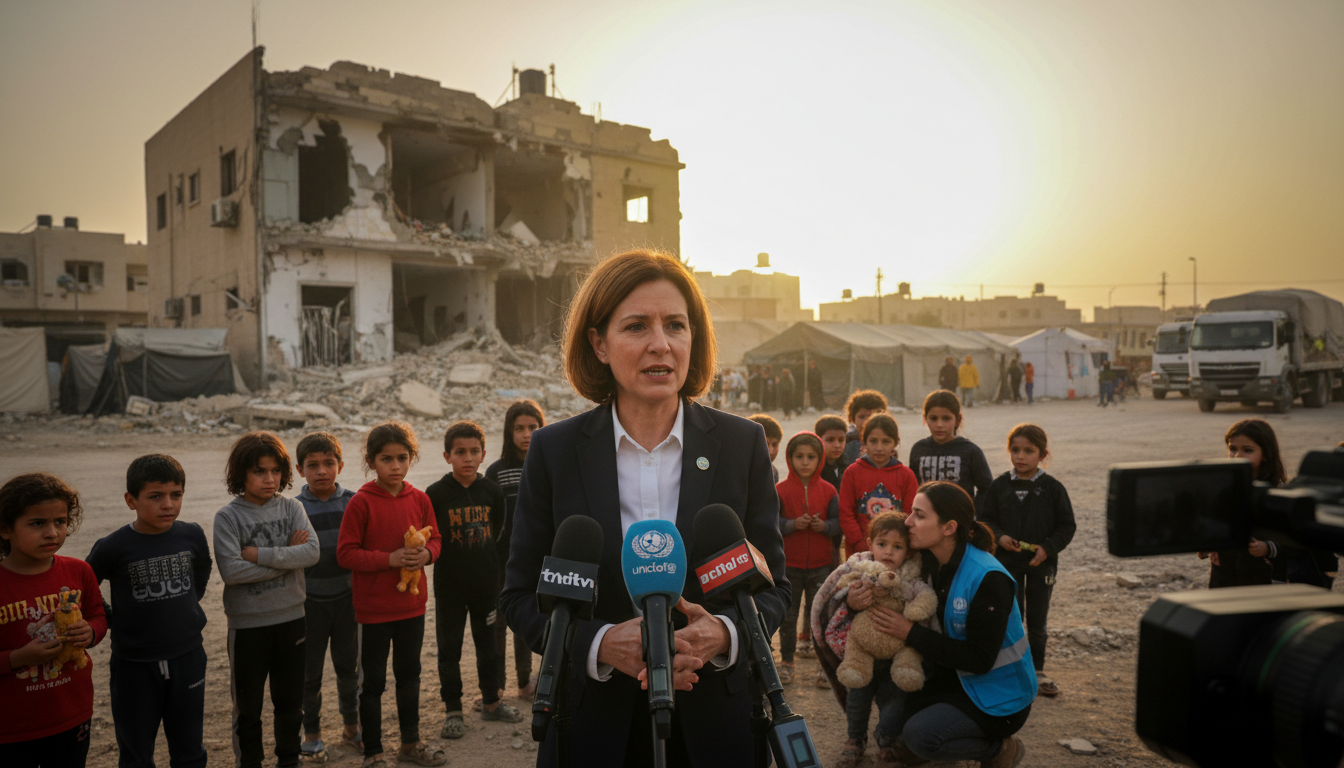
UNICEF welcomes ceasefire in Lebanon, urging protection for children after 46 days of fighting
UNICEF welcomes the ceasefire in Lebanon, urging sustained protection and humanitarian access after 46 days of fighting that left hundreds of children dead, injured and displaced.
UNICEF welcomes ceasefire and issues urgent warning
UNICEF said on X on April 17, 2026, that the announcement of a ceasefire in Lebanon offers a critical opportunity to protect children and families who have endured “immense suffering.” The agency urged that “This ceasefire must hold – and must be fully respected,” calling on parties to allow safe passage for civilians and aid. UNICEF warned that a temporary pause is not enough and stressed the need for durable protection and recovery for children affected by the conflict.
Children’s toll over 46 days
UNICEF reported that over the past 46 days at least 172 children have been killed and 661 injured in Lebanon. The agency also said more than 415,000 children have been displaced inside the country during the same period, reflecting widespread disruption to homes and communities. Those figures, provided by UNICEF Lebanon, illustrate the scale of harm to the youngest and most vulnerable as hostilities continued prior to the ceasefire.
Humanitarian access and urgent needs
Relief agencies say immediate priorities include restoring safe corridors for aid, delivering health and nutrition services, and ensuring clean water and shelter for displaced families. UNICEF emphasized that children “need more than a pause in hostilities” and called for rapid expansion of humanitarian deliveries to meet urgent needs. Officials have urged donors and humanitarian partners to mobilize resources quickly to prevent further deterioration of child health and protection outcomes.
Impact on essential services and education
The fighting disrupted schools, health clinics and other basic services, leaving many children without routine vaccinations, psychosocial support or schooling. Humanitarian assessments indicate that prolonged displacement and damage to infrastructure risk long-term setbacks for child welfare and learning. UNICEF and partner organizations are prioritizing temporary learning spaces and mental health support while coordinating repairs to essential facilities.
Protection concerns and civilian safety
Protection actors are raising alarms about unexploded ordnance, family separation, and the risk of recruitment or exploitation in displacement settings. UNICEF highlighted the particular vulnerabilities of children in overcrowded shelters and informal settlements where supervision and services can be limited. The agency urged all parties to take concrete steps to protect civilians and to facilitate reunification and specialized services for unaccompanied and separated children.
International response and monitoring the ceasefire
Diplomats and aid groups welcomed the ceasefire, but many stressed that its durability will depend on monitoring and sustained pressure from international actors. Humanitarian organizations are preparing to assess front-line needs as soon as security and access allow, and they have called for unimpeded, predictable routes for deliveries. Donor governments and multilateral bodies have been asked to accelerate funding pledges to support an emergency response and early recovery work.
The ceasefire in Lebanon creates a narrow window for relief and recovery, but agency statements caution that the promise of respite must translate into concrete protections, rapid aid deliveries, and measures to safeguard children’s futures. Immediate efforts will focus on reunification, health care, and restoring basic services, while longer-term planning will be needed to address displacement, education loss, and trauma recovery.

