
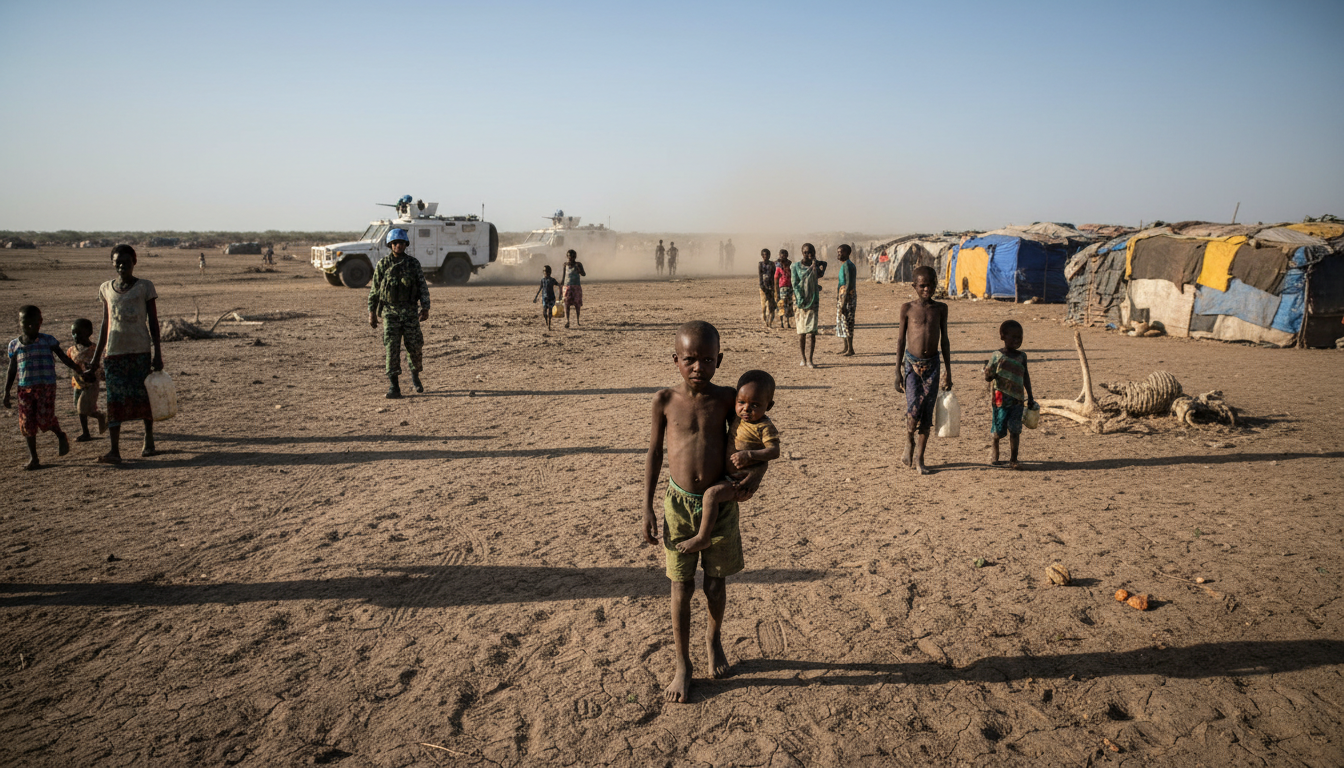
UN Warns of South Sudan Famine Risk as Fighting Intensifies and Peacekeeping Is Scaled Back
UN Emergency Relief Coordinator warns of South Sudan famine risk and collapse as renewed fighting and reduced peacekeeping hinder aid delivery, officials tell Security Council.
On 18 April 2026 the United Nations Emergency Relief Coordinator Tom Fletcher told the UN Security Council that South Sudan faces a growing risk of slipping into full-scale famine and state collapse. The South Sudan famine risk was highlighted as fighting intensifies in several areas and UN peacekeeping forces are being reduced, officials said. Fletcher’s briefing framed the situation as an urgent humanitarian and political emergency requiring immediate international attention.
UN official issues stark warning
On 18 April 2026 Tom Fletcher told the Security Council that humanitarian indicators in South Sudan have deteriorated sharply in recent weeks. He warned that continued conflict and the contraction of peacekeeping capabilities could combine to produce famine conditions in parts of the country. The statement placed responsibility on all parties to the fighting to allow lifesaving relief to reach civilians.
Fletcher described the scenario before the Council as one in which shrinking access, rising food insecurity and collapsing services could create “full-scale famine and collapse,” language that elevates the international stakes. He urged member states to treat the situation as time-sensitive and to support measures that protect humanitarian operations.
Fighting intensifies and restricts aid access
Security sources and humanitarian officials report a marked increase in hostilities across contested areas, aggravating already fragile supply lines. Roadblocks, front-line clashes and targeted attacks on logistics have reduced the movement of food, medical supplies and fuel into hard-hit communities. Agencies operating in the country have reported that convoys face heightened risks and delays.
Reduced access has a direct bearing on life-saving assistance such as emergency food distributions and therapeutic feeding for malnourished children. Humanitarian organisations say that even established delivery routes have become unpredictable, forcing some agencies to suspend or scale back programs where risk to staff is unacceptable.
Reduction of UN peacekeeping presence heightens concern
The Security Council briefing also noted a concurrent drawdown of UN peacekeeping assets that had been providing security and logistical support for relief operations. Officials told the Council that the contraction of the peacekeeping mission will leave gaps in protection and in the facilitation of humanitarian corridors. Those gaps, they warned, make it harder for aid agencies to operate safely and for civilians to move to safer locations.
UN peacekeepers have historically played a role in protecting humanitarian workers and critical infrastructure; their reduced footprint now compels agencies to reassess operations in volatile districts. The combination of fewer peacekeepers and more intense fighting raises concerns about an erosion of hard-won space for aid delivery.
Humanitarian impact: displacement and malnutrition rise
Humanitarian briefings to the Council highlighted growing displacement as families flee active combat zones, creating new concentrations of people in towns and refugee centres. Displacement complicates both immediate relief and longer-term recovery, increasing demand for shelter, water, sanitation and healthcare services. Agencies caution that health systems already stretched by years of conflict may be unable to cope with additional strain.
Malnutrition rates are cited as a central concern, with officials warning that restricted access to food and to therapeutic services places children and other vulnerable groups at extreme risk. Even where supplies exist, insecurity and transportation challenges prevent consistent delivery of life-saving treatment.
Diplomatic pressure and urgent appeals to the Security Council
In his address Fletcher pressed the Security Council and member states to prioritise protection of civilians and unimpeded humanitarian access. He urged diplomatic efforts to negotiate local ceasefires or safe-passage arrangements that would allow aid to reach desperate communities. The appeal underscored the need for political solutions to complement emergency relief.
Council members were also urged to respond to humanitarian appeals with rapid funding and logistical support, enabling agencies to preposition supplies and scale up emergency response where possible. Fletcher framed funding and security guarantees as intertwined requirements to prevent the worst outcomes.
Regional and international implications
Analysts and diplomats warned that the deterioration in South Sudan could have spillover effects across neighbouring states, including increased refugee flows and pressure on regional stability. Cross-border markets, trade routes and shared water resources could all be affected as insecurity disrupts normal economic and social life. Regional actors were called upon to support de-escalation and humanitarian efforts.
International organisations emphasised that preventing famine is not only a humanitarian imperative but also a strategic necessity to avoid a broader regional crisis. The Council was reminded that timely collective action can reduce the need for larger and costlier interventions later.
The UN’s warning on 18 April 2026 placed South Sudan at a critical juncture where the convergence of fighting, reduced peacekeeping support and constrained humanitarian access could tip the country into a catastrophic food crisis. Immediate diplomatic engagement, secure humanitarian access and emergency funding were presented as essential steps to avert full-scale famine and to stabilise conditions for civilians.

