
Japan to Supply 11 Upgraded Mogami-class Frigates to Australia in Largest Postwar Defence Export
Japan and Australia sign landmark deal for 11 upgraded Mogami-class frigates, the largest postwar Japanese defence export, boosting strategic and industry ties.
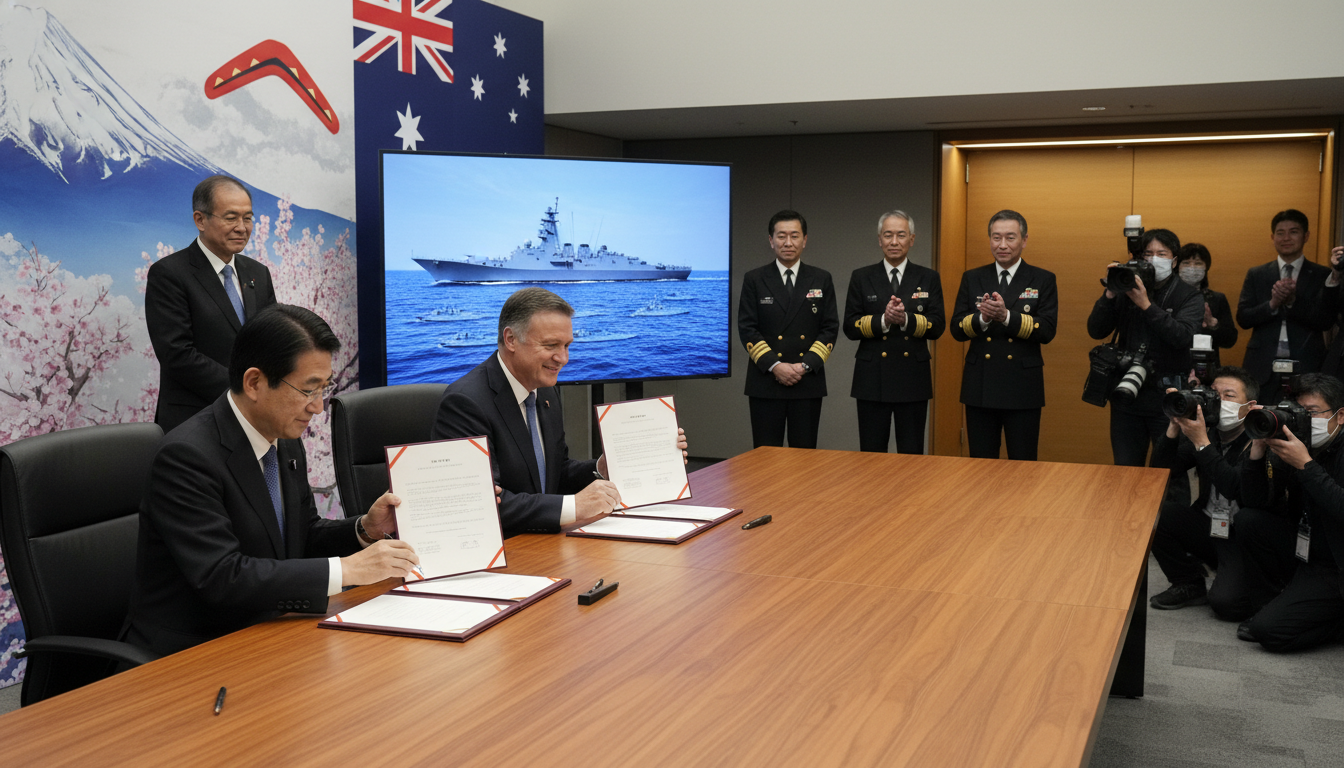
Japan and Australia reached a landmark agreement on Saturday for Tokyo to supply 11 upgraded Mogami-class frigates to the Royal Australian Navy, marking the largest defence export in Japan’s postwar history. The contract, signed in Melbourne by Japanese Defense Minister Shinjiro Koizumi and Australian Defence Minister Richard Marles, formalizes a multibillion-dollar partnership under Australia’s Project Sea 3000. The deal underscores rapidly deepening defence and industrial cooperation between the two countries.
Deal Signed in Melbourne
The memorandum was completed during a ceremony in Melbourne where officials described the signing as a milestone in bilateral relations. Japan’s selection follows a competitive procurement process in which Mitsubishi Heavy Industries emerged as Australia’s preferred partner last August. Australian officials emphasized that Japan’s offer best met Canberra’s requirements for cost, capability and delivery schedule.
Scope and Value of Contract
Under the agreement, Mitsubishi Heavy Industries will deliver 11 upgraded Mogami-class frigates customized to Australian specifications and operational needs. The contract is reported to be multibillion-dollar in scale, representing both a major defence sale and an extensive industrial program. Canberra has framed the purchase as central to its decade-long Project Sea 3000 modernization plan for the surface fleet.
Why Japan Won the Bid
Australian defense sources cited a combination of technical capability, schedule certainty and competitive pricing as the decisive factors in selecting Japan’s proposal over Germany’s Thyssenkrupp Marine Systems. Mitsubishi’s offer reportedly demonstrated an ability to adapt the Mogami-class design to Australian requirements without jeopardizing delivery timelines. Officials also pointed to closer interoperability potential given growing partner exercises and systems alignment across the Indo-Pacific.
Strategic Implications for the Indo-Pacific
Analysts say the deal signals an intensification of Japan-Australia security cooperation as both nations respond to evolving regional dynamics. The frigate sale enhances Australia’s naval capabilities while strengthening Tokyo’s role as an arms exporter within the region. Observers note the move may encourage further defense ties among like-minded Indo-Pacific partners pursuing greater maritime deterrence and collective readiness.
The agreement also carries diplomatic weight, reinforcing the broader strategic alignment between Tokyo and Canberra. Both governments framed the deal as contributing to stability and resilience in shared maritime domains.
Industrial and Workforce Impact
Mitsubishi Heavy Industries will lead a complex industrial program involving Japanese yards and Australian supply chains, creating jobs and technology-transfer opportunities in both countries. Canberra has indicated that a portion of construction, systems integration and sustainment work will be undertaken locally to support Australian industry and workforce transition. Japanese manufacturers and subcontractors stand to benefit from sustained production lines and potential follow-on orders.
The program is expected to boost defense-related manufacturing and skills development across shipbuilding, electronics and systems engineering. Officials on both sides highlighted training and logistical arrangements designed to sustain the fleet over its operational lifecycle.
Delivery Timeline and Next Steps
Australian authorities have tied the project to a decadelong schedule under Project Sea 3000, with phased deliveries and integration milestones to follow. Detailed technical agreements, certification steps and industrial arrangements remain to be finalized in the coming months. Both governments said they will coordinate schedules, testing and crew training to ensure the first vessels enter service on planned timelines.
Procurement offices will now move into contract implementation, including detailed design finalization, supplier selection and the establishment of Australian work scopes. Regular ministerial and technical dialogue will be used to monitor progress.
The contract represents a turning point in Japan’s postwar defence-industrial policy and in Australia’s long-term naval planning, linking procurement with broader strategic objectives and industry revitalization.
Japan’s delivery of 11 upgraded Mogami-class frigates to Australia will reshape elements of maritime capability and defence-industrial cooperation, while testing both nations’ ability to manage a complex, long-term acquisition program.

