
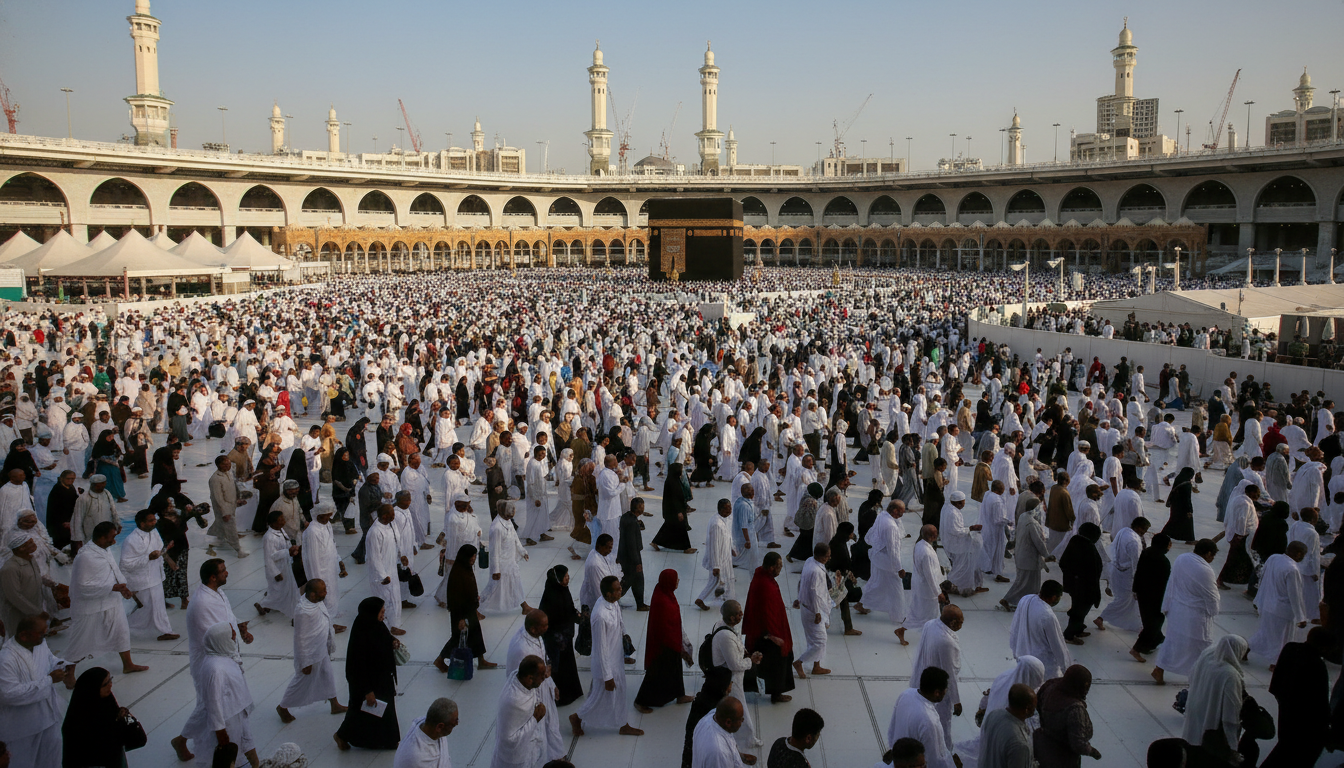
Hajj pilgrimage season opens as Asian pilgrims rehearse at Indonesia replica Kaaba
More than 750,000 Asian Muslims are preparing for the Hajj pilgrimage, rehearsing rites in Indonesia as governments coordinate travel, health and logistics.
The annual Hajj pilgrimage has commenced for many in Asia, with rehearsal sessions, logistical preparations and government briefings under way across the region. Prospective pilgrims in South Tangerang, Indonesia, practised rituals at a replica of the Kaaba as families finalise travel plans and authorities confirm arrangements for departures to Mecca.
Pilgrims rehearse at replica Kaaba in South Tangerang
Local mosques and private agencies in South Tangerang set up life-size replicas of the Kaaba to help first-time and returning pilgrims familiarise themselves with the sequence of rites. The practical drills cover tawaf, sa’i and group movements to reduce confusion when crowds converge in Mina and Arafat.
Organisers said the rehearsals also serve as opportunities to deliver briefings on health precautions, accommodation assignments and the schedule of rituals. Many attendees are elderly or travelling as part of large family groups, making practical preparation a priority for safety and comfort.
Regional turnout exceeds 750,000 for this year’s Hajj
Officials and community leaders report that more than 750,000 people from across Asia are expected to travel for this year’s Hajj pilgrimage. Asia remains the largest source region of pilgrims, reflecting its sizable Muslim populations that account for roughly two-thirds of the global Muslim community.
Countries with the largest contingents include Indonesia, Pakistan, Bangladesh, India and Malaysia, where national authorities organise quota allocation, flights and pre-departure orientation. Religious affairs ministries and approved travel operators are coordinating to ensure pilgrims meet visa, vaccination and documentation requirements set by Saudi authorities.
Saudi Arabia ramps up crowd management and services
Saudi authorities continue to implement crowd-management systems and infrastructure upgrades designed to handle the annual influx of worshippers to Mecca. Investments in transport links, temporary accommodation and mosque facilities aim to streamline movement between key ritual sites and reduce bottlenecks during peak days.
Officials emphasise coordination with international delegations and homeland agencies to align arrivals, departures and on-the-ground support. Security, emergency response units and multilingual volunteer networks are deployed across the holy sites to assist pilgrims and manage the flow of people.
Governments coordinate travel, health and logistics
National governments in the region have intensified coordination with airlines and pilgrimage operators to stagger departures and manage capacity at transit hubs. Public health ministries are advising pilgrims on vaccination, hydration and measures to reduce the risk of respiratory and heat-related illness during the journey.
Many countries are also providing dedicated helplines and on-site liaison teams in Saudi Arabia to handle lost documents, medical evacuations and family reunification matters. Travel agencies are issuing detailed itineraries and contingency plans to help groups navigate crowded periods and unexpected delays.
Economic ripple effects in origin and host countries
The Hajj season generates significant economic activity for both sending and receiving economies, from travel agency revenues and air travel demand to hospitality and retail spending in Saudi Arabia. Local businesses in departure cities—from training centres to outfitters and food vendors—report higher bookings and sales in the weeks leading up to departures.
Remittances and spending by pilgrims can also have a measurable short-term impact on spending patterns in their home communities. For many families, the pilgrimage is both a spiritual milestone and a major financial commitment, prompting advance saving and community fundraising that support travel and associated services.
Faith, climate and technology shape modern pilgrimage
Religious leaders underscore that the Hajj pilgrimage remains an essential pillar of Islam and a profound communal experience for believers, combining ritual discipline with encounters across cultures. At the same time, organisers and pilgrims confront modern challenges such as extreme heat, dense crowds and the logistical complexity of moving large numbers of people safely.
In response, authorities and private operators are increasingly deploying digital tools for registration, information and guidance to reduce confusion and improve responsiveness. Technology, coupled with practical rehearsals like those in South Tangerang, aims to shorten queues, enhance communications and help pilgrims focus on the spiritual aspects of the journey.
For many of the more than 750,000 pilgrims preparing to depart from Asia, the weeks of practice and planning will culminate in a short, intense period of rites in Mecca and the surrounding holy sites. As departures proceed, officials on both sides of the journey say the emphasis will remain on safety, clear information and preserving the dignity of worship for all who undertake the pilgrimage.

