
US forces to pursue ships linked to Iran into Indo-Pacific, general says
US forces will pursue ships linked to Iran beyond the Middle East, conducting maritime interdictions in the Indo-Pacific as analysts warn dark-fleet tanker risks.
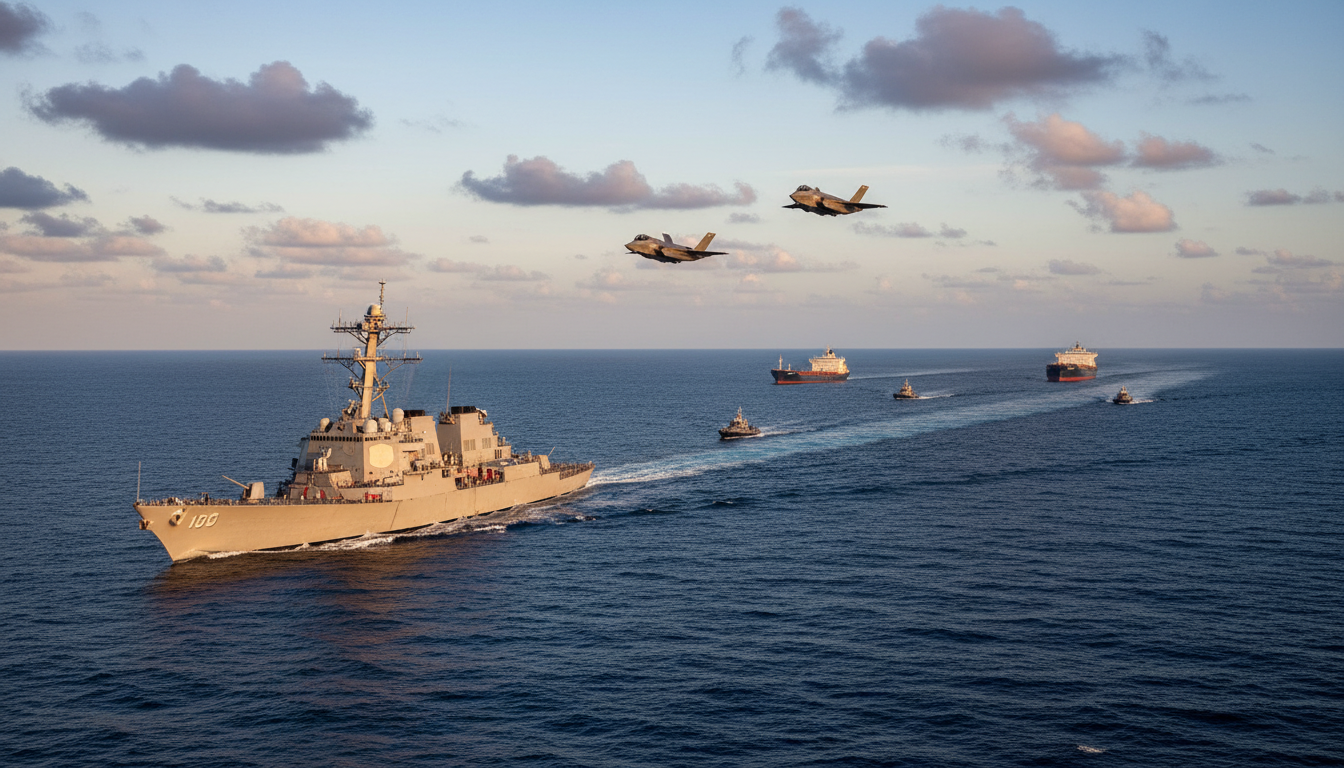
US military leaders have said American forces will chase ships linked to Iran well beyond the traditional Middle East theater, extending maritime interdiction operations into the Indo-Pacific region. The chairman of the Joint Chiefs of Staff, General Dan Caine, told CNN that the effort includes targeted actions in the Pacific area of responsibility against vessels that departed before a blockade began. The announcement signals a broadened operational footprint for U.S. naval forces and raises new questions about jurisdiction, commercial risk and regional diplomacy.
Expansion of interdiction operations into the Pacific
General Dan Caine confirmed that U.S. maritime interdiction activities are not confined to the Gulf or Red Sea corridors and now explicitly encompass the Pacific area of responsibility. He told CNN the operations are aimed at ships that left the Pacific region prior to the imposition of a blockade, indicating a tracing and interception strategy across long transit routes. The move reflects an effort to intercept shipments believed to be part of networks moving sanctioned Iranian oil and related cargo.
Details of the chairman’s statement
Caine described the actions as “maritime interdiction actions and activities” conducted by U.S. forces, emphasizing follow-through on vessels associated with Tehran. His comments, relayed through CNN, framed the operations as part of a coordinated campaign to enforce sanctions and disrupt illicit energy transfers. Officials did not provide specific operational timelines or list the units involved, citing operational security while signaling persistent engagement across distant waters.
Analysts point to dark-fleet activity near Strait of Malacca
Shipping analysts say large numbers of so-called “dark fleet” tankers congregate in choke points such as the Strait of Malacca and adjacent seas, creating opportunities to obscure cargo origins and ownership. These vessels often employ transshipment, AIS shutdowns and ship-to-ship transfers to mask movements and evade sanctions, analysts note. The concentration of opaque tankers in Southeast Asian waters has repeatedly been highlighted by maritime monitors as a principal route for sanctioned oil shipments originating from Iran.
Operational reach and legal considerations
Extending interdiction beyond the Middle East raises complex legal and operational questions about maritime jurisdiction and the rules governing use of force at sea. Under international law, navies operate with varying authorities depending on consent, presence in territorial waters, and whether interdictions occur on the high seas. U.S. commanders typically rely on combinations of unilateral authorities, multinational frameworks and flag-state cooperation to interdict suspect vessels, but actions far from home waters increase the need for diplomatic coordination with regional partners.
Risks to commercial shipping and regional stability
The prospect of expanded interdictions could increase commercial shipping uncertainty in one of the world’s busiest maritime regions, where large volumes of energy and goods transit daily. Insurers, charterers and shipowners monitor such developments closely because enforcement activity, even when targeted, can raise premiums and prompt route changes. Regional governments may also face pressure to balance security cooperation with Washington against concerns about escalation and economic disruption.
Implications for sanctions enforcement and energy markets
Targeting ships linked to Iran in the Indo-Pacific forms part of a broader effort to tighten sanctions enforcement and cut off revenue streams for sanctioned entities. Successful interdictions could constrain illicit shipments and complicate networks that rely on transshipment and identity masking. At the same time, any sustained disruption or confrontation carries potential knock-on effects for oil flows and market sentiment, particularly if operations intersect with major chokepoints or prompt retaliatory measures.
U.S. officials framed the Pacific actions as follow-through against vessels that left the region before the blockade began, indicating a temporal and geographical tail to the enforcement campaign. Analysts warn that the adaptability of dark-fleet tactics means enforcement will require enhanced tracking, multinational intelligence sharing and legal cooperation with flag states and coastal nations.
The announcement underscores growing U.S. attention to long-distance maritime enforcement as sanctions regimes and strategic competition converge at sea. It also places renewed focus on Southeast Asian maritime security, where transit routes, bunkering hubs and ship-to-ship transfer activity create both vulnerabilities and enforcement opportunities.
For now, U.S. forces describe the effort as targeted maritime interdiction designed to disrupt specific flows tied to Iranian sanctions evasion, while officials continue consultations with regional partners and maritime stakeholders. Continued monitoring by navies, industry groups and analysts will be key to understanding how interdiction operations shape shipping patterns and diplomatic responses in the months ahead.

