
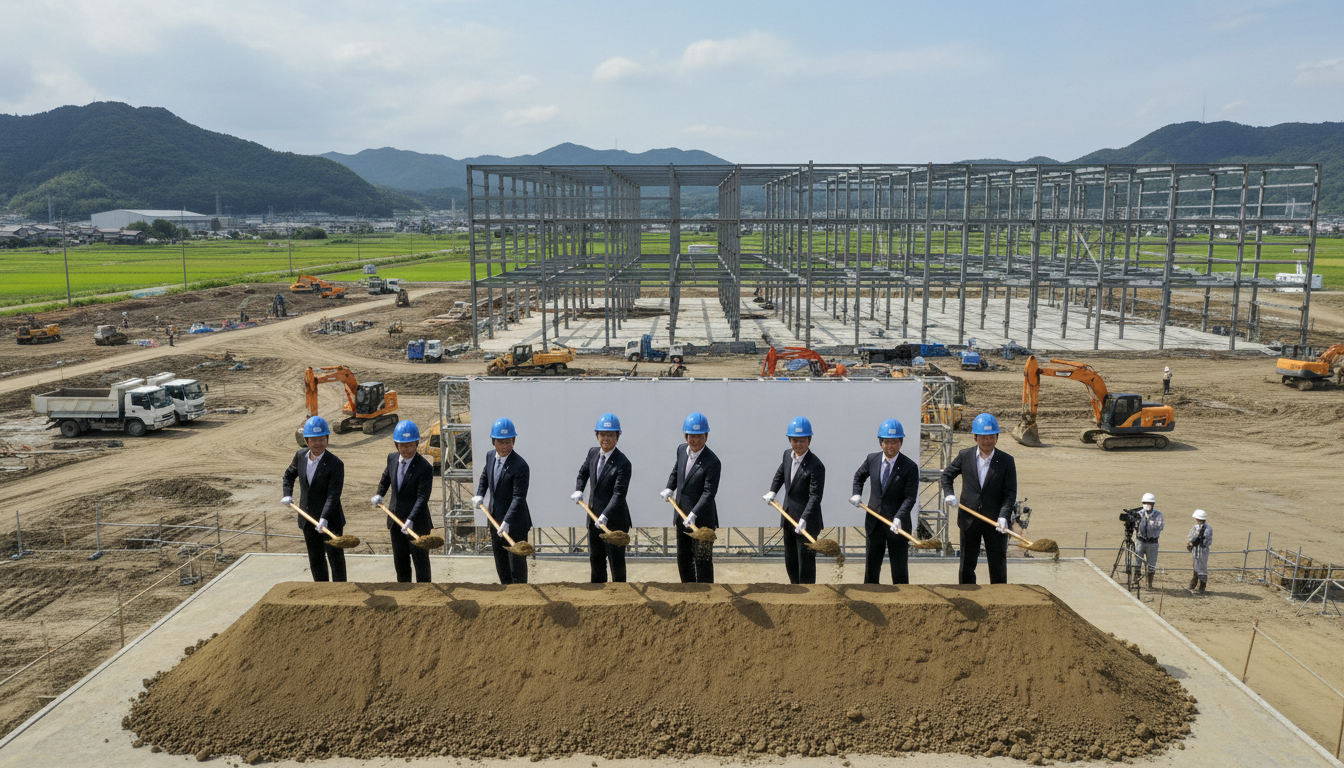
NTT Data to Build One of Japan’s Largest AI-Focused Data Centers Near Tokyo
NTT Data Group plans a major AI-focused data center just outside Tokyo to serve cloud providers and expand Japan’s computing capacity for artificial intelligence workloads.
Opening summary
NTT Data announced plans to construct one of Japan’s largest data centers on the outskirts of Tokyo aimed specifically at handling data processing for artificial intelligence. The project is designed to attract cloud service providers and companies running large-scale machine learning and generative AI workloads. Company officials say the facility will be part of a wider push to bolster domestic infrastructure amid rising demand for compute and storage in the AI era.
Planned site and scale
The new facility will be located just outside the capital, where land availability and access to major fiber routes make large-scale construction feasible. While NTT Data has not disclosed full technical specifications, the company described the project as one of the largest of its kind in Japan. Observers expect the development to include substantial power, cooling and network capacity to support dense GPU clusters and other AI-specific hardware.
The choice of a suburban site reflects a trend among data center builders seeking proximity to Tokyo’s business ecosystem without the constraints and costs of inner-city real estate. Developers also typically favor locations with reliable grid access and room for future expansion, attributes that are increasingly important for facilities aiming to host next-generation AI infrastructure.
Design and infrastructure for AI workloads
AI workloads drive different technical requirements than traditional cloud services, with much greater demand for high-density power delivery, liquid cooling options and low-latency networking. NTT Data’s center is expected to incorporate these features to remain competitive for customers running large neural-network training and inference tasks. Facility design will likely emphasize modular capacity so operators can scale GPU and accelerator racks as customer needs evolve.
Energy efficiency and resilience will be central considerations, given the heavy power consumption of modern AI hardware. Developers of comparable centers are prioritizing advanced cooling systems, on-site redundancy, and close collaboration with utilities to secure stable, high-capacity power. Such design choices will be crucial for ensuring uptime and controlling operating costs for tenants.
Target customers and market positioning
The primary customers for the new site are cloud service providers and enterprises that require concentrated AI compute capacity rather than general-purpose hosting. NTT Data aims to position the facility as a hub for companies developing large language models, real-time inference services, and other AI-driven applications. By offering optimized infrastructure, the group seeks to capture clients that want to co-locate specialized hardware and maintain close control over data flows.
Japan’s domestic cloud market has been expanding as local and foreign providers invest in regionally distributed capacity. A large AI-optimized center near Tokyo would give NTT Data leverage in selling integrated services to enterprises concerned with performance, latency and data governance. The facility could also support partnerships with hyperscalers and software vendors seeking regional capacity for distributed training and edge-to-cloud workflows.
Strategic implications for Japan’s cloud ecosystem
The project underscores a broader strategic push to secure more local compute capacity as AI adoption accelerates across industries. Governments and corporations globally are prioritizing sovereign infrastructure to control sensitive data and reduce reliance on distant overseas facilities. In Japan, increased domestic capacity can support sectors from finance and manufacturing to healthcare that are exploring AI-driven transformation.
By expanding its portfolio of data centers with an AI focus, NTT Data is signaling a move to capture a greater share of the high-value infrastructure market. The investment may intensify competition with other domestic operators and global hyperscalers that are also scaling AI-capable facilities in the region. Market analysts expect such competition to accelerate innovation in facility design, service offerings and pricing models for AI compute.
Local economic, regulatory and energy considerations
Large-scale data centers carry significant local economic impacts, including construction jobs, ongoing operations roles, and demand for ancillary services such as fiber buildouts. Municipalities often weigh these benefits against concerns over land use, noise, and environmental footprint. Securing permits and navigating regional planning requirements will be a necessary step before major construction can proceed.
Energy supply is another critical factor, especially in regions with constrained grid capacity or aggressive decarbonization goals. Operators and local authorities are increasingly working together to ensure adequate power while meeting emissions targets, sometimes incorporating renewable energy contracts or on-site generation. How NTT Data addresses power sourcing and environmental commitments will influence public reception and regulatory approval processes.
Final paragraph
NTT Data’s planned AI-focused data center near Tokyo represents a significant expansion of Japan’s infrastructure for high-performance computing and cloud services, reflecting growing demand for localized AI capacity and the strategic value of purpose-built facilities for modern machine learning workloads.

