
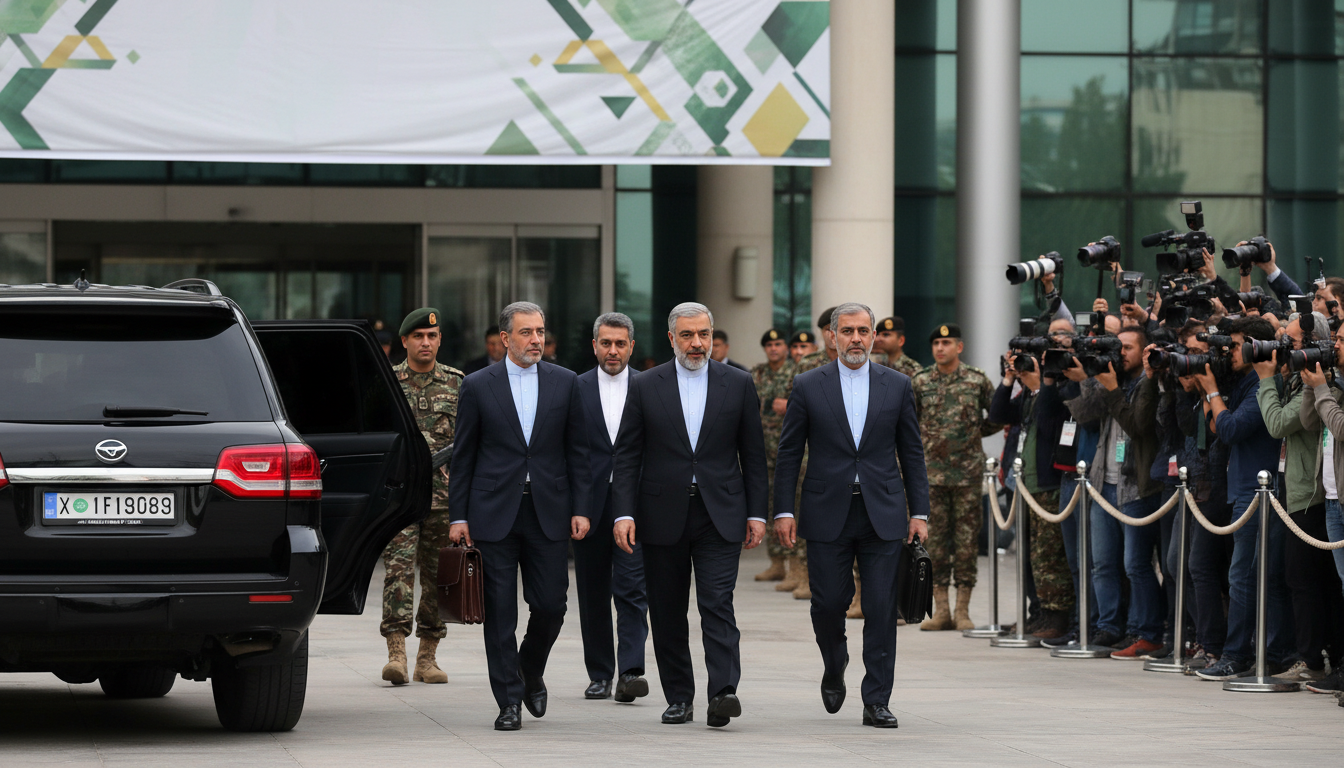
Iran Delegation to Attend Islamabad Talks Despite U.S. Naval Blockade Objection
Iran will send a delegation to the Islamabad talks on April 21, 2026, as mediators press for a ceasefire extension while Tehran objects to a U.S. naval blockade.
Opening summary
Pakistan official sources told Nikkei Asia that an Iranian delegation is scheduled to arrive in Islamabad on April 21, 2026, to take part in a second round of talks hosted by Pakistan with U.S. representatives.
Tehran has publicly argued it would not send negotiators while the U.S. navy is maintaining what Iranian officials call a blockade of its ports, a stance that has complicated the lead-up to the meetings.
Mediators have signaled the immediate priority is negotiating an extension of the current ceasefire, saying more time is needed to address complex issues at the heart of the broader conflict.
Iran delegation to arrive despite Tehran’s objections
Pakistani sources who spoke to Nikkei Asia confirmed the delegation’s arrival date after days of public uncertainty over Tehran’s willingness to participate.
Iran’s objections focus on the continued presence of U.S. naval forces near key maritime approaches, which Tehran says undermines the spirit of negotiations and complicates any reciprocal confidence-building.
Despite those objections, Islamabad’s diplomatic team has pressed ahead with preparations, and officials said logistical and security arrangements are being finalized to receive both sides.
Mediator prioritizes ceasefire extension over swift resolution
A mediator involved in the process told interlocutors that the immediate aim is to extend the ceasefire while negotiators tackle more intractable issues.
Officials described the remaining agenda items as “complex,” requiring detailed technical and legal work before a durable settlement can be reached.
Extending the ceasefire would buy time for talks on detainee exchanges, guarantees for maritime access, and mechanisms to monitor compliance, according to participants briefed on the discussions.
U.S. naval presence cited as a sticking point by Tehran
Iran’s public statements in recent days made clear that the U.S. naval posture is a major barrier to its full participation, framing the presence as tantamount to economic and military pressure.
Washington, for its part, has described its deployments as aimed at safeguarding commercial navigation and deterring further escalation, language that has thus far failed to assuage Tehran’s concerns.
Diplomats say bridging that gap will require carefully calibrated assurances and possibly third-party verification arrangements that neither side has yet accepted in full.
Pakistan’s role as host and regional implications
Islamabad’s decision to host a second round of talks underscores Pakistan’s interest in stabilizing a conflict with regional spillover effects, including disrupted trade routes and refugee flows.
Officials in Islamabad have emphasized a neutral hosting role, offering secure venues and diplomatic channels while encouraging frank, direct engagement between the U.S. and Iranian delegations.
Regional capitals and international organizations are watching closely, mindful that a breakthrough in Islamabad could relieve pressure across the Gulf and Indian Ocean shipping lanes.
Likely agenda items and technical hurdles
Negotiators are expected to prioritize an extension of the ceasefire, arrangements for humanitarian access, and protocols for monitoring adherence to any interim agreements.
More contentious items will include guarantees for maritime traffic, timelines for lifting or easing naval interdictions, and legal frameworks for prisoner and detainee exchanges.
Experts and diplomats caution that technical complexity—such as verification regimes and sequencing of concessions—could prolong talks even if the ceasefire is temporarily extended.
Next steps and potential outcomes
Delegations are scheduled to begin formal sessions immediately after the arrival of the Iranian team, with mediators urging concentrated, working-level meetings to resolve negotiable technicalities.
Observers say the most realistic near-term outcome is a short-term ceasefire extension coupled with agreed timelines for working groups to address verification, maritime access, and humanitarian clauses.
A comprehensive settlement remains elusive, but negotiators hope incremental agreements from the Islamabad talks can build momentum for broader understandings in subsequent rounds.
Momentum from the Islamabad talks will depend on whether the parties can convert a ceasefire extension into durable, monitored commitments that reduce the risk of renewed hostilities.
For now, diplomats and mediators are focused on keeping both delegations at the table and narrowing the list of unresolved technical issues ahead of follow-up meetings.
Photographs from the host city showed flags and preparatory hoardings as Islamabad readies itself for talks involving the United States and Iran, and international attention will remain fixed on whether the meetings yield tangible steps toward de-escalation.

