
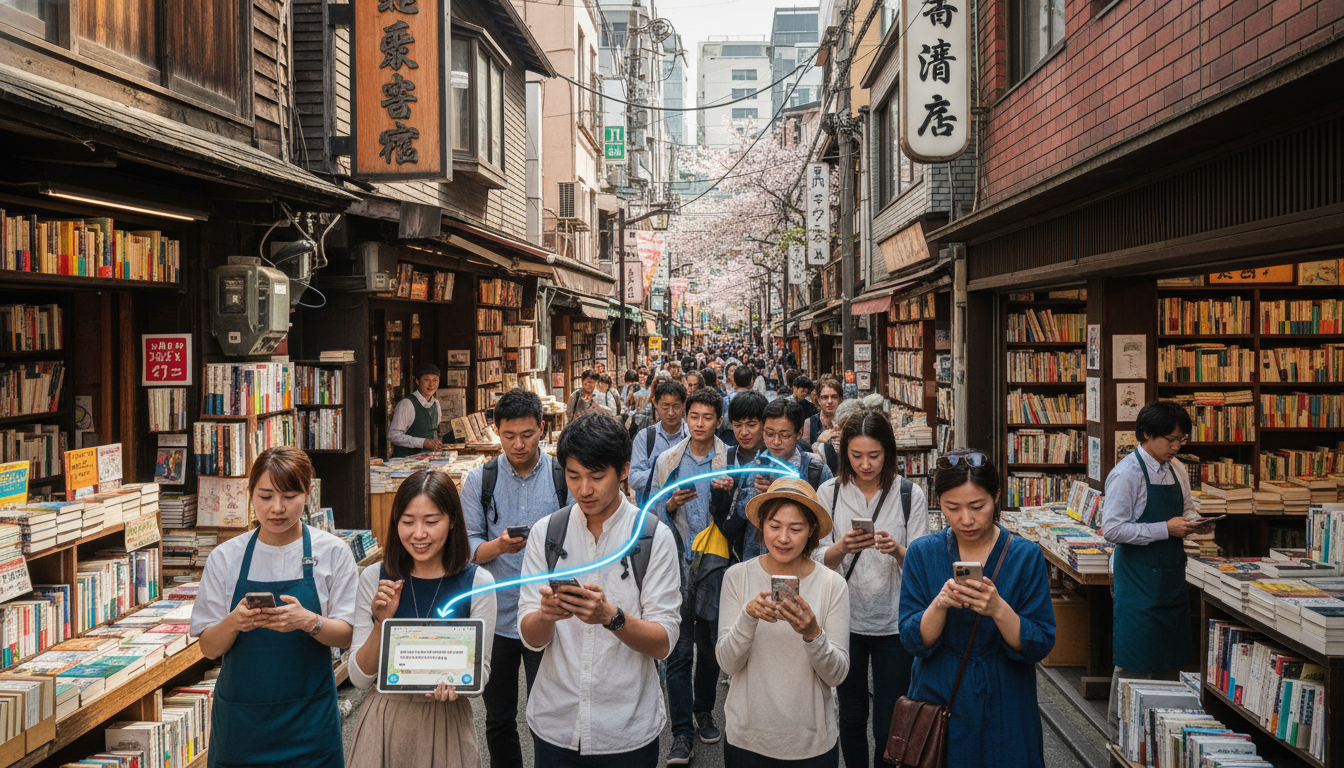
Jimbocho Draws Visitors After Time Out Accolade as Tourists Follow ChatGPT Directions
Jimbocho, Tokyo’s book district, tops Time Out’s coolest-neighborhood ranking and is drawing renewed attention from international visitors and local readers. The neighborhood’s reputation for secondhand bookstores and curry restaurants was on full display even on a rainy weekday, where umbrella-lined streets met literary curiosity. The word “Jimbocho” has begun to appear more frequently in travel chatter and social feeds as guides, both human and automated, point visitors toward the neighborhood.
Time Out recognition brings fresh scrutiny
Jimbocho’s placement near the top of a global neighborhood list by Time Out has given the long-standing book quarter renewed visibility on the world stage. The ranking highlights the concentration of antiquarian and secondhand bookshops, and has spurred commentary from international media. Local observers say the accolade has translated into a steady trickle of new visitors rather than a sudden influx, suggesting a gradual shift in attention rather than overnight gentrification.
Several small businesses in the area report increased inquiries from overseas readers, and tourism operators note a rise in book-themed itineraries. Urban planners and cultural promoters see the attention as an opportunity to bolster cultural tourism while preserving the neighborhood’s character. The recognition is now part of how Jimbocho is marketed to readers and sightseers alike.
Rainy weekday scene contrasts with glossy profile
On a gray Wednesday, the streets of Jimbocho felt more like a city vignette than a viral hotspot. Commuters in dark suits shouldered umbrellas and navigated between narrow storefronts offering rare volumes and used paperbacks. Aromatic plates of curry and small cafés provided a warm counterpoint to the chill, catering to both locals and visitors with long browsing lists.
The subdued pace undercuts the glossy images of a bustling international destination. Instead, the district retains a rhythm tied to academic schedules, neighborhood routines and collectors’ circuit. That steady tempo is part of what long-term residents say makes Jimbocho sustainable as an urban cultural node.
Tourists follow ChatGPT and other digital guides
A number of foreign visitors acknowledged relying on automated directions when they arrived, with one well-known Slovenian novelist quipping that “ChatGPT sent us here.” The use of generative tools and travel apps to discover neighborhoods is drawing attention to how artificial intelligence is reshaping travel behavior. For many visitors, AI-based suggestions are a first port of call before refining plans with guidebooks or local tips.
Travel specialists caution that algorithmic recommendations do not always capture nuance, and can steer visitors to familiar or algorithmically amplified spots. For Jimbocho, that means the neighborhood may see more targeted visits from people seeking a literary experience rather than broad sightseeing. Local businesses are increasingly adapting by making inventories and menus more accessible online to meet digitally informed demand.
Booksellers and eateries adapt to evolving audiences
Jimbocho’s secondhand bookstores, some of which have operated for generations, continue to attract collectors and scholars searching for out-of-print works. Shop owners describe a clientele mix that now includes older local collectors and younger international readers who arrive with translation apps and curated lists. Many stores maintain carefully catalogued collections, and some have experimented with bilingual signage or curated English-language displays to serve non-Japanese customers.
The neighborhood’s curry restaurants and small cafés play a complementary role, offering sustenance between bookstore stops. Restaurateurs report steady weekday trade from salarymen and students, with a modest uptick in foreign diners on weekends. Business owners emphasize the importance of balancing tourist-facing services with the needs of regular patrons to preserve Jimbocho’s local identity.
Literary visitors spark conversation on Japanese literature in translation
Visitors drawn by Jimbocho’s literary reputation sometimes bring strong views about contemporary Japanese writing. One visiting author, who has read widely in translation, expressed ambivalence about the prominence of certain names in English-language publishing while noting an ongoing search for lesser-known voices. That sentiment reflects a broader conversation among critics and readers about how translation, publishing priorities and media attention shape international perceptions of national literatures.
Cultural commentators suggest that Jimbocho’s role as a physical hub for book culture gives Tokyo an organic venue to showcase a wider range of Japanese writers. Events such as small readings, author talks and themed book fairs are opportunities to broaden the conversation beyond a few internationally famous names. Local cultural groups and independent publishers are exploring partnerships to highlight emerging translators and overlooked texts.
Jimbocho’s renewed international profile illustrates how a neighborhood’s reputation can evolve through a mix of media recognition, digital navigation tools and the enduring draw of physical bookshops. As visitors guided by both algorithms and curiosity continue to arrive, the challenge for the district will be to harness attention in ways that sustain local businesses and the community’s quietly resilient character.

