
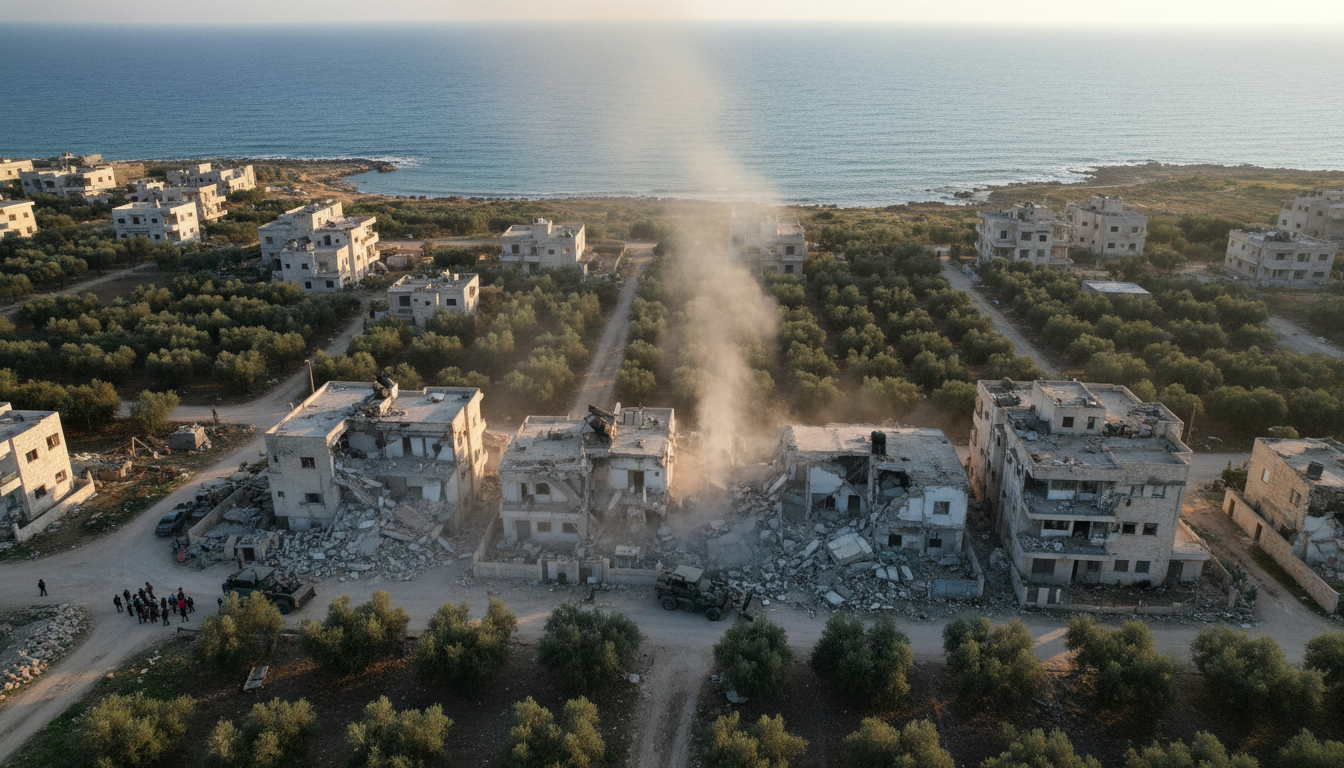
Israel flattening civilian buildings in southern Lebanon during truce, commanders say
Haaretz reports Israel continued flattening civilian buildings in southern Lebanon during a 10‑day truce, using excavators and paid civilian contractors to demolish homes and structures.
Israeli army commanders told Haaretz that the systematic flattening of civilian buildings in southern Lebanon has continued during an officially declared ceasefire. The report said heavy engineering equipment, including excavators, was moved into southern villages and operated by paid civilian contractors. Some contractors were reportedly paid a daily wage while others received fees tied to the scope of work and the number of buildings demolished. The claim raises fresh questions about the conduct of operations in areas where hostilities were meant to be paused.
Commanders report systematic demolitions during truce
According to the published account, multiple Israeli commanders described an organized effort to dismantle civilian structures in southern Lebanese villages. They characterized the activity as more than incidental damage from fighting, framing it as deliberate clearance of buildings.
The commanders told the newspaper that destruction was carried out methodically across several settlements, with teams moving from site to site. The report framed the demolitions as part of operations that continued despite an agreed pause in active combat.
Excavators and paid civilian contractors deployed
Haaretz reported that civilian engineering tools, notably excavators, were brought into the affected areas and operated by civilian contractors hired for the task. Those contractors were said to include both daily-paid workers and others compensated per job.
The account described a payment structure in which some workers received a fixed daily rate while others were paid according to the number of buildings they demolished or the work’s measured scope. The use of civilian labor and heavy machinery for demolition in a ceasefire zone is central to the report’s allegations.
Timing of the 10‑day pause and continuing demolitions
The newspaper said the activity took place after a 10‑day pause in hostilities began last Thursday, describing the demolitions as ongoing during that interval. The reporting presents the demolitions as concurrent with, rather than subsequent to, the temporary cessation of fighting.
That timing is important because it frames the demolitions as occurring during a period designated for reduced or halted military engagement. The report’s chronology is based on the accounts supplied to the paper by the commanders it quoted.
Humanitarian and legal concerns raised by observers
Observers and legal experts who monitor conflict conduct have frequently noted that deliberate destruction of civilian property raises humanitarian and legal questions. Humanitarian groups often stress that evacuation, shelter and essential services are directly affected when homes and infrastructure are removed.
International humanitarian law restricts attacks on civilian objects and requires parties to distinguish between military targets and civilian property. Allegations that civilian buildings were intentionally flattened during a truce are likely to prompt scrutiny from rights organizations and legal analysts, according to widely accepted standards for armed conflict.
Impact on southern Lebanese villages and residents
Destruction of homes and local infrastructure compounds immediate humanitarian needs by increasing displacement and undermining recovery prospects. Villagers who rely on local housing, shops and community facilities face longer-term displacement when structures are demolished.
The flattening of civilian buildings can also disrupt access to water, electricity and health services, worsening living conditions for families already affected by fighting. Reconstruction will be a lengthy and costly process if widespread demolition is confirmed across multiple communities.
Details cited in Haaretz report and reporting limits
The details of contractor payments and the operational methods cited in the Haaretz piece were based on the accounts of the commanders interviewed by the newspaper. Those specifics formed the backbone of the report’s claim that demolitions were systematic rather than incidental.
The published account did not cite independent on‑the‑ground verification within its text beyond the commanders’ statements, and it focused on the testimony provided to that outlet. As with any single report, independent corroboration and further investigation would be required to establish the full scope and intent of the demolitions.
Israeli army commanders’ statements to Haaretz that Israel continued flattening civilian buildings in southern Lebanon during the truce have prompted immediate attention to the humanitarian and legal implications. Further reporting and independent verification will be necessary to confirm the extent of the demolitions and to clarify whether official military policy endorsed the operations described by the commanders.

