
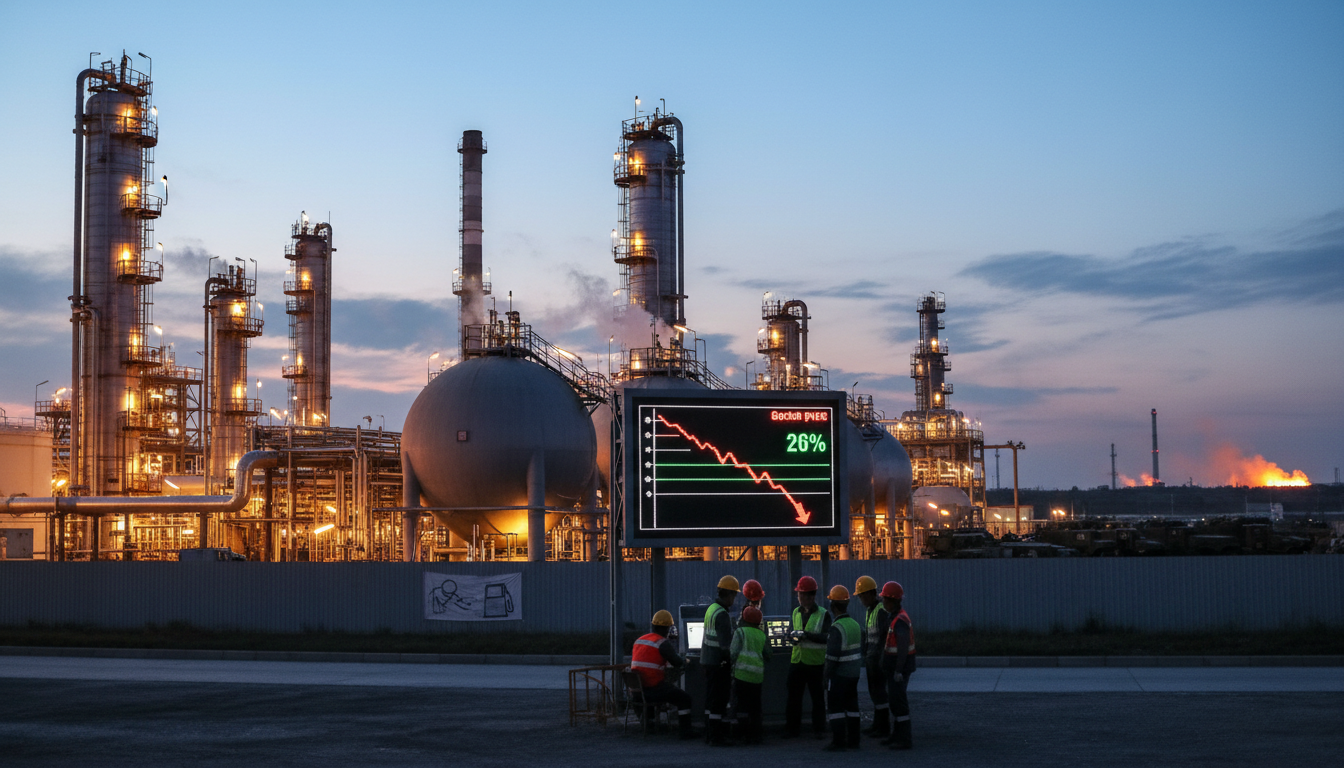
China cuts gasoline prices in first reduction this year after Iran ceasefire
China cuts gasoline prices for the first time this year after a ceasefire in the Iran conflict, a move that lowers pump costs and eases pressure on refiners’ margins. The reduction, announced Tuesday, reflects a drop in global oil prices and offers immediate relief to consumers and downstream fuel processors.
Price change and how it was implemented
The state pricing mechanism lowered retail gasoline rates on Tuesday, marking the first downward adjustment this calendar year. Officials said the change follows recent movements in international crude markets and will be passed through to service stations across the country.
The cut applies at the pump for standard grades of gasoline and is designed to reflect shifts in global benchmark prices. Motorists are expected to see the new retail levels at many urban and suburban outlets within days.
Market reaction to the Iran ceasefire
Global oil markets softened after reports of a ceasefire in the Iran conflict, reducing the geopolitical risk premium that had supported higher crude prices. Traders recalibrated supply and demand expectations, leading to a sustained decline in benchmark contracts that fed into China’s pricing formula.
Energy analysts said the ceasefire diminished the likelihood of supply disruptions in the region and encouraged oil-storage holders and refiners to reassess inventory strategies. That combination of lower risk perception and rebalanced expectations helped create room for retail cuts in major fuel-consuming nations.
Effects on refiners’ margins and operations
China’s refining sector had been operating under pressure as earlier high crude prices squeezed margins between feedstock and finished fuels. The gasoline price reduction eases that squeeze by narrowing the gap between domestic retail prices and international product differentials.
Smaller independent refiners, which operate on tighter margins, stand to benefit most from the improved economics, while larger state-affiliated processors may use the respite to manage inventories and optimize crude slates. Industry sources said the move could temper refinery turnarounds and influence export behavior for refined products in the coming weeks.
Consumer and broader economic implications
Lower pump prices provide immediate, if modest, relief for households and small businesses that depend on road transportation. Reduced fuel costs can also lower logistics expenses, potentially easing inflationary pressure on freight-sensitive goods and services.
Economists cautioned that while the cut helps near-term household budgets, its impact on headline inflation and consumer spending is likely to be limited unless sustained by further declines in crude. The measure nonetheless signals a short-term boost to disposable income for drivers and fleet operators.
Policy context and government signaling
Officials framed the adjustment as a routine response to market changes rather than a policy shift, underlining the role of the pricing mechanism in aligning domestic fuel costs with global trends. Observers said the timing also reflects careful balancing: supporting consumers and refiners without unnecessarily disrupting market signals that influence energy investment.
Policymakers remain attentive to wider energy-market volatility and to domestic economic indicators that inform future adjustments. The government’s approach suggests authorities will continue to use the pricing channel to smooth sudden shocks while monitoring the broader macroeconomic effect.
Outlook for future fuel pricing and demand
Further gasoline price moves will depend chiefly on the path of crude prices and any renewed geopolitical developments. If global benchmarks remain subdued, additional downward adjustments could follow, but a reversal in the geopolitical picture or a rebound in demand would quickly reintroduce upward pressure.
Domestic fuel demand trends, refinery throughput choices and export opportunities will also influence pricing decisions. Refiners and market participants will be watching shipping flows, inventory reports and policy signals to gauge whether the current easing is a short correction or the start of a longer cycle of lower retail fuel prices.
Lower pump costs provide a near-term reprieve for consumers and refiners alike, but sustaining that relief will require a stable global outlook and steady domestic demand trends.

