
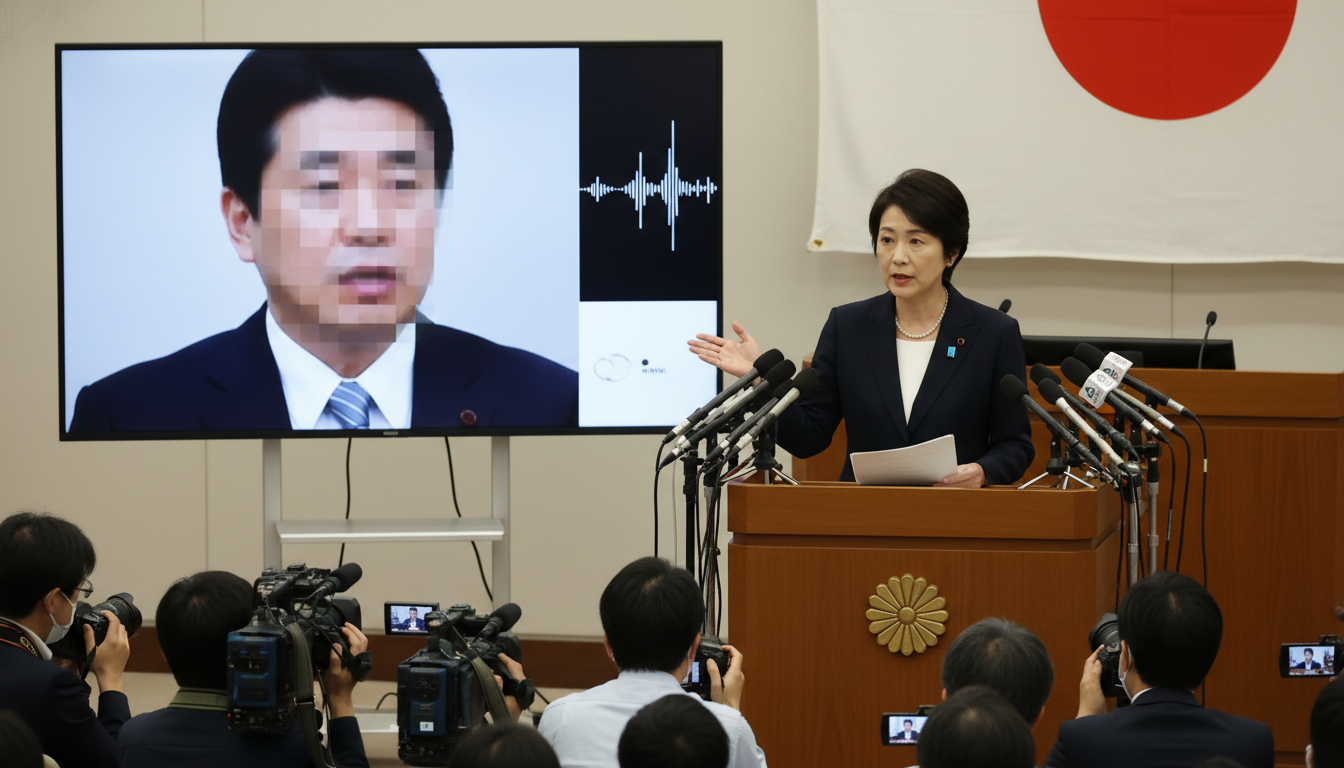
Takaichi audio controversy: Prime Minister confirms she listened to paid audio but questions attribution
Prime Minister Sanae Takaichi confirmed on June 5, 2026 that she had listened to a paid audio clip at the center of the Takaichi audio controversy, saying the voice attributed to her local secretary felt unfamiliar and urging caution in drawing conclusions from the recording.
Prime Minister Confirms Listening to Paid Audio
Prime Minister Takaichi told the House of Councillors budget committee on June 5, 2026 that she had personally checked the audio that was publicly released behind a paywall.
She said the recording had been circulated in connection with a Weekly Shukan Bunshun report alleging her local secretary’s involvement in the creation and social-media posting of videos that defamed other candidates in the Liberal Democratic Party’s leadership contests.
Takaichi emphasized that while she had listened to the clip, she would not expand on further factual confirmation at the committee hearing.
Her brief acknowledgment marked the first time she publicly confirmed having heard the material since the news outlet’s report emerged.
Prime Minister Questions Voice Attribution
The prime minister said the voice in the paid audio sounded “quite high and very clear,” which gave her a sense of incongruity with the voice she expected from the person identified in the report.
She described that mismatch as a reason to treat attribution cautiously and said it was difficult to make a definitive judgment based solely on the recording.
Officials and lawmakers in the budget committee pressed for clarification, but Takaichi repeatedly declined to move beyond the statement that the audio had been listened to and that she found the voice attribution strange.
Her response left unresolved questions about whether further verification, such as voice forensics or testimony, would be sought.
Description of the Online Meeting Takaichi’s Office Cited
Takaichi provided an account of the meeting linked to the audio, saying her secretary had participated in a remote session at the invitation of a civic organization.
She characterized the meeting as discussing ways to gather and present citizens’ views about politics, not as planning or producing videos that attacked political rivals.
The prime minister said the person who explained the session’s purpose during the remote meeting likely bore a different family name than the man named in the reporting.
That distinction was cited by Takaichi to suggest that media accounts may have misidentified participants or conflated separate individuals.
Allegations About Secretary’s Role and Video Distribution
The reporting by the weekly magazine alleges that a male associate and Takaichi’s local secretary collaborated on producing and posting social-media videos that criticized and disparaged other candidates in intra-party contests.
Those videos were said to have been distributed across platforms during the lead-up to LDP leadership discussions, raising concerns about coordinated online influence.
Takaichi did not deny that her secretary attended the remote meeting, but she stopped short of acknowledging any involvement in creating or uploading the allegedly defamatory content.
Her limited acknowledgement has prompted calls from some quarters for a fuller investigation into whether staff acted independently or on behalf of political operations.
Opposition Lawmakers Press for Evidence and Accountability
Opposition members in the Diet seized on the report and the prime minister’s partial confirmation to demand clearer answers and documentary proof.
They argued that the emergence of paid, behind-the-paywall audio and the lack of transparent attribution heighten the need for official inquiry.
Government supporters urged restraint pending verification, noting Takaichi’s assertion that the meeting’s stated purpose was to collect civic feedback rather than to devise attack materials.
Legal and media experts suggested that if the recordings are authenticated and linked to targeted disinformation, there could be both reputational and legal consequences for those involved.
Potential Political Impact Ahead of Party Contests
Analysts say the Takaichi audio controversy could complicate internal party dynamics as the Liberal Democratic Party prepares for future leadership gatherings.
Even without definitive proof tying the prime minister’s office to the alleged smear videos, the matter raises questions about campaign conduct and the role of staff in shaping online narratives.
Takaichi’s effort to distance herself and cast doubt on voice attribution aims to contain immediate fallout, but the episode may prolong scrutiny of political uses of social media and paid content.
How party elders and voters respond will depend in part on whether additional evidence emerges and whether official probes are launched to determine the facts.
The prime minister’s statements at the June 5 Diet session underscored her reluctance to base judgment solely on a paid audio clip while acknowledging public concern over the allegations linked to her local secretary.

