
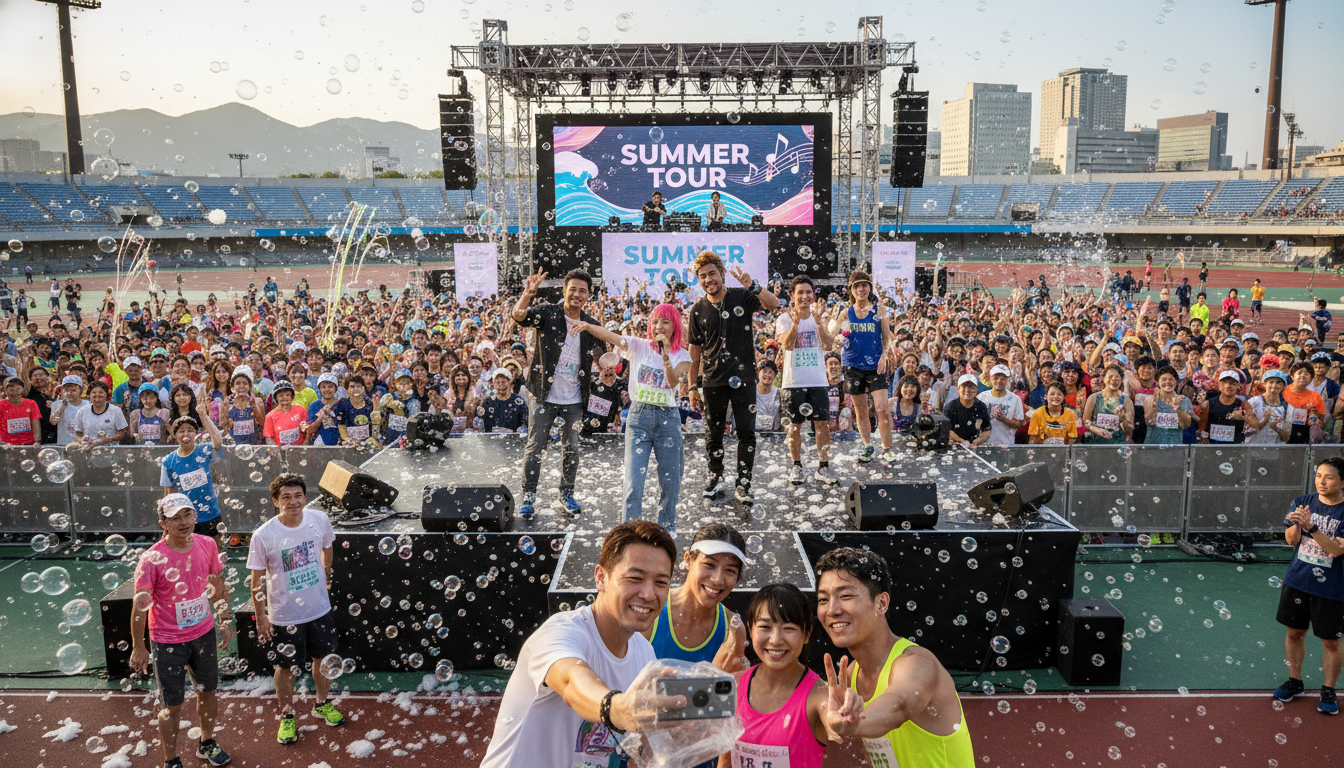
Bubble Run Japan: Foam-Filled Summer Races Return Nationwide with Music and Family Fun
Japan’s Bubble Run events return nationwide from late July through mid-September 2026, combining colorful foam courses with finish-line concerts and family activities.
The Bubble Run returns to cities across Japan this summer, running from late July through mid-September 2026 and promising foam-filled courses, live music at finish-line after-parties, and programming for families and fitness enthusiasts. Bubble Run events in Japan are staged as non-competitive fun runs where participants pass through foam stations along a short course, and the series this year pairs the run with DJs, bands and local performers at celebratory after-parties.
Nationwide schedule and host cities announced
Organizers have scheduled Bubble Run events in multiple regions, with dates concentrated between late July and mid-September 2026 to capture summer leisure crowds and festival seekers. Events will be staged in major metropolitan areas and regional centers to spread attendance and provide accessible options for weekend travel.
Each city’s run is set up as a standalone festival day, typically opening in the morning for check-in followed by staggered start times that keep crowd levels manageable. Local municipalities and event partners have worked with promoters to secure parks, sports grounds and waterfront promenades as venues that can host both the course and the music stage.
Organizers emphasize that the calendar includes both weekend and weekday options to accommodate families, tourists and corporate groups seeking team-building experiences during summer school holidays. Exact dates and venues are published on each city’s event page and through official ticketing partners, with advance sales recommended due to anticipated sell-outs on popular dates.
Course format and participant experience
Bubble Run courses are designed as short, social runs rather than timed races, typically spanning 2.5 to 5 kilometers depending on the venue and layout. Participants progress through foam stations where bursts of scented foam, bubbles and colored sprays create a festive atmosphere and photo opportunities.
The event format encourages walkers, joggers and runners to take part together, with no official timing or categories; the emphasis is on conviviality and sensory spectacle. Organizers provide safety briefings at the start, clear marshaling throughout the route, and designated slow lanes for participants with strollers or mobility needs.
Event staff set up clear entry and exit points to foam zones, and volunteers assist with distributing wristbands, pacing information and hydration. Course maps and recommended running lines are displayed at the start area, and marshals are positioned near the foam generators to ensure even foam dispersion and participant comfort.
Safety measures, hygiene and environmental practices
Safety protocols for Bubble Run events prioritize participant welfare around foam stations and the festival zone, with staff trained to manage crowd flow and respond to incidents. Medical tents staffed by trained first-aid teams are standard at each event, and organizers advise participants to disclose medical conditions during check-in.
Foam solutions used at the events are typically marketed as biodegradable and skin-safe, but organizers recommend patch-testing for sensitive skin and avoiding contact with the eyes. Clear signage and staff guidance instruct participants to avoid excessive rubbing after foam exposure and to use the rinsing stations provided at the finish area.
Environmental measures have become a focal point as public events scale up, and several host cities are imposing restrictions on single-use plastics and waste handling. Bubble Run operators state they coordinate with local waste management to collect and segregate recyclables, while rostered cleanup crews work immediately after each event to restore public spaces.
After-party lineups blend local acts and headline DJs
A defining feature of the 2026 Bubble Run series in Japan is the integration of live music at the finish-line after-parties, where DJs, bands and guest performers keep the energy high. These after-parties are positioned as both a reward for participants and a broader public attraction, drawing attendees who may not run but join for the music and food stalls.
Promoters are booking a mix of electronic, pop and festival-ready acts that can play shorter sets between 30 and 60 minutes, allowing multiple artists to share the stage across afternoon and early evening slots. Local talent is prioritized in many cities, with regional artists showcasing contemporary sounds alongside national touring DJs and performers.
Event organizers confirm that set times will be staggered to match wave finishes, creating recurring bursts of activity rather than a single peak. Audio and staging setups are scaled to venue size to balance volume with neighborhood noise curfews, and sound checks are coordinated with local authorities to comply with municipal guidelines.
Ticketing, registration and group bookings
Tickets for Bubble Run events are sold in tiers, including general admission for runners, spectator passes for after-parties, family packages and VIP bundles that offer extras such as express start lanes and shaded viewing areas. Early-bird discounts are commonly available until a predefined cutoff, after which standard pricing applies.
Registration typically requires online pre-booking with name, contact details and selected start wave; organizers recommend participants complete waivers electronically to speed check-in on event day. Group bookings and corporate packages are offered for teams, and many promoters provide discounted rates for groups of ten or more to encourage company outings and community groups.
Refund and transfer policies vary by promoter, but most events allow ticket transfers up to a specified date while limiting refunds to exceptional circumstances. Organizers advise buying tickets through official channels or authorized resellers to ensure entry and to receive timely updates on potential schedule changes due to weather or local restrictions.
Family programming and accessibility initiatives
Bubble Run events position themselves as family-friendly festivals, offering shorter children’s laps, stroller-accessible start waves and designated family zones with kid-oriented entertainment. Organizers frequently partner with local activity providers to run face-painting, children’s DJs and age-appropriate obstacle circuits.
For accessibility, event layouts include accessible toilets, ramped routes where possible, and priority check-in for participants with disabilities. Some host cities offer sign language interpreters at main stages and printed event guides in multiple languages to accommodate international visitors during the busy holiday season.
Family tickets are designed to make participation affordable, with bundled pricing for parents and children that reduces per-head cost compared with single tickets. Safety measures in family areas include child identification wristbands and meeting points clearly marked on venue maps to help reunite families in case they get separated.
Practical tips for participants and what to bring
Participants are advised to arrive early to allow time for check-in, bag drop and pre-event briefings, with staggered start times designed to prevent bottlenecks. Comfortable athletic wear that you do not mind getting foam on is recommended, as well as footwear with secure straps for mixed-surface courses.
Sunscreen, a refillable water bottle and a small towel are practical essentials for summer runs, and organizers typically provide hydration stations on course and at the finish area. Many participants bring a change of clothes and a sealable bag for wet items, as well as a waterproof phone pouch to protect devices during foam stations.
Photographers and social-media teams often circulate along the course and at designated photo points, so wear bright or themed outfits if you want standout images. Event organizers encourage respectful on-course behavior, reminding participants to avoid pushing, to watch footing in foam-heavy zones, and to follow marshals’ directions for safety.
Economic and community impact of summer events
Bubble Run events generate short-term economic activity for host cities through venue rentals, food and beverage concessions, retail sales and hotel stays for out-of-town attendees. Local vendors and small businesses often secure spots at festival markets, using the event platform to showcase regional foods and crafts to large crowds.
Community groups and volunteer organizations frequently support the events, gaining opportunities for fundraising and visibility while assisting with logistics and crowd management. City officials have highlighted such events as part of summer tourism strategies designed to extend visitor stays beyond traditional sightseeing into experiential programming.
There are trade-offs to consider, including the need for public-space management and potential disruption to regular park users during setup and takedown periods. Organizers and municipal authorities work to minimize disturbance through clear scheduling, robust cleanup plans and community consultations ahead of major festival days.
Events like Bubble Run also contribute to the wider festival calendar by offering a mid-summer option that complements music festivals, fireworks displays and seasonal markets. For local economies, the incremental spending on food, transport and accommodation can be significant when a run draws participants from neighboring prefectures.
How to stay informed and plan attendance
Interested participants should monitor official event announcements for specific dates, start-wave allocations and any weather-related contingency plans. Organizers communicate updates through social channels, mailing lists and the event pages where ticketing is handled; subscribing to newsletters is a practical way to receive early-bird deals and logistical notices.
Event pages typically publish FAQs covering age restrictions, prohibited items, bag-drop procedures and instructions for participants with special needs. For travel planning, early reservations for nearby accommodation are advisable on peak dates, and public-transport options may be adjusted on event days, so check timetables in advance.
Spectators who do not want to run can still attend the after-parties, purchase food and drink at festival stalls, and enjoy staged performances, while organizers recommend buying spectator tickets ahead of time for popular sessions. Those traveling with large groups should coordinate meeting points and wave assignments in advance to ensure everyone can participate together.
Closing paragraph
The Bubble Run series offers a colorfully choreographed blend of casual fitness, music and family entertainment this summer in Japan, and participants are encouraged to register early, review safety guidance and prepare for a wet, bubbly celebration that aims to refresh the season’s calendar.

