
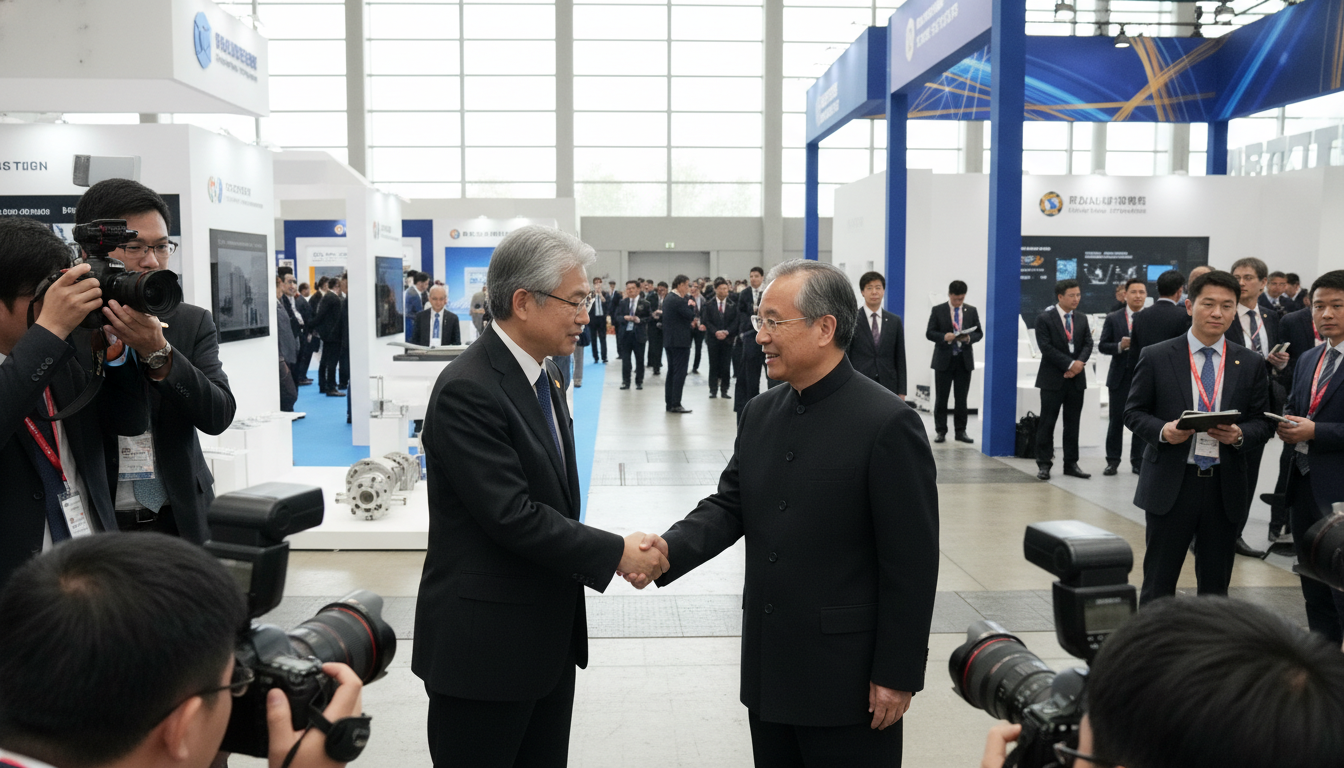
Japanese economic delegation to China, led by Yohei Kono, to visit Beijing in June
A Japanese economic delegation to China will visit Beijing from June 21 to 24, led by former House Speaker Yohei Kono, sources said.
The delegation, organized by the Association for the Promotion of International Trade, is slated to inspect the China International Supply Chain Expo and hold talks with senior Chinese officials.
The trip would mark the first official economic mission to China since tensions surged after Prime Minister Sanae Takaichi’s remarks last year.
Delegation Set to Visit Beijing
The Association for the Promotion of International Trade plans to send a delegation to China between June 21 and June 24, officials familiar with the matter said.
The delegation will attend the China International Supply Chain Expo in Beijing, which runs from June 22 to June 26, and is expected to meet with Chinese counterparts during its stay.
This mission is intended as an economic and trade-focused visit rather than a political summit, according to people close to the organizers.
Sources indicate this year’s delegation will be smaller than last year’s, reflecting a more focused agenda and careful calibration of diplomatic optics.
Context: Takaichi Remarks and Beijing’s Reaction
The planned visit comes after a period of strained ties following comments last year by Prime Minister Sanae Takaichi about a potential Taiwan contingency.
Those remarks drew strong criticism from Beijing and chilled high-level exchanges, particularly on economic cooperation and trade diplomacy.
The timing of this delegation suggests both sides are testing avenues for limited restoration of dialogue in trade and supply-chain matters.
Observers say that resuming even technical-level engagement on economic issues could help reduce short-term risks to bilateral commerce.
Yohei Kono’s Role and Historical Resonance
The delegation is led by Yohei Kono, a veteran lawmaker and former chief cabinet secretary who issued a landmark 1993 statement expressing “sincere apologies and remorse” regarding wartime comfort women.
Kono’s standing in Japan and his historical gestures toward reconciliation are believed to have influenced Beijing’s decision to accept the group.
Beijing’s willingness to receive a delegation headed by Kono is interpreted as a gesture of respect for his personal legacy and past statements.
Analysts note that the choice of a respected elder statesman may be intended to lower political friction and emphasize the mission’s economic focus.
Planned Itinerary and Expo Engagement
A central objective of the trip is an inspection of the China International Supply Chain Expo, a major trade event in Beijing that showcases logistics, manufacturing, and supply-chain solutions.
Delegates will tour exhibition halls, meet industry representatives, and attend panels designed to highlight cross-border supply-chain resilience.
In addition to the expo, the delegation is expected to request meetings with senior Chinese officials to discuss trade conditions and practical cooperation.
Last year’s delegation secured a meeting with Chinese Premier Li Qiang, and organizers hope to secure similarly substantive discussions this year, albeit on a reduced scale.
Diplomatic Significance and Signals from Beijing
Analysts say Beijing’s acceptance of the delegation sends a calibrated signal: China is open to pragmatic engagement on economic matters while maintaining firm objections to rhetoric it views as provocative.
This visit could serve as a low-risk channel for re-establishing communication and managing economic friction between the two countries.
Japanese officials are likely to frame the visit as industry-led and technical to avoid escalating political controversy.
Observers caution that outcomes will depend on follow-through and whether both capitals can compartmentalize economic collaboration from broader security and diplomatic disputes.
Business Expectations and Economic Stakes
Japanese businesses remain closely attuned to developments, given deep integration of supply chains across East Asia and the centrality of China in manufacturing and logistics.
The expo and bilateral meetings offer companies opportunities to discuss bottlenecks, regulatory hurdles, and potential areas for investment and cooperation.
Domestic exporters and supply-chain managers will watch for practical agreements or memoranda that could ease trade flows or improve logistical coordination.
Even modest steps toward cooperation could have outsized effects in sectors dependent on cross-border parts, semiconductors, and advanced manufacturing inputs.
The delegation’s schedule and composition reflect a cautious, pragmatic approach to re-engagement focused on trade continuity and industrial cooperation.
If the visit proceeds smoothly it may open the door to further technical exchanges, while any diplomatic misstep could reinforce existing tensions and complicate business planning.

