
Iran drone attack intercepted near Strait of Hormuz; US strikes Qeshm Island military sites
U.S. Central Command says an Iran drone attack toward the Strait of Hormuz was intercepted on June 5, 2026; U.S. struck Qeshm Island facilities. U.S. reply.
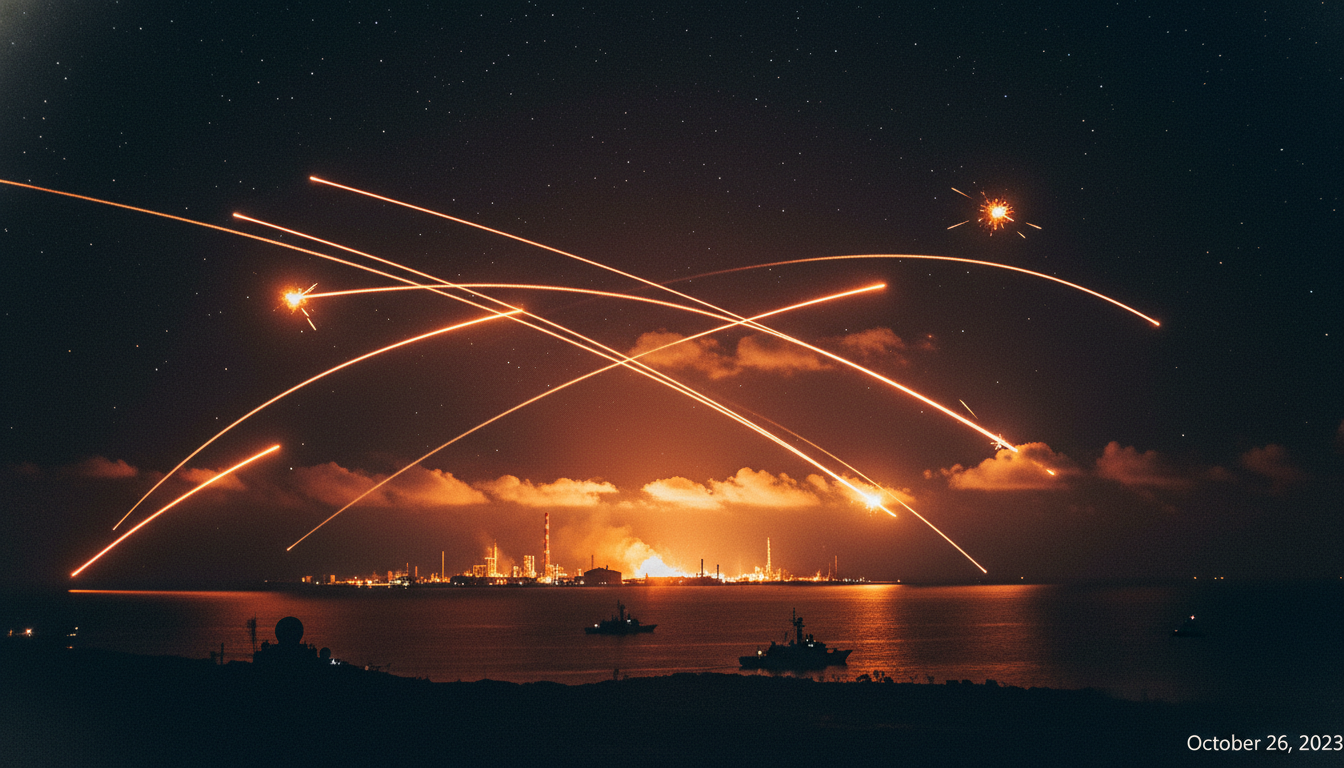
On June 5, 2026, U.S. Central Command reported it intercepted multiple unmanned aerial vehicles and later engaged Iranian military sites after an Iran drone attack was launched toward the Strait of Hormuz. The U.S. said four suicide-style drones were detected heading into the strategic waterway and were neutralized by U.S. forces. The strikes and counterstrikes mark a significant escalation as regional tensions have continued to rise.
U.S. intercepts Iran-launched drones near Strait of Hormuz
U.S. Central Command said four explosive-laden unmanned aerial vehicles were fired from Iranian territory toward the Strait of Hormuz on June 5. The command reported that all four were intercepted before they reached shipping lanes critical to global oil flows.
The U.S. described the drones as "kamikaze" or suicide-type systems that would have posed a direct threat to commercial vessels and naval assets in the narrow passage. Officials framed the interceptions as defensive actions to protect maritime traffic and U.S. forces operating in the region.
U.S. strikes military facilities on Qeshm Island to prevent further attacks
Following the drone interceptions, CENTCOM said U.S. forces struck multiple Iranian military facilities located on Qeshm Island, an Iranian-controlled island in the northern Persian Gulf. The targets included ground control stations and other infrastructure CENTCOM assessed were used to launch or guide unmanned systems.
U.S. officials characterized the strikes as limited and intended to degrade the capability for further attacks, saying they were executed to prevent imminent threats. The operation marks a direct kinetic response after what U.S. commanders described as a pattern of hostile activity emanating from Iranian sites.
Ballistic missiles fired toward Kuwait and Bahrain; most intercepted
Hours after the exchanges involving drones and the Qeshm strikes, CENTCOM reported that Iran fired seven ballistic missiles toward the Gulf states of Kuwait and Bahrain. U.S. forces intercepted six of the missiles, according to the command, while one missile failed to reach its intended target and fell short.
The intercepted missiles heightened concerns about the potential for civilian casualties and damage to regional infrastructure, given the proximity of the launches to populated areas and commercial ports. U.S. defenses have, for now, contained the immediate missile threat, but officials warned the situation remains volatile.
Iranian state-linked media reports warnings to tanker traffic without mentioning drones
Tasnim, a news agency closely linked to Iran’s Islamic Revolutionary Guard Corps, reported on June 6 that the Revolutionary Guard had "warned" four U.S.-escorted oil tankers in the Strait of Hormuz. The Tasnim dispatch did not reference the drone launches that U.S. forces said they had intercepted the previous day.
The differing public narratives underscore a gap between U.S. military statements and Iranian state-affiliated outlets. Each side is framing incidents through its own security lens, complicating international efforts to assemble a single, independently verified account of actions on the ground and sea.
Escalation occurs amid stalled talks to end hostilities
The exchange of strikes came as diplomatic efforts to de-escalate regional tensions have shown little progress, with negotiators reportedly unable to reach an agreement to halt retaliatory strikes. Military officials on both sides have continued to present limited strikes as targeted and necessary to prevent further attacks.
Analysts say the pattern of tit-for-tat strikes increases the risk that a limited confrontation could expand, drawing in regional partners or prompting broader retaliatory measures. For now, the incidents remain geographically concentrated in the Gulf and around Qeshm Island, but they have raised alarms in capitals worldwide.
Regional shipping, diplomacy and the risk of miscalculation
The Strait of Hormuz is a chokepoint for roughly a fifth of global seaborne oil trade, and any sustained disruption would have immediate economic consequences. Shipping companies have already signaled heightened vigilance following the reported drone launches and missile activity.
Diplomats and maritime security experts warned that the current pace of confrontations heightens the risk of miscalculation, where a single technical error or misidentified actor could spur broader military reprisals. Calls for restraint and for renewed talks to secure maritime safety have been issued by several regional and international actors, even as public statements from Tehran and U.S. commands reflect different narratives.
The coming days will be closely watched for further military movements, official statements from Iran and Gulf partners, and any international mediation efforts. Intelligence assessments and on-the-ground reporting will be critical to clarifying particulars and preventing further escalation.

