
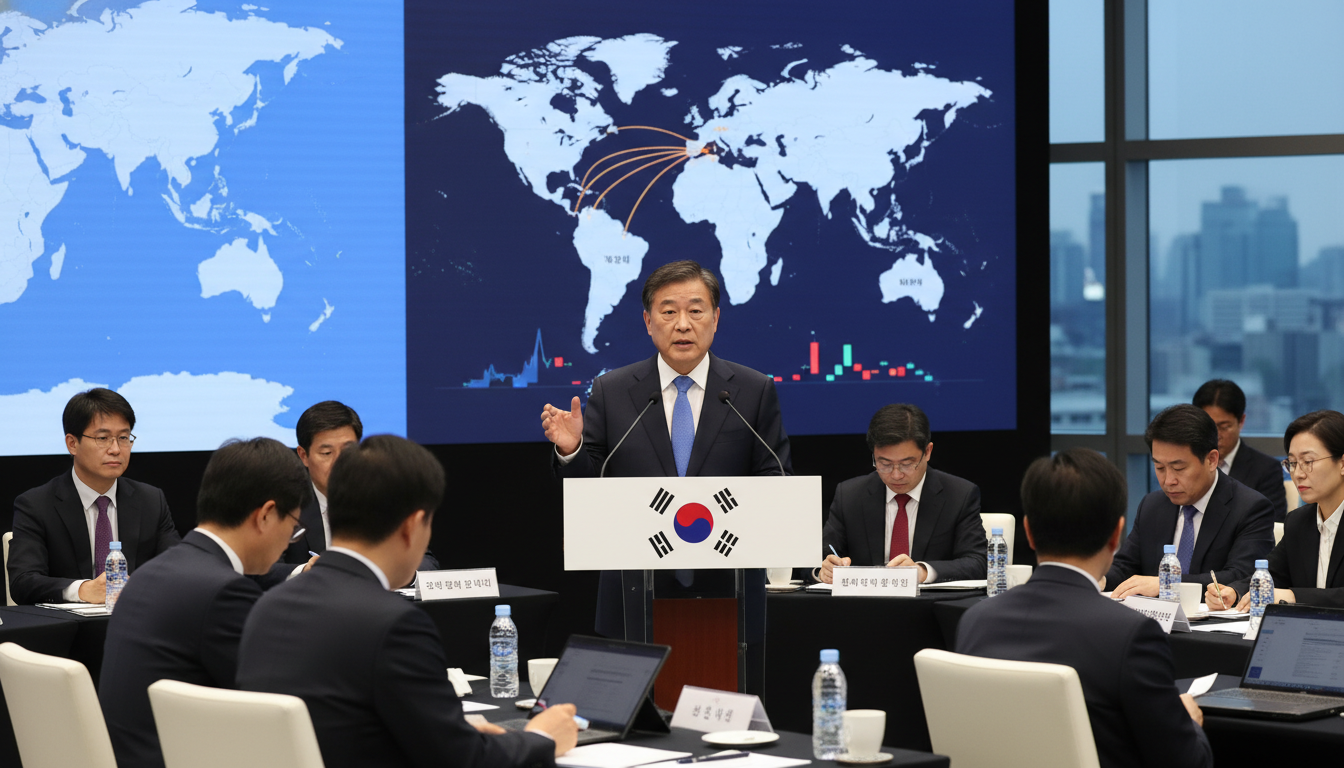
South Korea-Japan energy cooperation urged by trade minister amid Middle East war and import risks
Yeo Han-koo urged stronger South Korea-Japan energy cooperation in Tokyo on April 22, saying the Middle East war and heavy import dependence make joint action essential.
South Korea’s trade minister, Yeo Han-koo, told reporters and officials in Tokyo on April 22 that the war in the Middle East has sharpened risks to energy supplies and underscored the need for closer coordination with Japan. He said the two economies face a shared vulnerability because both rely heavily on fuel and liquefied natural gas imports, and he proposed a range of cooperative measures to reduce exposure. The remarks, delivered during a bilateral dialogue, framed energy partnership as central to maintaining stable trade and industrial activity.
Yeo highlights immediate risks from Middle East conflict
Yeo warned that disruptions in Middle East shipping routes and market volatility could quickly translate into higher costs and supply shortages for Northeast Asia. He emphasized that both nations import a large share of crude oil and LNG from the region, and that a prolonged conflict could strain industrial supply chains and consumer energy bills. The minister urged Tokyo and Seoul to treat energy security as a shared strategic priority rather than a solely domestic policy issue.
He also called for joint contingency planning and information-sharing on logistics and reserves. Yeo noted that coordinated release of reserves, mutual support for shipping security, and aligned market responses would blunt the worst short-term impacts of any major disruption.
Current import exposure between Seoul and Tokyo
South Korea and Japan are among the world’s largest importers of fossil fuels, with limited domestic production capacity for oil and gas. Both countries depend heavily on maritime routes that pass near the Middle East, making them sensitive to disruptions in the Strait of Hormuz and surrounding waters. Analysts say this exposure has led companies and governments in both countries to monitor tanker flows and freight insurance rates more closely in recent months.
The trade minister pointed to the concentration of suppliers as a structural weakness that elevates price risk during geopolitical shocks. He argued that diversifying supply chains and building complementary infrastructure could lower systemic vulnerability for both economies.
Proposed areas for South Korea-Japan energy cooperation
Yeo outlined several practical measures to deepen South Korea-Japan energy cooperation, including joint investments in LNG terminals, shared use of strategic petroleum reserves, and coordinated procurement strategies. He suggested that pooling market intelligence and synchronizing purchase windows could reduce price volatility for both countries’ utilities and industrial users. The minister also raised the possibility of bilateral agreements to facilitate cross-border energy flows and emergency swaps of refined products.
Beyond fossil fuels, Yeo proposed collaboration on renewable energy deployment and hydrogen development as medium-term priorities. He said joint research, standards alignment, and infrastructure linkages could accelerate the transition and create commercial opportunities for firms in both countries.
Economic and trade implications for industry
Heightened energy insecurity carries direct implications for manufacturers and exporters across South Korea and Japan, especially in sectors with high energy intensity such as chemicals, steel, and semiconductor fabrication. Rising fuel costs can erode competitiveness and feed into inflation, prompting central banks and fiscal authorities to reassess policy levers. Yeo emphasized that minimizing supply shocks through cooperative resilience measures is essential to protect jobs and sustain growth.
Business groups in both countries have signaled support for government-led coordination, urging clearer frameworks to enable private investment in cross-border projects. The minister framed such public-private partnerships as a necessary complement to bilateral government action.
Diplomatic context and recent relations between Seoul and Tokyo
Yeo’s appeal for closer coordination comes amid a period of cautious diplomatic thawing between Seoul and Tokyo after years of trade and historical disputes. Officials in both capitals have said they favor pragmatic cooperation on economic and security matters, while domestic sensitivities continue to temper rapid rapprochement. The trade minister portrayed energy cooperation as an area where mutual interest can produce tangible results without immediately resolving more contentious historical or territorial issues.
He also stressed the broader regional dimension, saying that enhanced South Korea-Japan cooperation would contribute to stability across Northeast Asia and support allies that depend on uninterrupted energy flows.
Next steps and planned exchanges following talks in Tokyo
Following the Tokyo meeting, Yeo indicated that his ministry would begin technical consultations with Japanese counterparts to map specific projects and timelines. He said delegations would explore pilot schemes for joint LNG procurement and intergovernmental agreements on emergency reserve sharing. The minister set a pragmatic tone, noting that some measures could be implemented quickly while others, such as infrastructure linkages and hydrogen markets, would require longer-term planning.
Yeo called for regular ministerial-level exchanges to monitor risks and coordinate policy responses, and he invited business leaders from both countries to participate in follow-up working groups.
Yeo’s appeal for South Korea-Japan energy cooperation in Tokyo underlines a shared recognition that regional stability and economic resilience depend on pragmatic, technical collaboration. As officials move from discussion to planning, the scope and speed of any joint measures will be watched closely by industry and international partners alike.

