
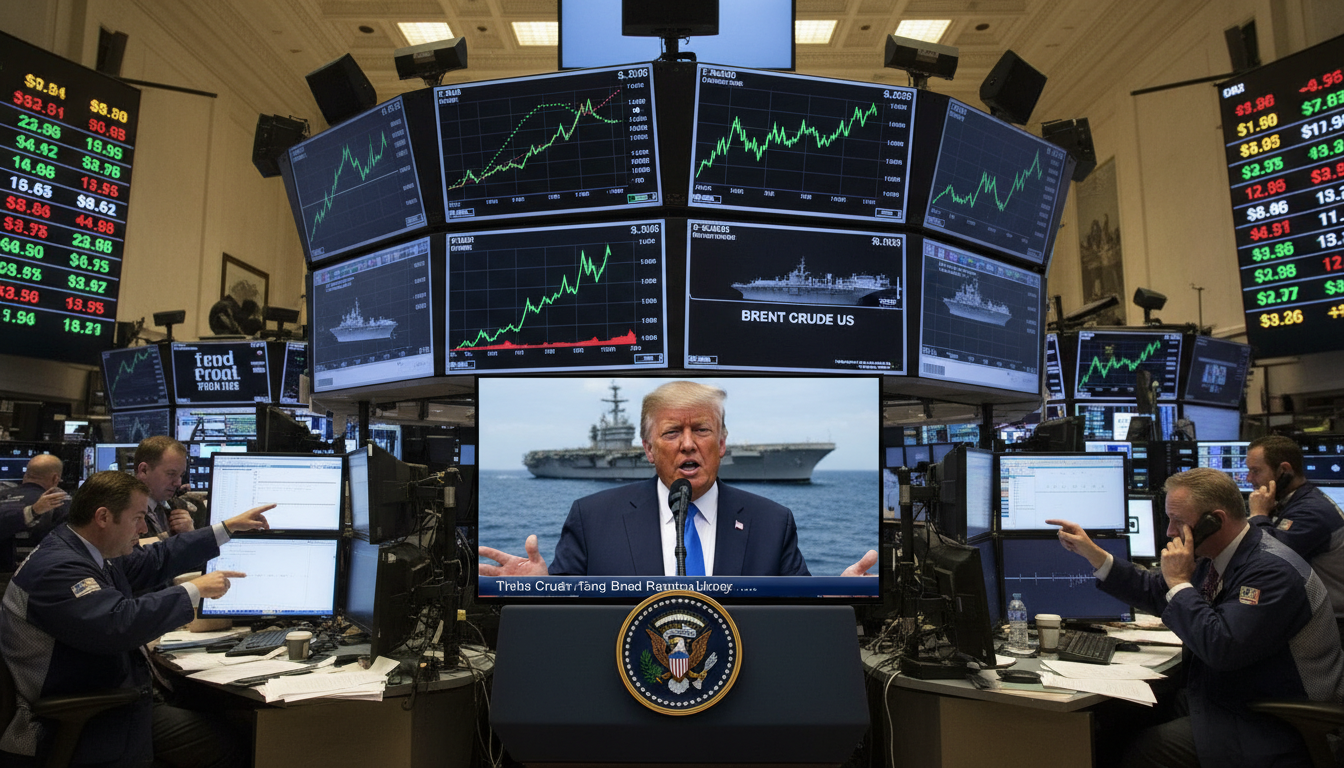
US-Iran Clash in Strait of Hormuz Sends Brent Above $106 as Shipments Halt
Oil prices climbed after renewed Strait of Hormuz tensions disrupted shipping and U.S. President Donald Trump ordered tighter naval controls on vessel transits.
Market Reaction to Strait of Hormuz Tensions
Brent crude surged above $106 per barrel on April 24, 2026, as confrontations between Washington and Tehran intensified in the Strait of Hormuz. The international benchmark rose nearly 5 percent from Wednesday’s close, reflecting fears of prolonged disruption to a major oil transit route.
U.S. equity markets reacted cautiously, with the S&P 500 and Nasdaq slipping amid the spike in energy prices and heightened geopolitical risk. Traders cited supply concerns and the prospect of broader military entanglement as drivers of volatility in commodity and equity markets.
U.S. Naval Orders and Public Statements
President Donald Trump announced on social media that he had directed the U.S. Navy to take aggressive action against Iranian vessels placing mines and to exercise authority over ship movements in the strait. The White House and Pentagon actions followed the seizure of a tanker alleged to be carrying sanctioned Iranian oil, a move officials said was part of enforcement of maritime sanctions.
The president’s statements appeared to broaden U.S. naval posture, saying ships would require approval to transit the waterway. Military and diplomatic sources cautioned that such declarations could further escalate tensions if implemented without multilateral backing.
Iran’s Seizures and Conflicting Official Accounts
Iran’s Islamic Revolutionary Guard Corps (IRGC) announced the capture of two foreign cargo vessels, naming the Panamanian-flagged MSC Francesca and the Greek-owned Epaminondas. The IRGC accused the ships of operating without proper permits and tampering with navigation systems, asserting the seizures were aimed at protecting maritime security.
Greek authorities disputed at least one of those claims, saying the Epaminondas remained under the control of its captain and had not been taken. Independent maritime trackers reported inconsistencies in ship movements and communications that underscored the difficulty of independently verifying conflicting official narratives in the congested waterway.
Sharp Decline in Commercial Transits
Maritime traffic through the Strait of Hormuz dropped precipitously, with only nine commercial transits recorded on Wednesday, compared with 15 on Monday and seven on Tuesday, according to maritime intelligence firm Windward. The decline follows a sharp departure from the pre-conflict daily average of about 129 transits before major hostilities began on February 28.
Analysts warn that continued reductions in passage could choke supply lines for crude oil and liquefied natural gas that routinely move through the strait. Shipping companies are rerouting vessels where possible, but alternative routes add time and cost, and cannot fully substitute for the capacity the strait provides.
Energy Supply Concerns and Global Impact
The Strait of Hormuz typically handles around one-fifth of global oil and gas shipments, making disruptions there disproportionately impactful on world energy markets. A sustained stoppage or wider naval confrontation could force emergency releases from strategic petroleum reserves and prompt coordinated international action to stabilize markets.
Refiners and trading houses have already priced in a risk premium, pushing prompt oil contracts higher and encouraging some buyers to seek alternatives. Economists note that prolonged uncertainty in shipping lanes may feed into inflationary pressures at a time when many economies are sensitive to energy cost swings.
Diplomatic Pressure and Calls for De‑escalation
International actors, including maritime organizations and trading partners, have urged restraint and called for urgent diplomatic engagement to defuse the situation. Shipping insurers and classification societies have warned of growing premiums and potential refusals to cover transits through high-risk zones.
Diplomatic channels are reportedly active behind the scenes, with several countries seeking to mediate and restore agreed norms for navigation through the Strait of Hormuz. Observers said multilateral coordination will be critical to re-establish predictable commercial flows and prevent further contagion in energy markets.
The immediate trajectory of the crisis will depend on whether Tehran and Washington can avoid direct military confrontation while addressing claims and counterclaims over vessel behavior. Market participants will be watching naval movements, official statements, and transit statistics for signs of either escalation or containment.

