
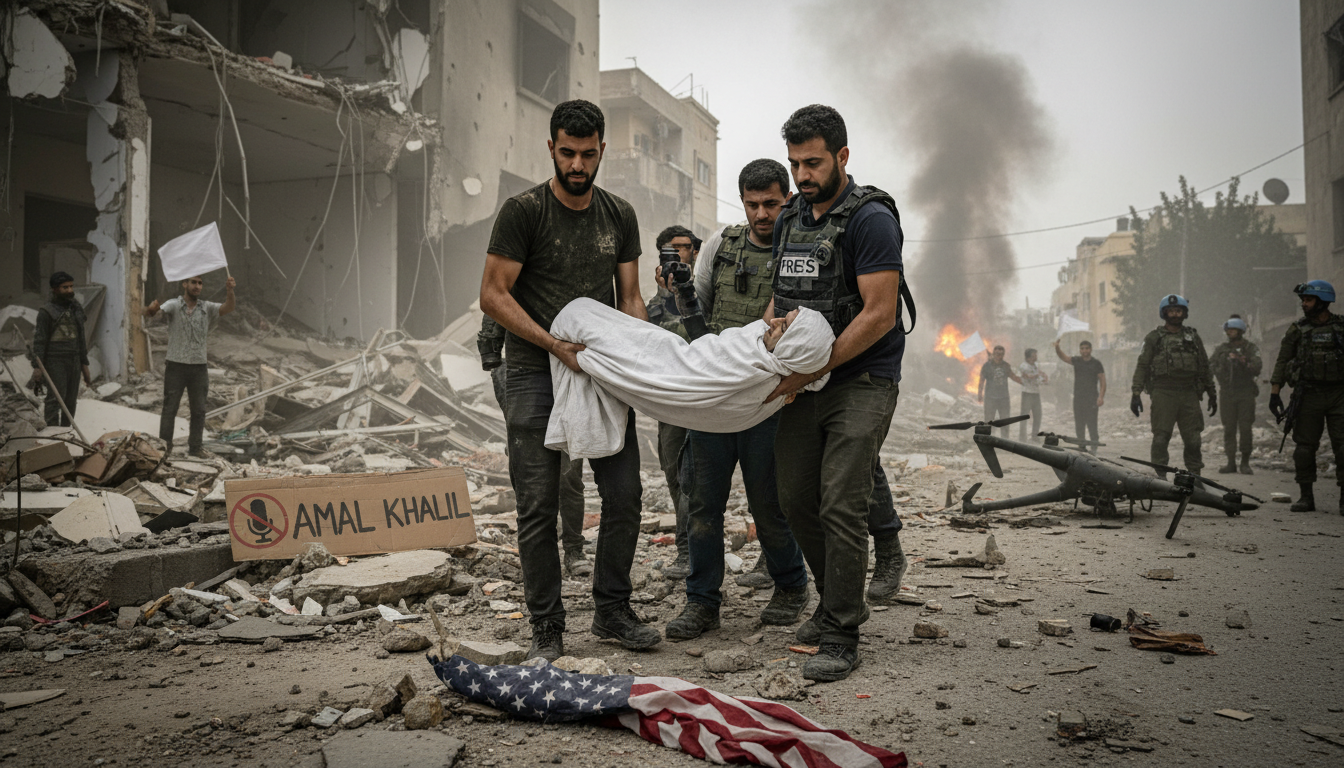
Journalist Killed in Southern Lebanon as Ceasefire Frays
A Lebanese journalist was killed in southern Lebanon on Wednesday, and a colleague wounded, after an Israeli air strike hit al-Tayri despite a US-backed ceasefire announced last week.
Attack in al-Tayri
Amal Khalil, 43, a journalist covering the aftermath of earlier strikes, was killed when a second Israeli strike struck the house where she had taken shelter, officials said. Her colleague, freelance photographer Zeinab Faraj, suffered a head injury and was evacuated after rescuers reached her at the scene. Local health ministry statements and media reports described an initial strike that hit a car in front of the two journalists, prompting them to seek shelter before the subsequent hit on the house.
Ambulance and rescue access denied
Rescuers attempting to reach Khalil were reportedly impeded when Israeli forces fired on an ambulance and deployed a stun grenade near the site, according to the Lebanese health ministry. Medical teams said they were only able to recover Khalil’s body several hours later, after repeated attempts to access the location. The obstruction of ambulance crews and delayed retrieval of the wounded intensified concerns about protection for civilians and first responders in the area.
Official condemnation and legal claims
Lebanon’s Prime Minister Nawaf Salam described the killing as a “war crime” and pledged to pursue the matter before relevant international bodies. Khalil’s employer, the daily Al-Akhbar, mourned her death and noted she had received threats from unknown sources in 2024, highlighting the heightened risks faced by reporters. The Lebanese government and media organizations called for transparent investigations into the circumstances of the strike and the reported interference with rescue operations.
Ceasefire violations and military escalation
The attack occurred amid reports that Israel has continued strikes, demolitions, and ground raids in southern Lebanon even after a US-backed truce was announced last week. The same day saw seven people killed in strikes, the highest daily toll since the ceasefire took effect, officials said. Hezbollah has responded to repeated violations with rocket and drone launches at Israel this week, contributing to a volatile security environment along the border.
Journalists’ casualties and threats
Journalist safety groups say targeting and attacks on media workers have intensified since October 2023, with dozens killed across the region in that period. In Lebanon and Gaza, media workers have been among the civilian casualties, and outlets warn that sustained violence and threats undermine independent reporting. Families and colleagues of Khalil have called for stronger measures to ensure the safety of journalists covering conflict and humanitarian crises.
Rights groups and international reaction
The Committee to Protect Journalists (CPJ) said it was “outraged” by the attack and held Israeli forces responsible for endangering journalists and obstructing medical access, according to a CPJ regional director. Human rights organizations urged independent inquiries and reiterated that strikes on locations known to shelter journalists or that obstruct medical assistance may breach international humanitarian law. Diplomatic channels and NGOs are pressing for unfettered access for investigators and for guarantees that journalists and ambulances be protected during operations.
Reporting from the scene indicates the incident has renewed calls for accountability and safeguards for press freedom in conflict zones. The killing of Amal Khalil adds to growing international scrutiny over conduct in the south Lebanon theatre and raises fresh questions about the durability of the recent truce.
The conflict’s immediate outlook remains uncertain as hostilities continue to flare and the declared 10-day truce approaches its scheduled end, fueling fears of further civilian harm and press casualties.

