
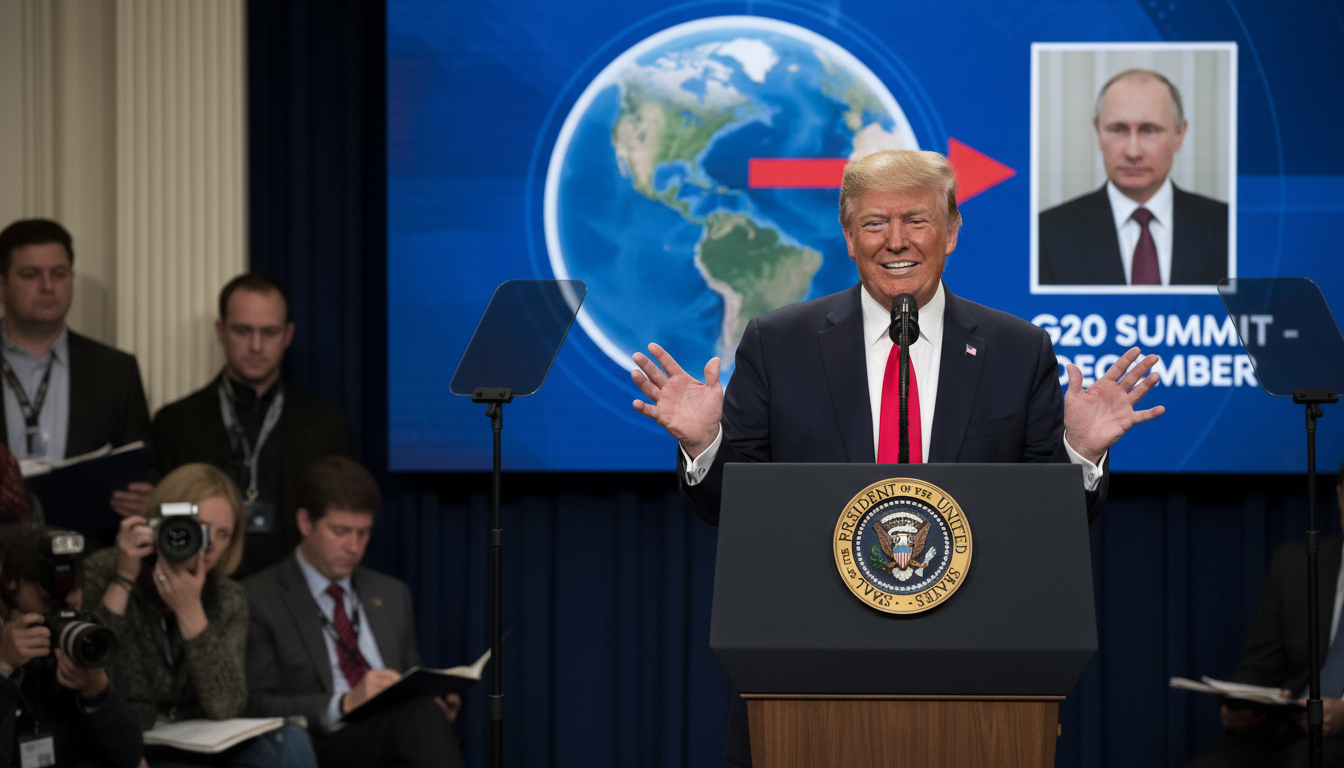
Trump Signals Intention to Invite Putin to December G20 Summit, Calls Potential Visit “Useful”
Trump plans to invite Vladimir Putin to the December G20 summit, calling his attendance "useful" while expressing doubt Putin will accept, U.S. officials say.
President Donald Trump said on April 23, 2026, that he intends to invite Russian President Vladimir Putin to the G20 summit the United States will host in December, portraying a potential face-to-face meeting as potentially beneficial even as he conceded he did not expect Putin to attend. The remark, reported by U.S. media and confirmed in part by State Department comments, thrust the question of Russia’s participation back into international debate.
White House Statement and Presidential Comments
At a White House event, Mr. Trump told reporters he was considering extending an invitation to President Putin for the December G20 summit and described such a meeting as “probably very useful” if it occurred. He also said candidly that he did not believe Putin was likely to come.
A State Department spokesperson later clarified that Russia, as a G20 member, is being invited to the forum’s working-level meetings and that the administration had signaled openness to Russia’s attendance across preparatory sessions. The comments stopped short of detailing the formal invitation process for heads of state.
Reporting and Timeline of the Invitation News
U.S. news outlets reported on April 23, 2026, that the White House planned to invite President Putin to the leaders’ summit in December, prompting swift reaction in capitals and diplomatic circles. The reports said the outreach would come as the United States holds the G20 presidency and prepares to host the year-end meeting.
Officials have not published a formal guest list, and protocol for invitations to leaders can involve multiple diplomatic steps, including consultation with other members and logistical coordination with the host country.
Putin’s Absence from Recent Summits and Legal Obstacles
President Putin has not attended recent in-person global summits since Russia’s 2022 invasion of Ukraine, and his travels abroad have been constrained by legal and diplomatic hurdles. International criminal proceedings and the prospect of arrest in some jurisdictions have been cited by analysts as a principal reason for his absence from certain forums.
Those concerns complicate the prospect of a high-profile return to a G20 leaders’ table, where host-country legal obligations and the presence of other states could create exposure. Analysts say any plan to welcome Putin would have to account for legal, security and political ramifications across multiple capitals.
Domestic and Allied Reactions to Invitation Talk
Within the United States, lawmakers and former officials expressed mixed views on the advisability of inviting Mr. Putin, with critics warning that formal engagement could be seen as normalizing conduct tied to the war in Ukraine. Supporters of engagement framed the invitation as a pragmatic channel for high-level diplomacy.
European governments and other G20 members are expected to watch developments closely, with some allies likely to raise objections if a formal invitation is issued without prior consultation. Diplomatic sources say member states often exchange views in advance of leader-level outreach to avoid surprise at the summit itself.
Diplomatic and Security Implications for the December Summit
Inviting the Russian president would present the Biden administration’s successor with immediate practical questions about summit security, legal exposure and the tone of multilateral deliberations. Host nations typically bear responsibility for the safety of visiting leaders and must navigate any international arrest warrants or travel restrictions.
A high-profile attendance by Putin could reshape agenda priorities and bilateral meeting opportunities, presenting both risks and potential openings for de-escalation. Summit planners will need contingency arrangements to manage optics, protocol and the participation of delegations opposed to Russia’s policies.
Practical Steps Ahead for G20 Organizers
Organizers must determine whether to send a formal head-of-state invitation and, if so, how to coordinate with other G20 members on procedural and legal matters. The State Department’s affirmation that Russia is invited to working-level sessions signals a limited engagement approach that stops short of confirming a leaders’ invitation.
Diplomatic contacts and preparatory meetings in the coming months will test how far capitals are willing to accommodate a Russian return to the leaders’ table. Officials say the calendar of working groups, ministerial gatherings and bilateral talks will shape any final decision on attendance.
The United States’ public consideration of a Putin invitation to the December G20 summit underscores the persistent tension between diplomatic outreach and accountability for the war in Ukraine, leaving governments and summit planners with complex choices as they prepare for the year-end meeting.

