
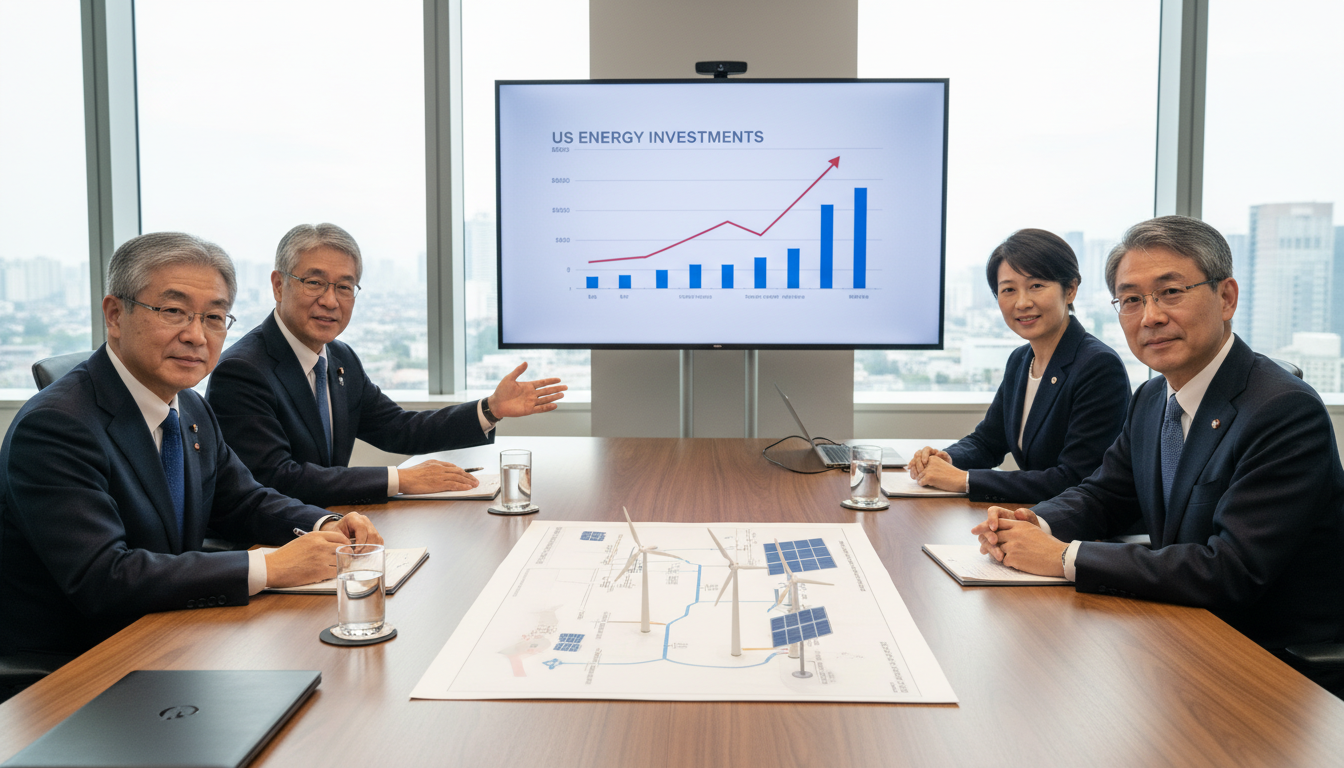
Japan megabanks and JBIC to lend ¥250 billion for first U.S. projects under Japan-U.S. tariff agreement
Japan’s megabanks and state-backed JBIC will provide ¥250 billion in loans for initial U.S. projects under the Japan-U.S. tariff agreement, targeting energy and industrial investments.
Japan’s three megabanks and the government-backed Japan Bank for International Cooperation (JBIC) will supply an initial ¥250 billion (about $1.5 billion) in loans to three U.S. projects under the Japan-U.S. tariff agreement, informed sources said. The financing marks the first tranche of a broader pledge in which Japan agreed to provide up to $550 billion in loans and investments in exchange for lower U.S. tariffs. The move covers construction and industrial projects that Japanese officials and private financiers say aim to bolster U.S. energy capacity and strategic manufacturing.
Financing package and participating lenders
The ¥250 billion package is structured with one-third supplied by JBIC and two-thirds by Japan’s three megabanks: MUFG Bank, Sumitomo Mitsui Banking Corporation and Mizuho Bank. State-backed Nippon Export and Investment Insurance (NEXI) is expected to guarantee the banks’ loans, reducing credit risk for the participating financial institutions.
Officials and banking sources indicated that the initial loans cover only the first round of projects and that additional capital could be injected in staged tranches as project milestones are met. The three projects in the first round are collectively estimated at roughly $36 billion in total value, well above the initial loan amount.
Projects selected for first-round financing
The first round targets three distinct projects: the construction of a gas-fired thermal power plant in Ohio, development of crude oil export facilities, and production facilities for synthetic diamonds. Each project reflects different strategic priorities, from energy supply to export infrastructure and advanced manufacturing capability.
Project developers and Japanese backers have framed the selections as complementary: the Ohio power plant addresses regional electricity demand, export facilities expand energy logistics capacity, and synthetic diamonds represent a high-value industrial product with technological and supply-chain significance.
Roles of JBIC, megabanks and NEXI guarantees
JBIC’s participation signals active public-sector backing for the initiative, leveraging its mandate to support overseas projects that serve national economic and diplomatic interests. The megabanks’ involvement provides private-sector capital and underwriting capacity crucial for closing deals in complex, multi-billion-dollar projects.
NEXI’s expected guarantees will cover loan exposures taken by the commercial banks, a mechanism designed to unlock larger private lending pools by transferring some political and commercial risk to a government-backed insurer. This public-private arrangement enables faster mobilization of funds while aligning with the broader Japan-U.S. tariff agreement objectives.
Link to the Japan-U.S. tariff agreement and prior pledges
Tokyo’s loans are part of the broader Japan-U.S. tariff agreement in which Japan pledged up to $550 billion in loans and investments to the United States in return for tariff relief. The arrangement, announced earlier, aims to recalibrate trade and industrial ties by coupling tariff concessions with targeted financing for U.S. infrastructure and manufacturing projects.
Earlier this year, in March, a second round of projects under the pledge was disclosed; those projects reportedly included next-generation nuclear and additional natural gas-fired power developments. Policymakers on both sides have described the program as an effort to deepen economic integration while supporting domestic objectives in each country.
Economic and strategic implications for both nations
For Japan, mobilizing bank capital and JBIC funds overseas advances industrial policy aims while securing business for its financial institutions and equipment manufacturers. The strategy may help Japanese companies win contracts for construction, machinery and high-tech components tied to the financed projects.
For the United States, the inflow of Japanese capital can accelerate construction timelines, enhance energy infrastructure, and support regional economic activity through job creation and supply-chain development. At the same time, the arrangement raises questions about political optics and the balance between economic sovereignty and the benefits of foreign-backed financing.
Implementation steps and future financing rounds
Sources said the initial ¥250 billion will be disbursed to the three projects and that additional investments will be considered in subsequent stages depending on project performance and evolving bilateral priorities. The financing is structured to allow follow-on investments, reflecting both commercial assessment and political coordination between Tokyo and Washington.
Stakeholders expect detailed loan terms, schedules and project-specific conditions to be finalized as agreements with individual developers advance. Observers will watch closely for announcements on contracting, environmental approvals and construction timelines that will determine when the next rounds of capital are deployed.
The coordinated lending package underscores Tokyo’s commitment to the tariff agreement and represents a significant example of public-private cooperation aimed at reshaping industrial and energy links between Japan and the United States.

