
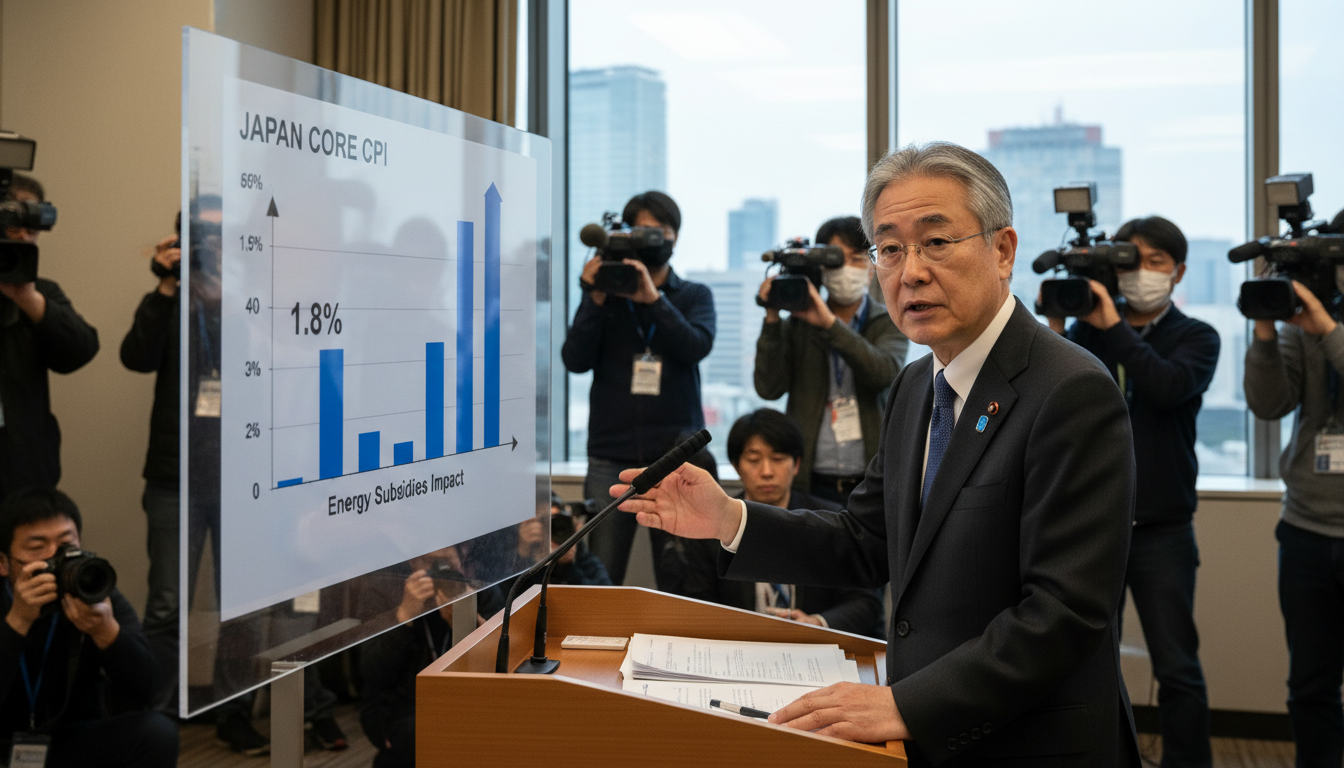
Japan core inflation rises to 1.8% in March, kept below BOJ target by energy subsidies
Japan core inflation rose 1.8% in March, below the BOJ’s 2% target as government energy subsidies eased consumer costs amid Middle East-driven price pressures.
TOKYO — Japan’s core inflation edged up to 1.8% year-on-year in March but remained below the Bank of Japan’s 2% target for the second consecutive month, government figures showed on April 24, 2026. The measured rise in core CPI, which excludes fresh food, reflected broader price pressures while being restrained by a government package of energy subsidies introduced amid elevated global oil and gas prices. Policymakers and markets are now watching whether the subdued headline will temper pressure on monetary policy and whether underlying inflation will firm without fiscal supports.
Core inflation at 1.8% in March
Government statistics released Friday indicated core CPI rose 1.8% compared with the same month a year earlier, marking modest acceleration from recent months but still short of the BOJ’s objective. The data showed that while some categories such as services and food continued to push prices up, the overall reading was kept in check by suppressed energy costs after subsidy measures took effect. Analysts noted that the difference between headline and core figures narrowed only slightly as temporary measures offset spikes in imported energy.
Energy subsidies blunt the impact of international shocks
Tokyo implemented targeted subsidies aimed at reducing the immediate burden of higher energy bills on households and businesses, the government said, measures designed to blunt the impact of Middle East-related disruptions to global energy markets. Those subsidies reduced the pass-through of higher wholesale prices into retail energy tariffs and fuel, directly lowering the contribution of energy to core CPI. Officials have argued the measures were necessary to protect consumption while international markets remain volatile, though economists warn they also complicate assessment of underlying inflation momentum.
Household budgets and consumption trends
Despite the subsidy support, many households continue to face persistent cost pressures on everyday items, particularly in housing, utilities, and services, contributing to a mixed picture for real incomes. Survey data and retail sector reports point to cautious spending patterns, with consumers prioritizing essentials while discretionary purchases remain subdued. Policymakers are monitoring whether subsidies succeed in stabilizing consumption without displacing the longer-term adjustments consumers and companies must make in response to higher global commodity prices.
Wage growth and corporate pass-through remain critical
Sustained inflation at or above target will likely hinge on the pace of wage growth and the extent to which firms pass input cost increases onto consumers, economists say. Spring wage negotiations and pay decisions in coming months will be closely watched for signs of firms increasing base pay sufficiently to support sustained domestic demand. If wages remain stagnant while subsidies mask cost pressures, the risk is that inflation reverts downward once fiscal support is lifted, complicating efforts to achieve a stable 2% inflation rate.
Implications for Bank of Japan policy
The fact that Japan core inflation has not yet persistently surpassed the BOJ’s 2% threshold reduces immediate pressure on the central bank to tighten monetary conditions, according to policy observers. The BOJ has repeatedly emphasized the need for durable, wage-driven inflation before altering its long-standing accommodative stance, and the recent data reinforce that stance for now. Still, the central bank faces a delicate balance: signaling readiness to respond if inflation stabilizes above target while avoiding premature withdrawal of support that could derail a fragile recovery.
External risks and the path ahead
Global energy market volatility tied to geopolitical tensions remains the foremost external risk to Japan’s inflation outlook, with the potential for both sudden spikes and sharp reversals in commodity prices. Domestic factors, including corporate pricing behavior and labor market dynamics, will also shape whether Japan achieves a stable 2% inflation environment. Policymakers have highlighted that temporary fiscal measures can buy time for structural adjustments but are not a substitute for sustained private-sector wage growth.
Market participants and government officials said they will continue to monitor incoming data, including wage developments and service-sector price trends, to assess whether Japan core inflation can move sustainably toward the BOJ’s target. The coming months of wage negotiations and fiscal planning will be critical in determining whether the current pattern of subdued but positive inflation broadens into a self-sustaining cycle.

