
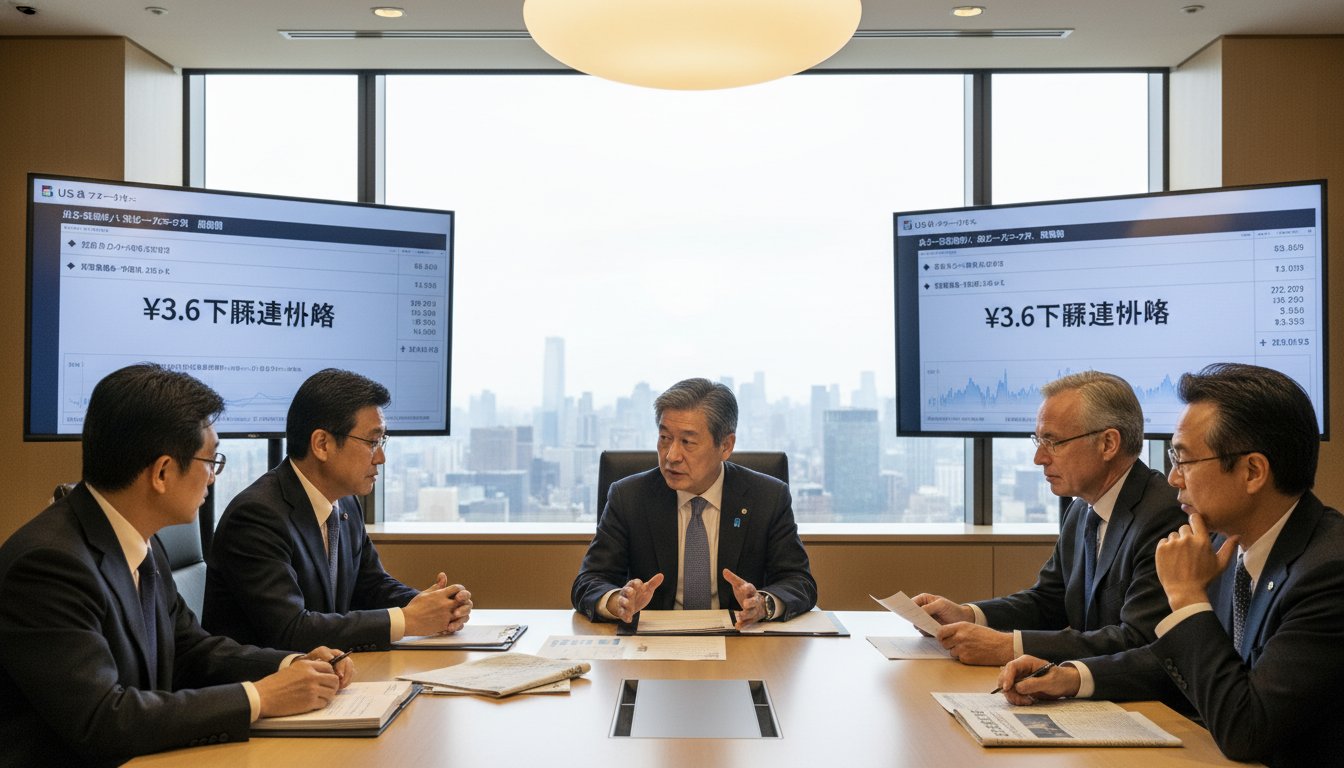
Japan megabanks weigh ¥3.6 trillion loan package to back initial U.S. investment projects
Three Japan megabanks are considering a combined ¥3.6 trillion loan to finance initial U.S. projects under a $550 billion investment pact, sources say, JBIC support.
The three Japan megabanks are weighing a collective loan of about ¥3.6 trillion to help fund the first tranche of projects under a $550 billion investment agreement with the United States. The planned lending, which involves MUFG Bank, Sumitomo Mitsui Banking and Mizuho Bank, would target roughly $36 billion in inaugural investments and is expected to be backed by government financing mechanisms. Sources said the move reflects growing momentum to channel private capital into large-scale infrastructure and industrial projects in the United States.
Megabanks consider structured lending of roughly ¥1.2 trillion each
Each of the three lenders is reportedly assessing loans of about ¥1.2 trillion, with coverage to be supported by Nippon Export and Investment Insurance. The arrangement would allocate risk between commercial banks and government-backed insurers to facilitate lending on a scale that might otherwise exceed single-bank limits. Officials and industry sources described the talks as focused on structuring credit lines that can be mobilized quickly for identified projects.
Bank executives have also been asked to prepare for potential follow-on financing for later rounds of the U.S. investment program. If the lenders extend financing beyond the initial round, their aggregate exposure could increase substantially as new projects move from planning to construction. Observers say the proposals are indicative of a broader shift toward coordinated public-private finance for overseas strategic investments.
Scope and financing of the initial $36 billion round
The initial target for the investment package is approximately $36 billion, drawn from the broader $550 billion commitment reached between Japan and the United States. That first phase will prioritize projects where Japanese firms can supply key components or services, officials said. The funding mix is expected to combine commercial bank loans, government-backed lending and insurance to make projects bankable for international partners.
Japan Bank for International Cooperation is set to play a central role in filling remaining funding gaps, with an announcement on its lending approach anticipated later this month. The JBIC’s participation is intended to reduce financing risk and attract private-sector co-investment by offering long-term loans and project support. Policy planners view this layered financing model as essential to meeting the scale and timelines required by the investment agreement.
Planned projects: Ohio gas plant, U.S. crude export facility, synthetic diamond plant
Three flagship projects have been identified for the first round: a large gas-fired power plant in Ohio, a crude oil export facility and a synthetic diamond manufacturing site aimed at semiconductor supply chains. The Ohio gas plant would be among the largest of its kind in the United States and is expected to draw equipment and engineering from Japanese industrial exporters. Major Japanese manufacturers, including firms with experience in heavy electrical and energy systems, have signaled interest in supplying components.
For the crude export facility, shipping, steel and logistics companies are seen as likely leaders on the Japanese side, positioned to invest in terminals and related infrastructure. The synthetic diamond project targets advanced materials used in semiconductor fabrication and could attract a range of Japanese technology and materials companies. Sources said the selection of these projects reflects a balance of energy security, industrial strategy and opportunities for Japanese suppliers.
JBIC commitment and insurance backing to lower project risk
Japan Bank for International Cooperation is expected to provide large-scale loans that will backstop much of the financing shortfall for the inaugural projects. JBIC’s involvement typically includes long-tenor loans and political risk mitigation, which can be crucial for attracting private lenders to complex infrastructure deals. Officials indicated JBIC plans to announce specific loan packages and risk-sharing terms before the end of the month.
Nippon Export and Investment Insurance’s role in providing guarantees would allow commercial banks to underwrite larger credits by mitigating credit and non-payment risks. This combination of JBIC lending and NEXI insurance is designed to align public policy objectives with private capital flows. Market analysts said the pairing could serve as a template for future rounds of the bilateral investment program.
Second-round projects and potential increase in bank exposure
Beyond the initial $36 billion, planners have already identified next-generation small modular reactor construction and other strategic projects for subsequent investment rounds. Banks have been asked to consider lending commitments for these later stages, which raises the prospect of much larger cumulative credit exposure. If commercial lenders participate across multiple rounds, the total amount they provide could grow well beyond the initial ¥3.6 trillion estimate.
Policy advisers and bankers are weighing how to manage concentration risk while meeting government objectives to boost industrial cooperation with the United States. Some industry participants favor syndication with international banks or use of project finance structures to spread risk. Others argue that strong public-participation components will be essential to make certain projects viable for private-sector underwriting.
Japanese lenders, government finance arms and private companies involved in the talks say the effort is part of a broader strategy to deepen economic ties with the United States while securing access to critical infrastructure and supply chains. The coming weeks are expected to bring formal announcements on JBIC’s lending plan and more detailed loan commitments from the three megabanks, which will clarify how public and private financing will be coordinated going forward.

