
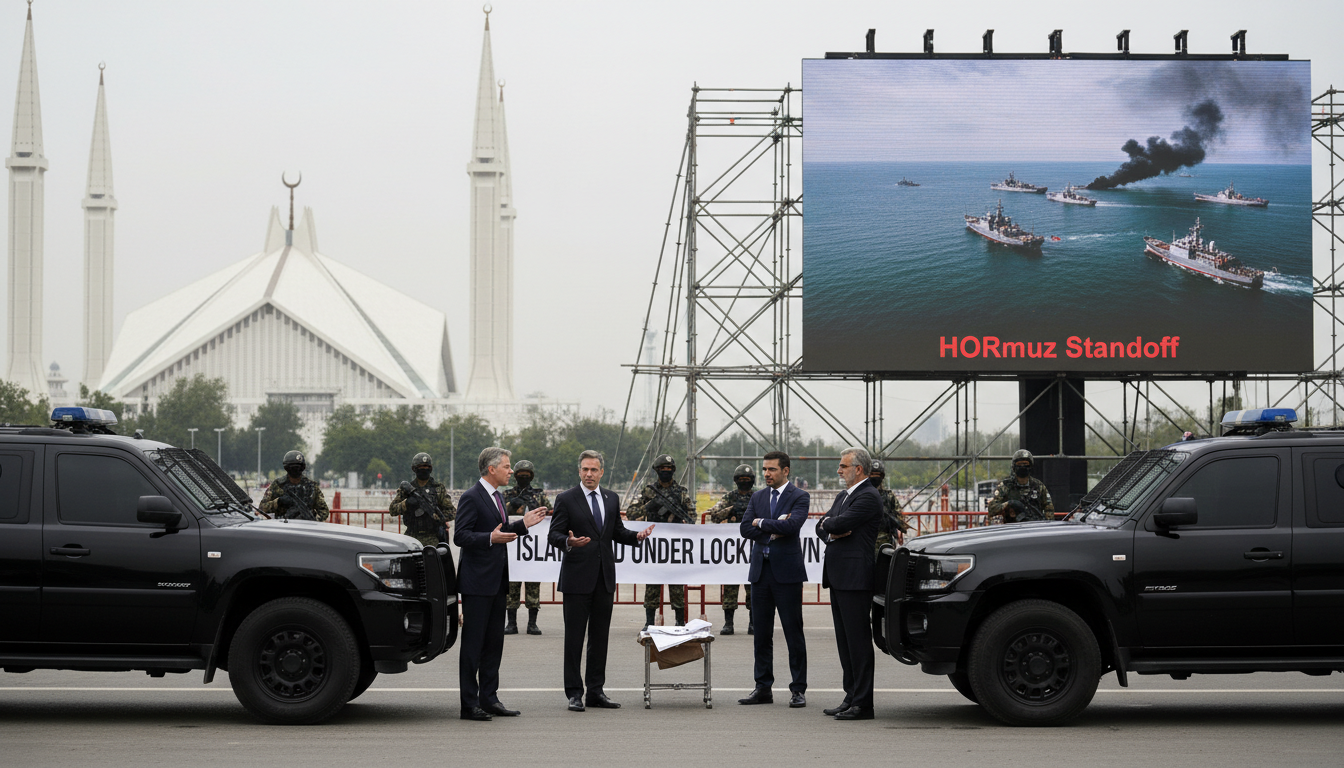
Hormuz crisis deepens as Islamabad lockdown complicates US‑Iran talks
Hormuz crisis deepens as Islamabad lockdown stalls US‑Iran talks, disrupting shipping and energy markets. Panama Canal fees surge and regional tensions widen.
Diplomacy faltered this week as the Hormuz crisis intensified and Islamabad was placed under tight security while foreign envoys arrived for consultations. US officials traveled to Pakistan seeking a path forward, but Tehran has signalled it will not engage in direct bilateral talks for the moment. The standoff has left mediators uncertain and regional capitals on edge as maritime traffic and energy markets react.
Islamabad lockdown receives diplomatic delegations
Pakistan tightened access to its capital as envoys from multiple countries landed to press for de‑escalation and clarification. Security measures constrained movement around diplomatic quarters and the air of urgency reflected the high stakes of potential talks over Iran and maritime security.
Pakistani officials insisted that they would play a facilitating role, but also warned that any negotiations would follow formal channels and Pakistan’s own assessments. The environment has complicated face‑to‑face meetings, producing mixed signals about whether direct US‑Iran contact could occur on Pakistani soil.
US‑Iran talks remain uncertain amid mediation claims
Washington sent delegations to explore options for reducing tensions, yet US spokespeople signalled that clarity is lacking on Tehran’s willingness to negotiate directly. Iranian authorities said they would channel positions through Pakistan rather than sit down in direct talks, a stance that keeps diplomacy in limbo.
The ambiguity leaves a narrow window for mediation and raises the prospect that third‑party transmissions of proposals will dominate any near‑term diplomacy. Observers note that indirect exchanges can prolong stalemates and increase the risk of miscalculation during heightened military postures.
Strait of Hormuz standoff strands thousands of seafarers
Maritime disruption in the Strait of Hormuz has left crews and cargoes in limbo, as shipping companies reroute vessels and delay sailings to avoid the contested waters. Industry sources report thousands of sailors temporarily stranded as transits are postponed and port rotations are altered.
The bottleneck has compounded logistical strains on global supply chains, with insurers and charterers reassessing risk premiums for vessels operating in the wider Gulf. The concentrated nature of global energy flows through the area means even brief interruptions have outsized effects on delivery schedules.
Shipping costs spike as routes and fees shift
To bypass the Hormuz choke point, carriers are diverting ships along longer courses, prompting a sharp rise in transit costs and surcharges. Reports indicate Panama Canal passage fees have surged to as much as $4 million for some transits, reflecting both route congestion and owners’ efforts to economize on longer detours.
Rerouting through southern Africa or around the Cape of Good Hope adds days or weeks to voyages and increases fuel and crew expenses. These higher operating costs are translating into upward pressure on freight rates and, ultimately, on commodity and consumer prices along affected supply chains.
Washington intensifies economic pressure; Tehran signals restraint
The United States has tightened economic measures, announcing an end to oil waivers and freezing some Iran‑linked assets valued at roughly $344 million. US officials framed the moves as intended to reduce Tehran’s capacity to finance activities Washington deems destabilizing.
At the same time, Iranian authorities publicly stressed that much of the country’s missile capability remains unexpended despite weeks of confrontations. Tehran’s statements were positioned as both a deterrent and an assertion that it retains options short of wider escalation.
Conflict spreads across Levant as arrests and strikes continue
Military activity has continued across Gaza and the West Bank, with fresh strikes reported in Gaza and intensified arrest operations in the occupied territories. The sustained tempo of operations has drawn international concern about civilian harm and the potential for further regional spillover.
Beyond Israel and the Palestinian territories, tensions widened as Hezbollah claimed operations in southern Lebanon, while Beirut’s leadership explicitly rejected being used as a bargaining chip. The expansion of confrontations across multiple fronts complicates diplomatic efforts and raises the likelihood that localized incidents could trigger broader confrontations.
The combination of stalled diplomacy in Islamabad, maritime disruption through the Strait of Hormuz, and continued regional hostilities has heightened uncertainty for markets and policymakers. With mediation channels constrained and economic measures escalating, the situation remains fragile and subject to rapid change.

