
Tokyo Nihonbashi Parade Draws 50,000 to Honor Japan’s Milano Cortina Olympians and Paralympians
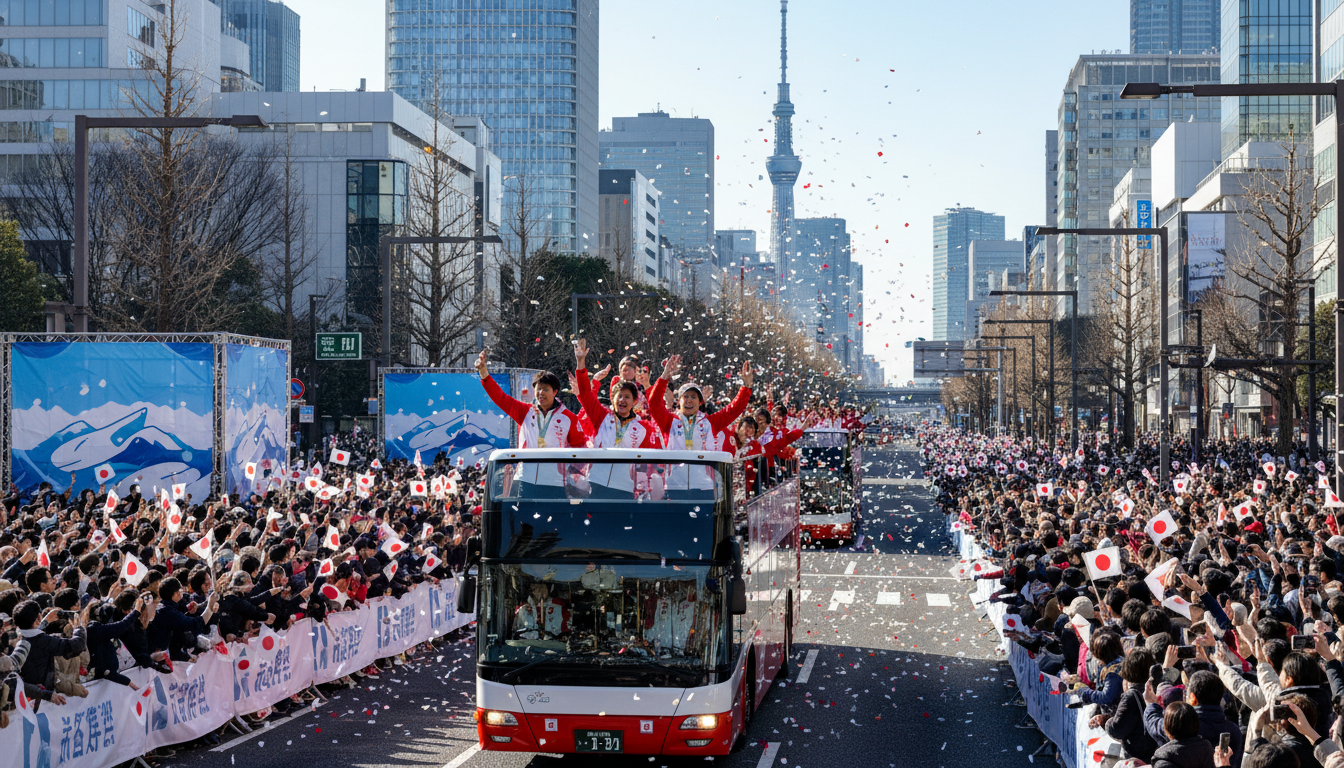
About 50,000 people watched a 700-meter Nihonbashi parade in Tokyo on April 25, 2026 honoring Japan’s Milano Cortina Olympic and Paralympic medalists.
Japan’s Milano Cortina athletes were celebrated in a jubilant Nihonbashi parade on April 25, 2026, drawing an estimated 50,000 spectators to central Tokyo. The event, the first parade held specifically for a Winter Games in Japan, featured gold-medal pair Riku Miura and Ryuichi Kihara and para alpine skier Momoka Muraoka among the procession. The short, 700-meter route through the Nihonbashi district in Chuo Ward transformed a commercial boulevard into a stage for the country’s winter sports successes. Organizers and local officials described the event as both a public thank-you and a milestone for winter-sports recognition in Japan.
Miura and Kihara front the procession
Riku Miura and Ryuichi Kihara, who captured Japan’s first Olympic gold in pairs figure skating at Milano Cortina, were lifted and cheered as they rode through the crowd. The pair’s victory, widely covered in domestic and international media, provided one of the parade’s most sustained ovations and served as a focal point for photographers and fans. Miura and Kihara paused several times to acknowledge supporters, accepting bouquets and responding to calls from the crowd. Their appearance underscored figure skating’s high profile in Japan and its role in driving public interest in winter sports.
Paralympic medalists receive high-profile recognition
Para athletes took center stage alongside Olympic medalists, with Momoka Muraoka singled out for applause after winning two silver medals in sitting alpine skiing events. Muraoka and other Paralympic competitors were greeted with the same ceremonial fanfare and public gratitude reserved for able-bodied medalists. Officials emphasized that the parade deliberately integrated Paralympians to highlight inclusivity and to honor achievement across all competitions at Milano Cortina. The visibility afforded to para athletes during the event marked a notable step for public recognition of disability sport in Japan.
Route and crowd control on a 700-meter boulevard
The parade covered a 700-meter stretch through Nihonbashi, a historic commercial district in Chuo Ward, drawing dense crowds along the sidewalks and at designated viewing areas. Local police and event organizers coordinated extensive crowd-control measures, including temporary road closures, barriers, and staggered entry points to manage the estimated 50,000 attendees. Vendors and small businesses along the route reported strong foot traffic, and emergency services maintained a visible presence to ensure safety. City officials said the short route was chosen to concentrate spectators and to permit efficient logistics for athletes and support staff.
Organizers and sponsors frame the event as a first for Winter Games
Organizers described the parade as the first of its kind in Japan specifically honoring Winter Games competitors, framing it as both celebratory and symbolic. Representatives from the Tokyo metropolitan government and national sports bodies attended, and commercial sponsors participated in the staging of floats and signage. Event planners noted that the parade’s format drew on established practices from summer-Games receptions while adapting for winter-sports athletes and Paralympians. Several officials said they hoped the event would become an annual or recurring feature to sustain public engagement with winter disciplines.
Reactions from athletes, officials and the public
Athletes expressed gratitude to their supporters and reflected on the surge in public interest following Milano Cortina. Miura and Kihara spoke briefly to assembled media about the emotion of receiving a public celebration in Tokyo, while Paralympians including Muraoka highlighted the value of increased visibility for para sport. Spectators interviewed along the route described a festive atmosphere, noting families and longtime fans who turned out despite busy spring weekend schedules. Local business owners and tourism officials suggested the parade offered an economic uplift to the Nihonbashi area, at least for the day.
The parade also prompted discussions about legacy and development for winter sports in Japan, including calls for greater funding, more accessible facilities for para athletes, and expanded youth programs. Sports administrators said the nationwide attention could bolster recruitment and grassroots participation ahead of future international competitions. Meanwhile, urban planners and cultural groups noted how the parade revived historical civic traditions of public processions while placing modern athletes at the center of community celebration.
Public feedback in the hours after the event ranged from praise for the inclusive lineup to requests for clearer viewing guidelines and more extensive seating for elderly spectators. Organizers acknowledged the critiques and indicated they would review operational details for future events, including improvements to accessibility and ticketing for prime viewing sections. For many attendees, however, the parade accomplished its immediate goal: a visible, communal expression of pride for Japan’s Milano Cortina Olympians and Paralympians that brought a large slice of Tokyo together in celebration.

