
Gaza municipal elections resume after 21 years as roughly 70,000 register to vote
Gaza municipal elections on April 25, 2026 resume after 21 years; about 70,000 registered voters choose council lists with mandated female candidates amid attacks
Gaza voters head to polls in first local vote since 2005
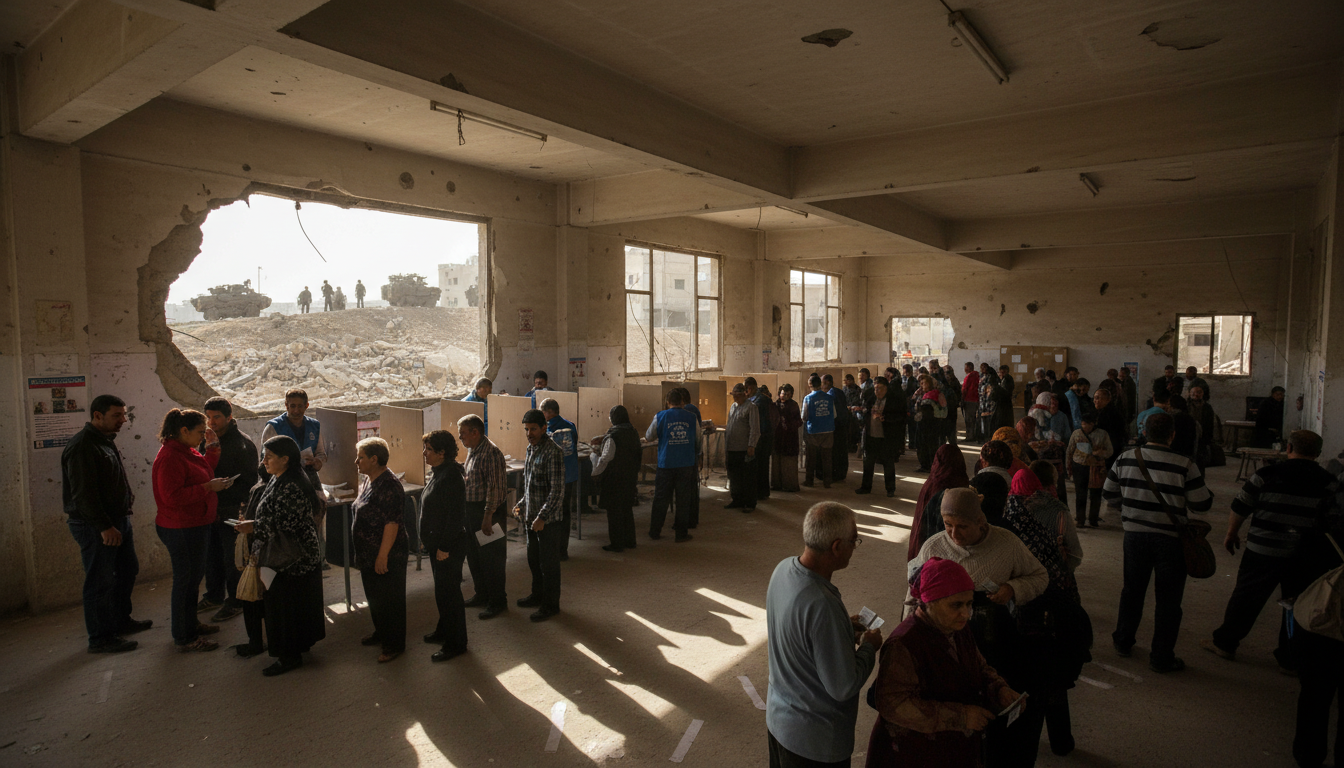
Palestinians in the Gaza Strip went to the polls on April 25, 2026, in the territory’s first municipal elections in 21 years, marking a rare exercise in local democracy amid an ongoing conflict. The Gaza municipal elections attracted roughly 70,000 registered voters who were called to choose council representatives through a list-based ballot system. Residents and local officials described the vote as an attempt to restore municipal governance and basic services as security conditions remained precarious.
Turnout was uncertain throughout the day as voters weighed the risks of travel and of gathering at polling stations while nearby hostilities persisted. Election organizers said the ballot format requires lists to include female candidates, a provision aimed at safeguarding women’s representation on local councils.
Electoral rules require lists and women’s representation
The municipal contests were conducted on a list system rather than individual-candidate ballots, with each list fielding a slate of candidates for council seats. Election authorities stipulated that each list must include female nominees to ensure women are represented on newly elected municipal bodies. Observers noted the rule was intended to increase participation by women in local decision-making after decades of limited municipal elections.
Officials further explained that the list format is designed to produce council compositions reflecting a range of local interests while simplifying administration under difficult conditions. The requirement for female inclusion was highlighted by advocacy groups as an important step toward gender balance in a context where political participation by women has often been constrained.
Registration figures and expectations for turnout
About 70,000 people were registered to vote in the Gaza municipal elections, according to local electoral authorities, a number that election officials and community leaders said represented a cross-section of urban and rural neighborhoods. Organizers set up polling stations across the territory, but the distribution and accessibility of those stations varied by area due to damage, checkpoints, and security limitations.
Analysts cautioned that registration does not directly translate into turnout, particularly given fears about safety and movement. Election day observers said some polling centers reported steady participation, while others experienced thin queues, underscoring the uneven impact of security on voting behaviour.
Voting under fire: security and logistical challenges
Security risks shaped the voting day as Israeli military activity continued in parts of the Gaza Strip, creating logistical and psychological obstacles for voters and poll workers. Local officials reported disruptions in some locations and urged citizens to exercise caution while making clear the polls would remain open wherever it was safe to do so. Humanitarian agencies had previously warned that escalations in violence could jeopardize both voter turnout and the integrity of electoral operations.
Poll workers faced the dual task of conducting ballots and safeguarding voters in an environment where sudden exchanges of fire or restrictions on movement could force temporary closures. Despite these pressures, many residents described their participation as an act of civic resilience, hoping that elected councils would help coordinate repairs and basic services after prolonged instability.
Implications for municipal services and governance
Municipal councils elected through the Gaza municipal elections are expected to take on responsibilities for local services such as waste management, water supply, local roads, and public health coordination. Community leaders emphasized that functioning local authorities are crucial for restoring municipal services that have deteriorated during long periods without formal municipal elections. The outcome of the vote will determine which local actors and coalitions gain authority over day-to-day governance and budgetary priorities at the municipal level.
For residents, immediate concerns include clearing debris, repairing infrastructure, and re-establishing routine service delivery. Elected councils will also face the challenge of working within a broader political and security environment that can limit their capacity to implement policies or access funds.
Counting, certification and potential hurdles ahead
Election officials said ballots would be counted in accordance with established procedures, with results to be certified in the days following voting. Organizers cautioned that the certification process could be delayed in areas still affected by violence or where logistical complications impede the secure transfer of ballot materials. Legal and administrative steps are required before new councils can convene and assume official responsibilities, and these processes will be closely watched by residents and local stakeholders.
The municipal vote is likely to prompt scrutiny from civil society groups and local media, which will monitor whether councils reflect the diversity of communities and whether the mandated female representation is realized in practice. The challenge for newly elected bodies will be to translate electoral mandates into tangible improvements in services while navigating constraints posed by the security environment.
Results are expected to shape municipal leadership across Gaza and could influence how local needs are articulated to humanitarian agencies and other external actors. The degree to which newly elected councils can operate effectively will depend on security, access to resources, and cooperation with administrative authorities.
The Gaza municipal elections represent a localized effort to revive governance structures after a long hiatus, offering residents a chance to select council lists that include mandated female candidates and to press for restoration of essential services despite ongoing hostilities.

