
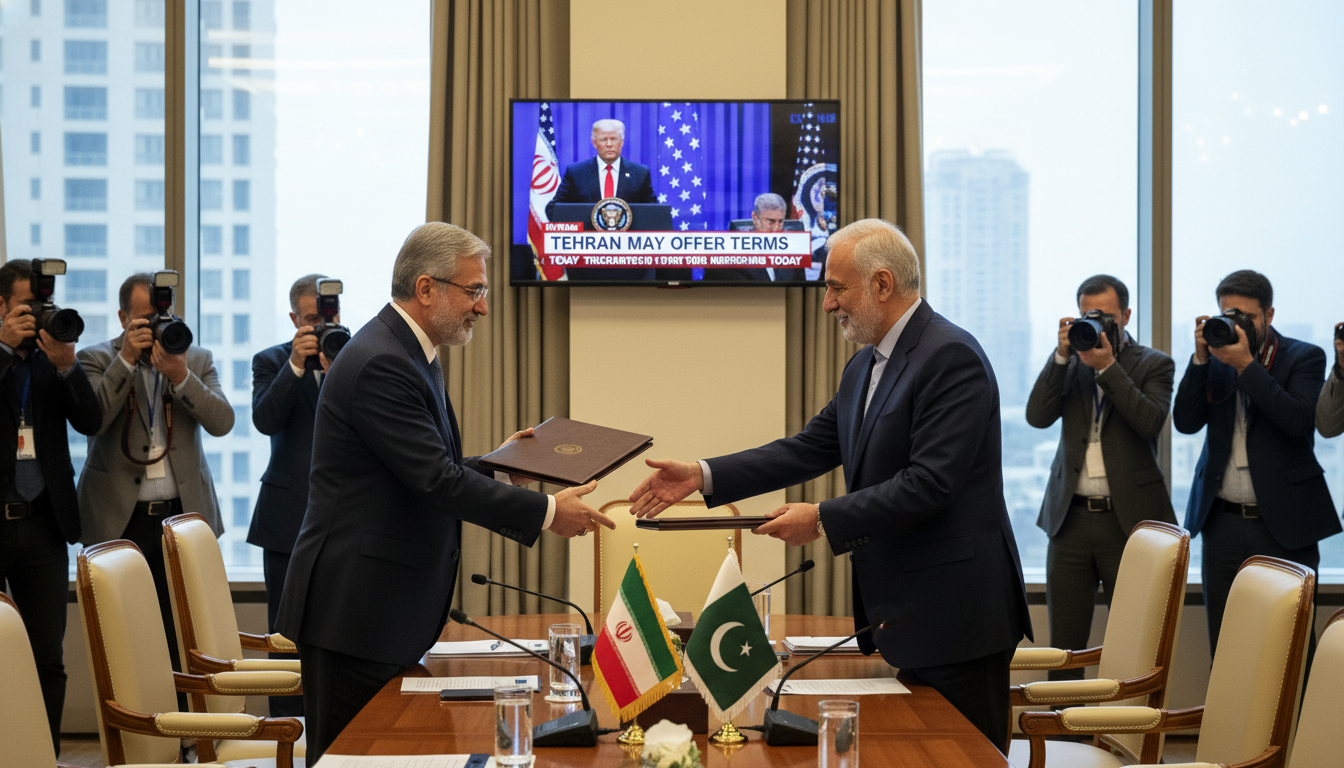
Iran negotiating demands delivered to Pakistan as Tehran flags reservations over U.S. proposals
Iran negotiating demands were presented to Pakistani officials in Islamabad as Tehran outlined its negotiating stance and flagged specific reservations about U.S. proposals, a Pakistani source involved in the talks said.
The delivery was made by Iranian Foreign Minister Abbas Araghchi during a visit aimed at relaying Tehran’s position to a regional intermediary.
Former U.S. President Donald Trump said on Friday that Iran planned to make an offer intended to satisfy U.S. demands, but he said he did not know the details of any proposed package.
Araghchi’s Islamabad meeting and the handover
A Pakistani source directly involved in the discussions confirmed that Foreign Minister Abbas Araghchi handed over Tehran’s negotiating demands to Pakistani officials during his visit.
The exchange is presented by Tehran as both a transmission of formal positions and a clarification of reservations about elements of U.S. proposals.
Contents of Iran’s negotiating demands and reservations
Officials described the material delivered as a package that outlined Tehran’s priorities and the limits of acceptable concessions.
The Pakistani source said the communication included both constructive proposals and explicit objections to certain U.S. conditions, though it did not enumerate specific clauses or timelines.
Why Pakistan is acting as an intermediary
Pakistan’s geopolitical position and diplomatic ties with both Tehran and Washington have long made it a practical conduit for confidential exchanges.
Pakistani officials have previously facilitated back-channel contacts, and Islamabad’s role in this instance appears to reflect a preference for discreet, state-to-state transmission over public diplomacy.
U.S. response and Trump’s public comment
On Friday, former U.S. President Donald Trump stated that Iran intended to submit an offer aimed at meeting U.S. demands, but he acknowledged he did not know what the offer included.
There was no immediate public confirmation from U.S. negotiators about the scope or timing of any Iranian submission, leaving the comment without official corroboration from current U.S. channels.
Diplomatic implications for nuclear talks and sanctions relief
If Tehran’s package is designed to address core U.S. concerns, it could reopen space for substantive diplomacy on longstanding disputes, including nuclear compliance and sanctions relief.
Analysts note, however, that bridging gaps will require detailed text, verification mechanisms and reciprocal steps that have eluded negotiators in previous rounds.
Regional reactions and stakeholdership
Regional capitals, including those in the Gulf and Europe, will be closely watching any move that signals a shift in Iran’s negotiating posture.
Neighboring states have overlapping security and economic interests that could be affected by changes in sanctions policy or nuclear-related commitments.
Possible next steps in the negotiation process
Diplomats suggest several pathways: Iran could forward a formal offer via intermediaries, request direct talks, or seek phased confidence-building measures before detailed agreement drafting.
Timing will depend on internal Tehran deliberations, the willingness of the United States to engage with whatever package is presented, and the preferences of intermediary states such as Pakistan.
Challenges remaining on verification and mutual trust
Even a detailed Iranian offer would face scrutiny over how compliance would be verified and what reciprocal concessions Washington would be prepared to make.
Past negotiations have repeatedly faltered on sequencing and verification, underscoring the difficulty of converting positions into enforceable language acceptable to all sides.
The transmission of Iran’s negotiating demands to Pakistani officials and the subsequent public comment by Donald Trump have introduced a new dynamic into an already complex diplomatic landscape.
Whether the reported package will lead to sustained talks or simply represent a fresh round of posturing depends on follow-up steps by Tehran, the United States and regional intermediaries.

