
Samsung strike deepens as union demands removal of bonus cap amid AI-driven chip profits
Samsung strike escalates as union rallies at Pyeongtaek seeking removal of bonus cap amid AI-driven semiconductor profit surge, raising production and investor concerns.
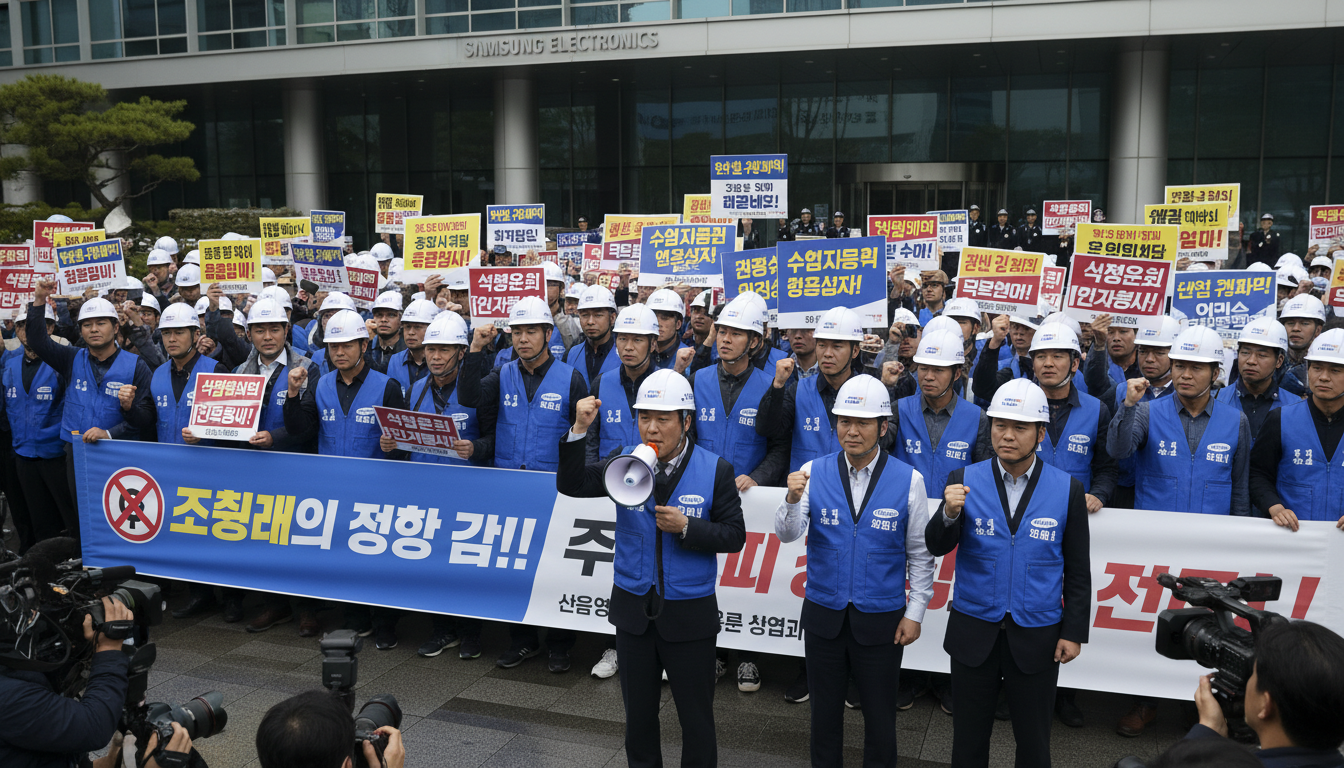
Samsung strike talks intensified after thousands of union members staged a rally at the company’s Pyeongtaek chip complex on April 23, pressing management to remove a cap on bonuses as semiconductor profits climb amid the global AI boom. The dispute marks only the second labor strike in Samsung Electronics’ history and has focused attention on pay structures across the industry. Workers say the bonus ceiling is unjustifiable given the surge in demand for high-performance chips powering artificial intelligence applications.
Rally at Pyeongtaek chip complex
Union members representing Samsung Electronics workers gathered at the Pyeongtaek site on April 23 to publicly press their case. Photographs from the event showed large groups of employees carrying placards and chanting demands for bonus reform. Organizers described the demonstration as a show of strength intended to push management back to the negotiating table.
Union demand: remove bonus cap
The core demand from shop stewards and rank-and-file members is straightforward: eliminate the ceiling on year-end bonuses that limits employee payouts even when corporate profits are strong. Union leaders argue that the cap undermines morale and does not reflect the company’s earnings, which have been buoyed by a renewed appetite for semiconductors. Workers contend that uncapped bonuses would better share the gains of the current cycle with those directly involved in production.
Management and labor clash over pay policy
Samsung Electronics and its union have clashed repeatedly in bargaining sessions as each side defends its position on compensation. Company statements have emphasized fiscal discipline and structured incentive plans, while the union counters that extraordinary profits linked to AI demand justify broader reward mechanisms. That impasse has left both sides publicly at odds and increased the likelihood of sustained industrial action if no compromise is reached.
Historic nature of the strike
This confrontation is notable because it represents only the second strike in Samsung Electronics’ long corporate history, underscoring the rarity of large-scale labor stoppages at the company. The event reflects growing labor activism within high-tech manufacturing and signals a shift in expectations among employees who have seen their employer regain profitability. Analysts said the strike’s symbolic weight may encourage similar demands at other major suppliers and assembly plants.
AI boom fueling semiconductor profits
Industry observers point to the artificial intelligence-led surge in computing demand as the driver behind rising chipmaker profitability. Data-center operators, cloud providers and AI-specialized hardware makers have ramped orders for memory and logic chips, tightening supply in key segments. That market backdrop has given workers leverage to argue that bonus structures should more closely track extraordinary revenue and margin improvements.
Potential operational and market implications
If the Samsung strike expands or extends, there is potential for production slowdowns at key wafer fabs and assembly lines, which could ripple through supply chains that rely on the company’s components. Investors and customers will be monitoring the situation for signs of disruption to delivery schedules and product roadmaps. At the same time, prolonged labor unrest could prompt other industry players to reassess compensation frameworks to avoid similar disputes.
The coming days will be crucial as union leaders and Samsung management decide whether to intensify action or return to productive talks, with both sides under pressure to balance labor demands against operational continuity.

