
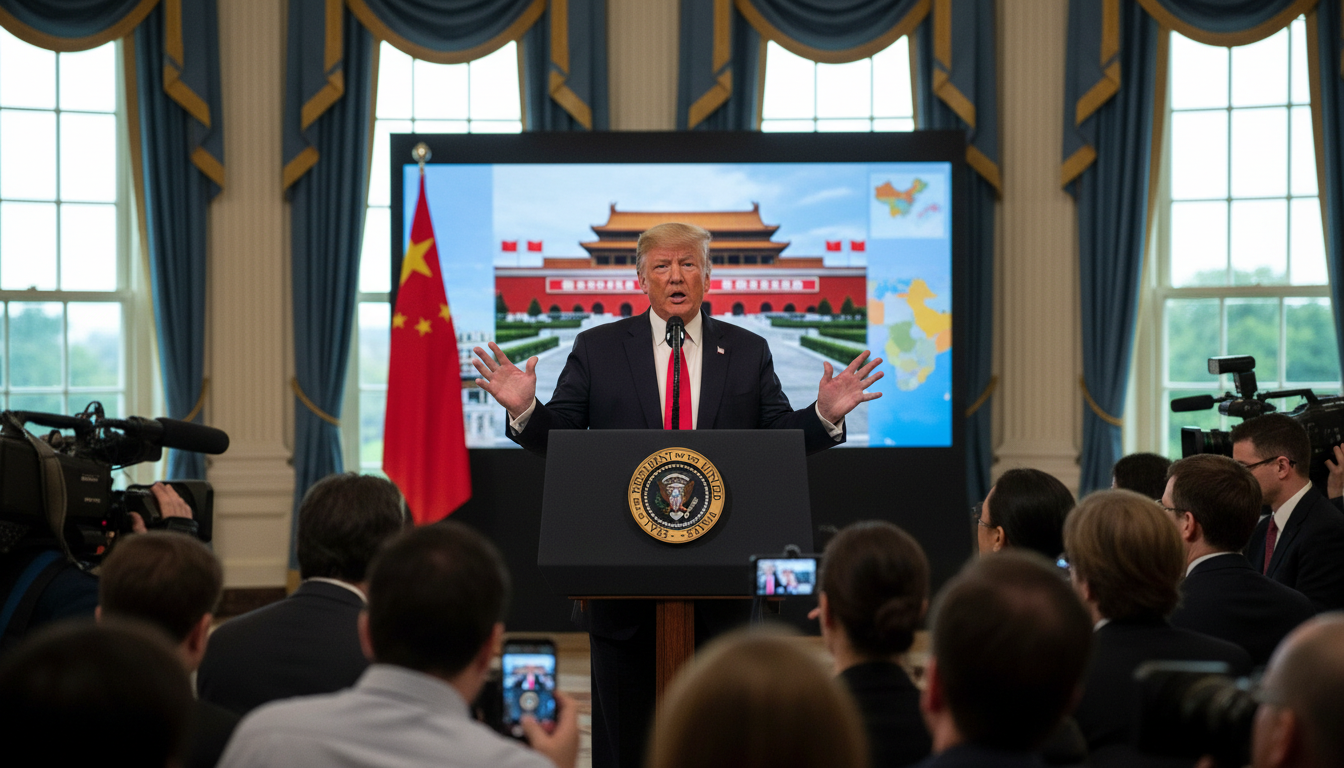
Trump Presses Beijing to Expand China’s Role in Iran Conflict Ahead of May 14 Xi Meeting
Trump urges Beijing to take a larger diplomatic and practical part in de-escalating tensions with Iran, saying China’s role in Iran conflict should increase ahead of his May 14 meeting with Xi Jinping.
US President Donald Trump said on Monday that China could play a larger role in addressing hostilities involving Iran, and that he plans to raise the matter when he meets Chinese leader Xi Jinping in Beijing on May 14. Trump said Beijing "could help a lot more" and added he was not "overly disappointed" with its current position. The remarks signal Washington’s intent to press Beijing publicly for deeper engagement on the Iran conflict ahead of a high-profile bilateral summit.
Trump urges Beijing to expand role on Iran
Trump framed his comments as a request for China to match what he described as American support for partners in other conflicts. He suggested that Beijing’s diplomatic and economic leverage could be used to influence Tehran’s behavior and help reduce regional tensions. The president did not provide a detailed list of measures he expects China to undertake, instead characterizing the appeal as a call for greater involvement.
His public appeal follows a pattern of bilateral pressure aimed at widening international engagement on Iran, an approach Washington says could complement military deterrence and sanctions. Analysts say any change in Beijing’s approach would be consequential given China’s economic ties with Iran and its position on U.N. diplomacy.
14 May meeting with Xi Jinping to include Iran discussions
The scheduled meeting on May 14 in Beijing will bring the two leaders together amid heightened strategic competition and perennial disagreements on security issues. Trump told reporters he planned to discuss the Iran situation directly with Xi, signaling that the topic is high on the summit agenda. U.S. officials have often sought to use one-on-one diplomacy to secure commitments from Beijing on global security matters.
Both countries have incentives to avoid escalation in the Middle East, but they also have divergent priorities and tools. The summit will test whether private negotiations can produce a public shift in Beijing’s engagement with Tehran.
Trump contrasts China with U.S. allies’ support
In public remarks, Trump drew explicit comparisons between China’s current stance and the level of support the United States provides to its allies in conflicts elsewhere. He used those comparisons to underscore his expectation that major powers should act more collectively in crisis management. The president framed his appeal as pragmatic: greater Chinese involvement, he argued, could yield quicker, less costly resolutions.
Observers note that such comparisons are designed to pressure Beijing diplomatically without escalating rhetoric into direct confrontation. They also reflect a broader U.S. strategy of leveraging international opinion to amplify pressure on Iran through multilateral channels.
Beijing’s current stance and diplomatic constraints
Beijing has historically balanced its relationships in the Middle East to protect energy supplies and trade ties while avoiding direct involvement in military conflicts. Chinese officials have publicly advocated for restraint and dialogue, and they often emphasize sovereignty and non-interference in bilateral relations. These principles can limit the scope of China’s actions, particularly when Tehran’s security posture intersects with Chinese regional interests.
China’s responses typically favor diplomatic engagement, economic cooperation, and support for multilateral frameworks, rather than enforcement measures. Any shift toward more assertive pressure on Iran would therefore represent a significant recalibration of Beijing’s regional policy and could be constrained by domestic and strategic considerations.
Possible diplomatic and economic levers Beijing could use
If Beijing chose to intensify its role, analysts say it could employ a mix of diplomatic, economic, and normative tools. Diplomatic steps might include hosting mediation talks or using high-level channels to convey messages directly to Tehran. Economic levers could involve tightening trade terms, modifying energy purchases, or conditioning investment flows, though such moves would carry costs for both China and Iran.
China also participates in international institutions where it could press for coordinated responses, but experts caution that any measures short of a unified multilateral strategy may have limited impact. Beijing would weigh the potential benefits of reducing regional instability against the risks of damaging a strategic relationship with Iran.
Implications for U.S.-China relations and regional stability
The demand for a larger Chinese role in the Iran conflict intersects with broader tensions in U.S.-China relations, including disputes over trade, technology and regional security. How Beijing responds could affect trust and cooperation on other global issues. A constructive Chinese contribution might open pathways for limited cooperation, while refusal or minimal action could deepen mistrust.
Regional actors, including Gulf states and European partners, will likely watch the outcome of the May 14 meeting closely. Any sign that the two powers can align, even partially, on de-escalation measures could reduce the risk of wider conflict. Conversely, public disagreement could complicate multilateral efforts to manage the crisis.
The coming weeks and the summit will determine whether Washington’s public appeal produces a tangible shift in Beijing’s policy toward Iran, or whether the United States will need to recalibrate its expectations and tactics.

